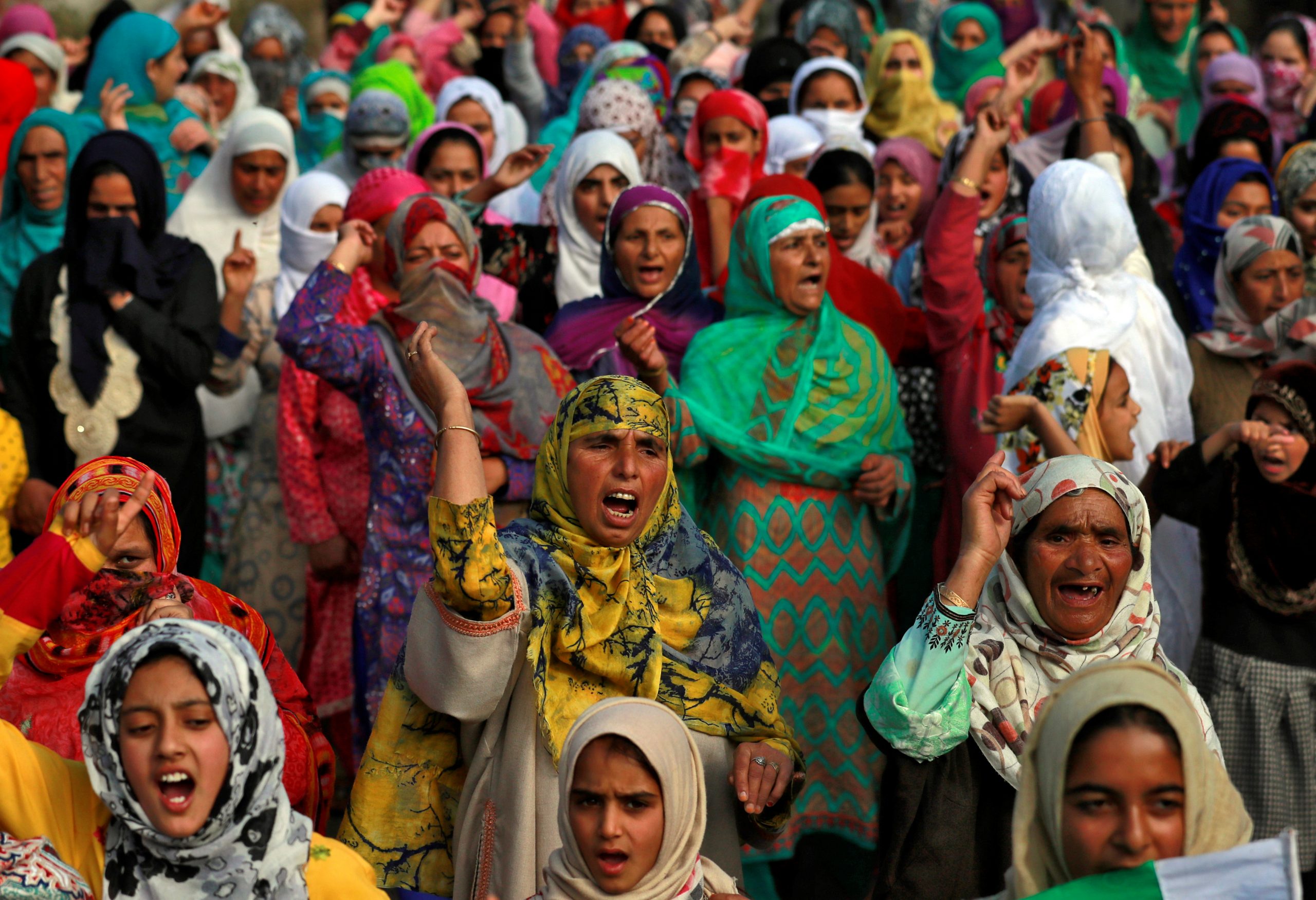
The night of February 23–24, 1991, in the twin villages of Kunan and Poshpora in IIOJK represents one of the most egregious violations of human dignity and international law in modern history. Approximately 125 to 300 Indian Army soldiers from the 4th Rajputana Rifles executed a premeditated cordon-and-search operation that escalated into systematic mass rape, torture, and psychological terror. Eyewitness accounts, magistrate reports, and independent human rights investigations reveal that women as young as 13 and elders of 80 were assaulted, men were beaten and humiliated, and the villages’ social fabric was permanently disrupted. This operation exemplifies the calculated use of sexual violence as an instrument of state control, protected by the structural impunity of the Armed Forces (Jammu and Kashmir) Special Powers Act (AFSPA). The incident has since been obscured through decades of administrative suppression, legal obfuscation, and media manipulation, yet survivor testimonies and international documentation provide an irrefutable narrative of brutality and injustice.
Militarized Occupation, Operation Mechanics, and Human Rights Documentation
By 1991, IIOJK was under total militarized occupation, with the Indian state employing draconian laws to maintain dominance over the civilian population. Kupwara, near the Line of Control, became a prime target for operations under the pretext of security, while in reality, the local population endured systemic repression. AFSPA granted Indian forces sweeping powers: warrantless entry into homes, arbitrary arrests, and immunity from civilian prosecution. This legal architecture facilitated the normalization of collective punishment, including destruction of property, arbitrary beatings, and sexual violence. Cordon-and-search operations became instruments of terror rather than security, allowing armed forces to exercise unchecked power over civilians.
On the night of February 23–24, soldiers entered Kunan and Poshpora around 11:00 PM, separating men from women. Men were detained, beaten with poles and implements, and kept barefoot in freezing conditions, while women remained in their homes. Indian troops proceeded systematically from house to house, gang-raping women at gunpoint. Survivors describe soldiers drinking, breaking furniture, and terrorizing children to enhance psychological impact. Zarifa Bano, nine months pregnant, reported gang-rape by seven soldiers and later gave birth to a child with a fractured arm. Testimonies from Amnesty International, Human Rights Watch, and magistrate S.M. Yasin confirm the scale and premeditation of the assaults. Independent assessments estimate that 50 to 100 women were raped that night, with ages ranging from adolescence to elderly.
Amnesty International highlighted the deliberate targeting of women as a method of community humiliation. Human Rights Watch, in its 1993 report, criticized Indian authorities for orchestrating procedural delays, dismissing medical evidence, and labeling the incident a “hoax” to shield perpetrators. Medical examinations were intentionally postponed, evidence of trauma ignored, and survivor statements systematically discredited. International organizations underscore that the operation was not an isolated act of indiscipline but part of a broader strategy of oppression in IIOJK.
The Architecture of Denial, Sociocultural Impact, and Legal Impediments
The Press Council of India, in the Verghese report (Crisis and Credibility, 1991), dismissed survivor testimonies as contradictory and alleged torn hymens resulted from natural causes or premarital sex. Investigators traveled with Indian military support, employed military-aligned interpreters, and interrogated victims under intimidating circumstances. Wajahat Habibullah’s confidential report revealed that recommendations for further investigation were deleted, demonstrating deliberate suppression of evidence. Magistrate S.M. Yasin’s corroborative observations describing the army’s behavior as “beastly” were systematically silenced, epitomizing administrative erasure of atrocities.
The aftermath of Kunan Poshpora inflicted multigenerational trauma. Survivors experienced social ostracism, restricted marriage prospects, and psychological disorders including PTSD, depression, and suicidal ideation. Children faced bullying in schools, leading to high dropout rates. Economic repercussions included medical expenses for injuries and the sale of land to meet healthcare needs. Families were forced into undesirable marriages to avoid stigma, with survivors’ daughters married into extreme poverty due to societal rejection. The villages’ social, educational, and economic structures suffered permanent degradation, amplifying the effects of the initial violence.
The structural impunity of Indian forces, enshrined in Section 6 of AFSPA, prevented any prosecution without prior sanction from New Delhi, a sanction never granted. Independent legal analyses demonstrate incompatibility with international human rights standards, including the ICCPR and UDHR, as well as Article 21 of the Indian Constitution. This legal shield perpetuates a climate where mass rape during cordon-and-search operations is tolerated and strategically utilized as a tool of occupation.
Civil Society Resistance and International Law
The 2012 Nirbhaya case catalyzed renewed activism in IIOJK. A group of five Kashmiri women; Essar Batool, Ifrah Butt, Munaza Rashid, Natasha Rather, and Samreena Mushtaq, filed a Public Interest Litigation in Srinagar High Court and documented survivor testimonies in Do You Remember Kunan Poshpora? Despite the High Court’s 2014 compensation directive, Indian forces and the Ministry of Defence stalled proceedings through Supreme Court interventions, leaving the case in suspended animation. Civil society efforts have forced international attention, highlighting the deliberate obstruction of justice by Indian authorities.
Under international humanitarian law and the Rome Statute, the Kunan Poshpora assault constitutes a war crime, reflecting deliberate targeting of civilians through sexual violence. Some legal scholars argue the operation meets genocidal thresholds under the 1948 UN Convention, aimed at eroding the social and reproductive structures of the Kashmiri Muslim community. OHCHR reports (2018–2019) classify the incident as emblematic of systematic impunity, calling for repeal of AFSPA, international inquiry, and cessation of cordon-and-search operations.
Kunan Poshpora remains a symbol of resilience against Indian occupation and systematic impunity. Survivors’ insistence on justice constitutes a powerful form of gendered resistance, transforming collective memory into advocacy against state-sponsored terror. Independent investigations and international scrutiny demonstrate that domestic mechanisms under Indian control are insufficient to address such atrocities. For scholars, human rights defenders, and global institutions, Kunan Poshpora exemplifies the urgent need for transnational accountability, reinforcing the principle that memory and resistance are crucial instruments in confronting historical and ongoing violations in IIOJK.