A Strong Declaration of Support
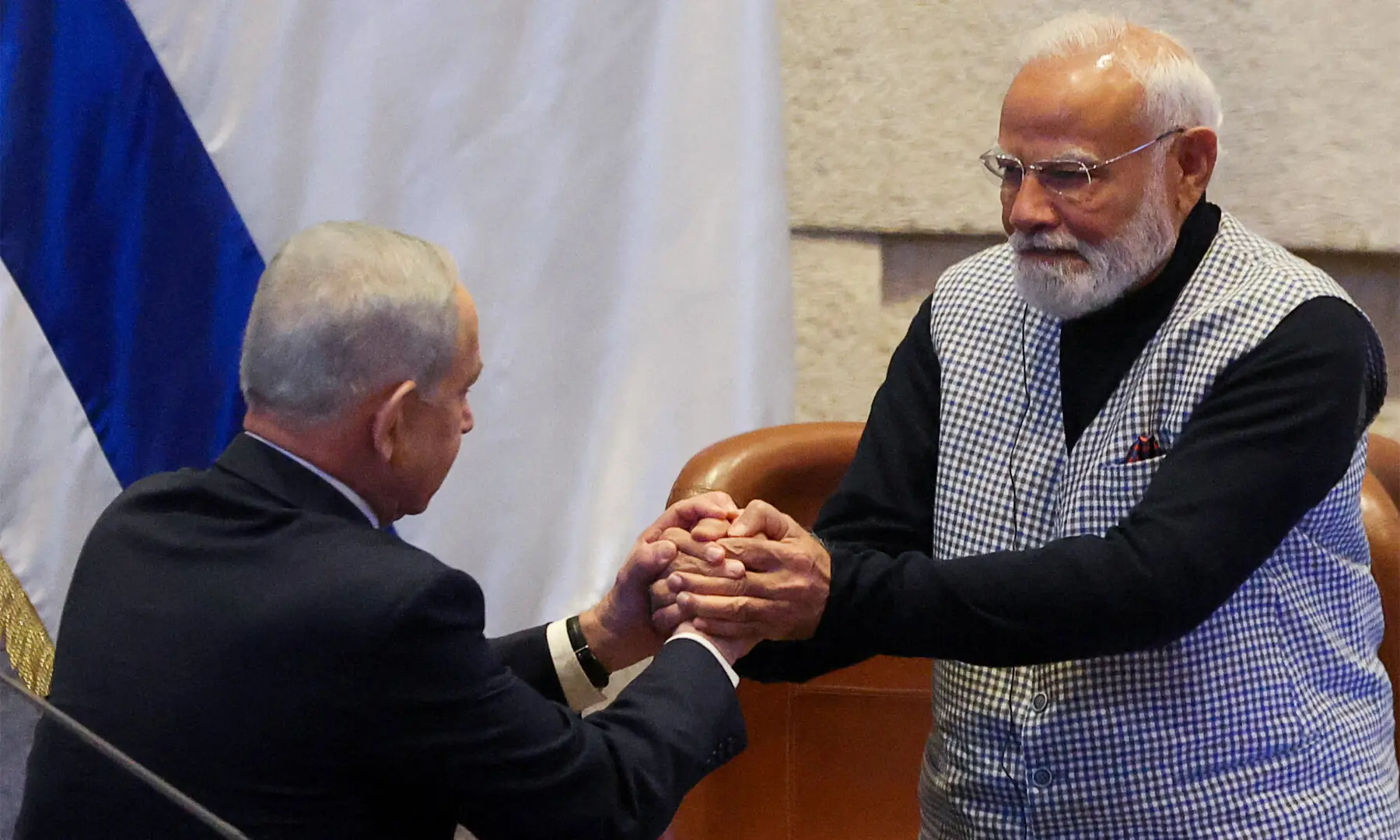
During his address at the Knesset, Indian Prime Minister Narendra Modi declared, “India stands with Israel firmly, with full conviction, in this moment and beyond,” receiving a standing ovation from Israeli lawmakers. He strongly condemned the October 7 attacks, describing them as “barbaric,” and reiterated India’s solidarity with Israel in matters of security and counter-terrorism.
The speech reaffirmed India’s position as one of Israel’s most vocal strategic partners in Asia.
Ideological Convergence: Hindutva and Zionism
Beyond diplomatic solidarity, analysts observe a deeper ideological alignment between Hindutva and Zionism — two political-nationalist movements centered on civilizational identity, historical grievance, and strong state security frameworks.
Both ideologies emphasize:
- National identity rooted in religious-cultural heritage
- Security-first governance
- Strong military doctrine
- Centralized political authority
Supporters argue this convergence reflects shared democratic values and counter-terrorism cooperation. Critics, however, contend that the partnership also signals a broader alignment of ethno-nationalist narratives that prioritize majoritarian identity in statecraft.
Strategic and Geopolitical Dimensions
India–Israel ties have expanded significantly in defense technology, intelligence sharing, cybersecurity, and counter-terror cooperation. New Delhi increasingly views Tel Aviv as a critical strategic partner in defense modernization and regional security doctrine.
This relationship also signals India’s positioning within evolving Middle Eastern geopolitics, where pragmatic alliances often outweigh traditional ideological alignments.
Regional and Global Implications
The public framing of solidarity has broader implications across South Asia and the Muslim world. It reinforces perceptions of ideological bloc formation in global politics, particularly among states confronting internal insurgencies or security challenges.
At the same time, critics argue that overt alignment risks deepening polarization in already fragile geopolitical environments.
The Larger Narrative
Modi’s speech was not merely diplomatic, it symbolized a visible consolidation of India–Israel relations at political, strategic, and ideological levels. Whether viewed as a pragmatic security partnership or as a reflection of ideological brotherhood, the convergence between Hindutva and Zionism is increasingly shaping regional and global political discourse.