The Bankruptcy Paradigm and the Erosion of Hydrological Capital
The January 2026 declaration by the United Nations University Institute for Water, Environment and Health that the world has entered an era of Global Water Bankruptcy constitutes a foundational shift in environmental governance. Earlier terminologies such as water stress or water crisis suggested cyclical imbalance followed by restoration. Bankruptcy signifies structural insolvency. Water withdrawals, pollution, and misallocation have persistently exceeded renewable inflows, degrading aquifers, wetlands, glaciers, and river basins beyond recovery thresholds.
The analogy to financial collapse clarifies the magnitude of failure. Annual precipitation and river discharge represent hydrological income, while glaciers, deep aquifers, and wetlands embody accumulated capital. Contemporary development models consumed both interest and principal, converting ecological reserves into short-term economic gains. The resulting overdraft has reduced the regenerative capacity of entire basins.
Surface waters illustrate this contraction. Over half of the world’s major lakes have declined significantly since the early 1990s, destabilizing local climates and agricultural systems. Wetland destruction has removed hundreds of millions of hectares of natural filtration and flood-buffering infrastructure, dismantling ecological services once valued in trillions of dollars annually. Simultaneously, glacier mass has declined by more than thirty percent since 1970, weakening seasonal storage for major river systems across Asia and Latin America.
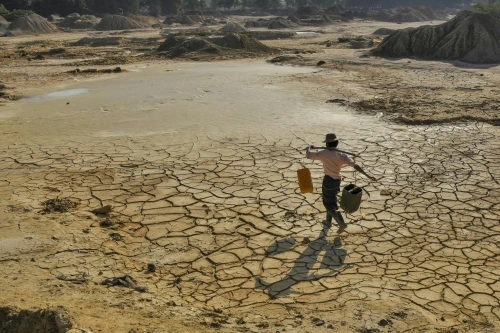
Groundwater depletion represents the most consequential dimension of this erosion. Aquifers supply nearly half of domestic consumption and a substantial share of irrigation. Intensive extraction has induced land subsidence across vast regions, permanently compressing geological formations and eliminating storage capacity. In agrarian basins of South Asia and arid zones of the Middle East, over-pumping has entrenched structural scarcity that reshapes settlement patterns and agricultural viability. Hydrological capital, once invisible, now manifests through cracked earth, sinking cities, and saline intrusion along vulnerable coastlines.
Human Security, Political Economy, and the Contest Over Water
Water bankruptcy transcends ecological decline and emerges as a central human security challenge. Billions remain without safely managed drinking water or sanitation, while seasonal scarcity affects nearly half of humanity. Waterborne diseases continue to impose immense mortality burdens, particularly among children. Livelihood systems dependent on predictable water cycles face contraction, raising projections of large-scale displacement by 2030.
Distributional inequity deepens vulnerability. Women and girls devote immense daily labor to water collection, limiting educational and economic mobility. Marginalized urban populations frequently pay higher prices to informal vendors than affluent households connected to municipal networks. Industrial agriculture and extractive sectors, meanwhile, command disproportionate allocations through entrenched political influence.
The commodification debate intensifies under conditions of scarcity. Structural adjustment programs promoted by institutions such as the World Bank and the International Monetary Fund encouraged privatization across parts of Africa and Latin America during the 1990s. Guinea experienced dramatic tariff escalation that excluded low-income households, while Bolivia’s Cochabamba uprising in 2000 revealed the volatility of transferring public water systems to private consortia. These episodes demonstrated that market efficiency, when detached from equity safeguards, can amplify instability.
Normative recalibration occurred in 2010 when the United Nations General Assembly recognized access to safe water and sanitation as a human right. This framework establishes water as a public trust essential to dignity and survival. Yet systemic undervaluation also encouraged wasteful consumption and ecological neglect. Governance therefore demands calibrated pricing mechanisms that secure universal basic access while restraining excessive industrial withdrawal and preserving environmental flows.
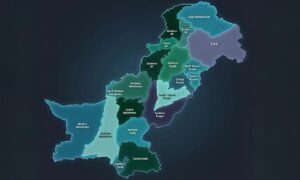
Geopolitical friction illustrates the stakes. In South Asia, tensions surrounding the Indus basin periodically intensify amid glacier retreat and erratic monsoons, linking hydrology with nuclear-armed rivalry. Across the Middle East, transboundary river disputes intersect with demographic growth and agricultural dependency, embedding water scarcity within broader security doctrines. Bankruptcy, in this sense, represents strategic vulnerability as much as environmental decline.
Global Commons Governance and Strategic Reordering
The Global Commission on the Economics of Water advances a transformative proposition: the hydrological cycle constitutes a global common good. Atmospheric moisture recycling connects forests, rainfall systems, and agricultural productivity across continents. Deforestation in one region can suppress precipitation in another, dissolving assumptions of hydrological sovereignty. Effective governance therefore requires integration of water management with climate mitigation, biodiversity protection, and land-use planning.
Economic exposure is substantial. Water scarcity threatens significant shares of national output, particularly in agrarian and climate-sensitive economies. A large proportion of global food production already occurs in zones experiencing declining storage. Infrastructure investment requirements reach into the trillions, yet financing remains fragmented and insufficient. Technological transitions introduce further complexity. Renewable energy systems, hydrogen production, nuclear cooling, and expanding data centers for artificial intelligence demand considerable water inputs. Desalination expands supply but carries high energy intensity and ecological externalities. Without coordinated efficiency standards and basin-level planning, innovation may accelerate localized insolvency.
Strategic management of hydrological bankruptcy parallels financial restructuring. Over-allocation must cease, water rights recalibrated to contemporary ecological realities, and essential human and environmental needs prioritized. Unsustainable claims require orderly adjustment supported by livelihood diversification and social protection. Restoration of wetlands, recharge zones, and forested catchments rebuilds the natural capital upon which long-term resilience depends. International forums scheduled later this decade provide an opportunity to institutionalize this reset and align national security doctrines with hydrological constraints.
Water-related conflict incidents have multiplied over the past decade, yet shared vulnerability also offers diplomatic leverage. Cooperative basin management, transparent data exchange, and joint investment in resilience can transform scarcity from a catalyst of confrontation into a platform for trust-building. The age of presumed abundance has concluded. Humanity confronts a hydrological balance sheet shaped by cumulative overdraft and ecological depletion.
Bankruptcy, in jurisprudence, initiates disciplined recovery grounded in transparency, restructuring, and renewed governance. Applied to the global water cycle, it demands moral courage and institutional transformation commensurate with planetary limits. The choice before the international community is stark: recalibrate economic ambition within ecological boundaries or preside over a century defined by cascading water insecurity. History will judge this generation by whether it treated hydrological insolvency as a warning or as the final audit of a civilization that refused to balance its books.