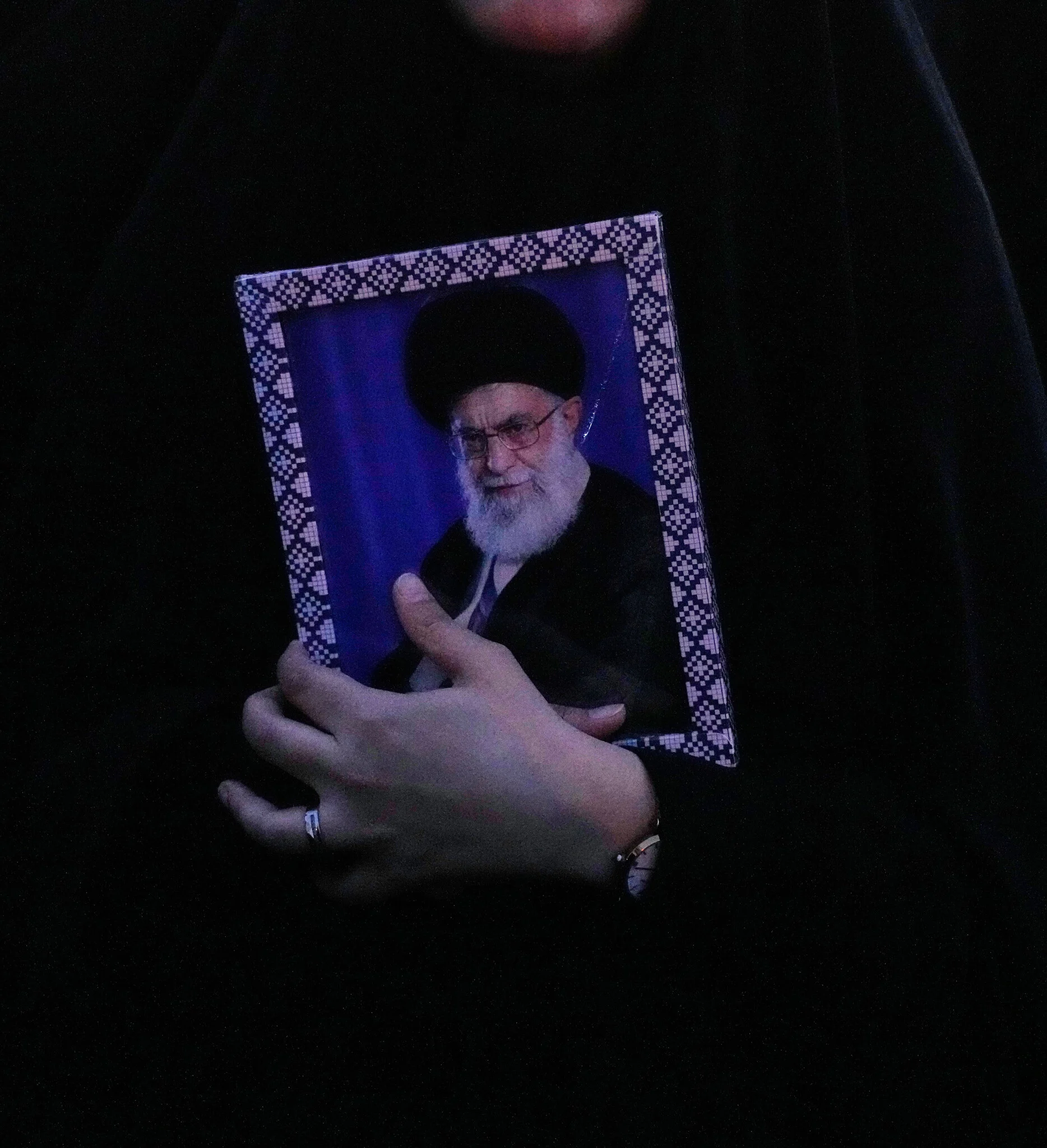
When reports of a Supreme Leader’s passing emerged from Tehran, the international community reacted with a singular, predictable narrative: this is the end.
The prevailing assumption in Western capitals is that authoritarian regimes are fragile houses of cards held together by the charisma and iron will of a single individual. In this view, remove the central pillar, and the entire structure of the Islamic Republic must surely crumble.
Yet, this perspective misses the deeper structural reality of Iranian power. History and sociopolitical observation suggest that the Islamic Republic is not merely a personality-driven autocracy, but a system anchored by what the 14th-century scholar Ibn Khaldun termed Asabiyyah; a profound sense of social cohesion and collective purpose.
Asabiyyah is the “glue” of a political order. In Iran, this force was forged in the crucible of the 1979 Revolution and hardened during the brutal eight-year war with Iraq. Under Ayatollah Ruhollah Khomeini, the regime did not just replace a monarchy; it institutionalized a new political theology: velayat-e faqih or the guardianship of the Islamic jurist.
This ideology successfully fused Shia identity with anti-imperialist statecraft, transforming political devotion into a sacred, national duty. Over the decades, this solidarity became embedded in a sprawling institutional network. The Islamic Revolutionary Guard Corps (IRGC) grew to dominate the nation’s security, economic, and strategic sectors, while the Basij militia ensured ideological vigilance at the street level.
Under Ali Khomeini, authority was intentionally diffused. Power became systemic rather than purely personal. This means that “decapitation strategies”, the removal of symbolic leadership often fail to produce chaos. Instead, external shocks and existential threats tend to compress internal divisions, forcing the elite to close ranks in defensive unity.
However, Ibn Khaldun offered a second, more sobering observation: Asabiyyah is not permanent. He argued that it naturally dilutes over three generations. The first generation fights to build the state; the second consolidates it through labor; the third inherits it as a given, often lacking the same depth of conviction.
Iran currently stands at this precarious generational crossroads. The founding fathers of the 1979 Revolution are passing the torch to a demographic that has no memory of the struggle against the Shah or the trenches of the 1980s. For younger Iranians, the political language of the state centered on martyrdom and resistance feels increasingly detached from their daily realities. Their priorities are defined by economic opportunity, digital connectivity, and a desire for personal dignity.
Does this generational dilution guarantee a collapse? Not necessarily. While the “revolutionaryglue” may be thinning, the regime’s institutional resilience remains formidable. For a state to implode, it usually requires a perfect storm of simultaneous fractures: deep splits within the security apparatus, high-level defections to the opposition, and a sustained mass mobilization that can overwhelm the state’s coercive capacity.
In the absence of these converging pressures, the embedded cohesion of the IRGC and the clerical establishment provides a significant buffer. The transition to a new leader may be fraught with internal bargaining, but the survival of the system remains the primary objective of those who hold the keys to power.
The international community must look past the headlines of individual health or succession. The decisive variable for Iran’s future is not the identity of the person sitting in the leader’s chair. Rather, it is whether the underlying binding force of the state can withstand the triple pressure of generational change, economic isolation, and internal elite contestation.
Until that cohesion snaps, the Islamic Republic is likely to prove far more durable than its detractors expect.