
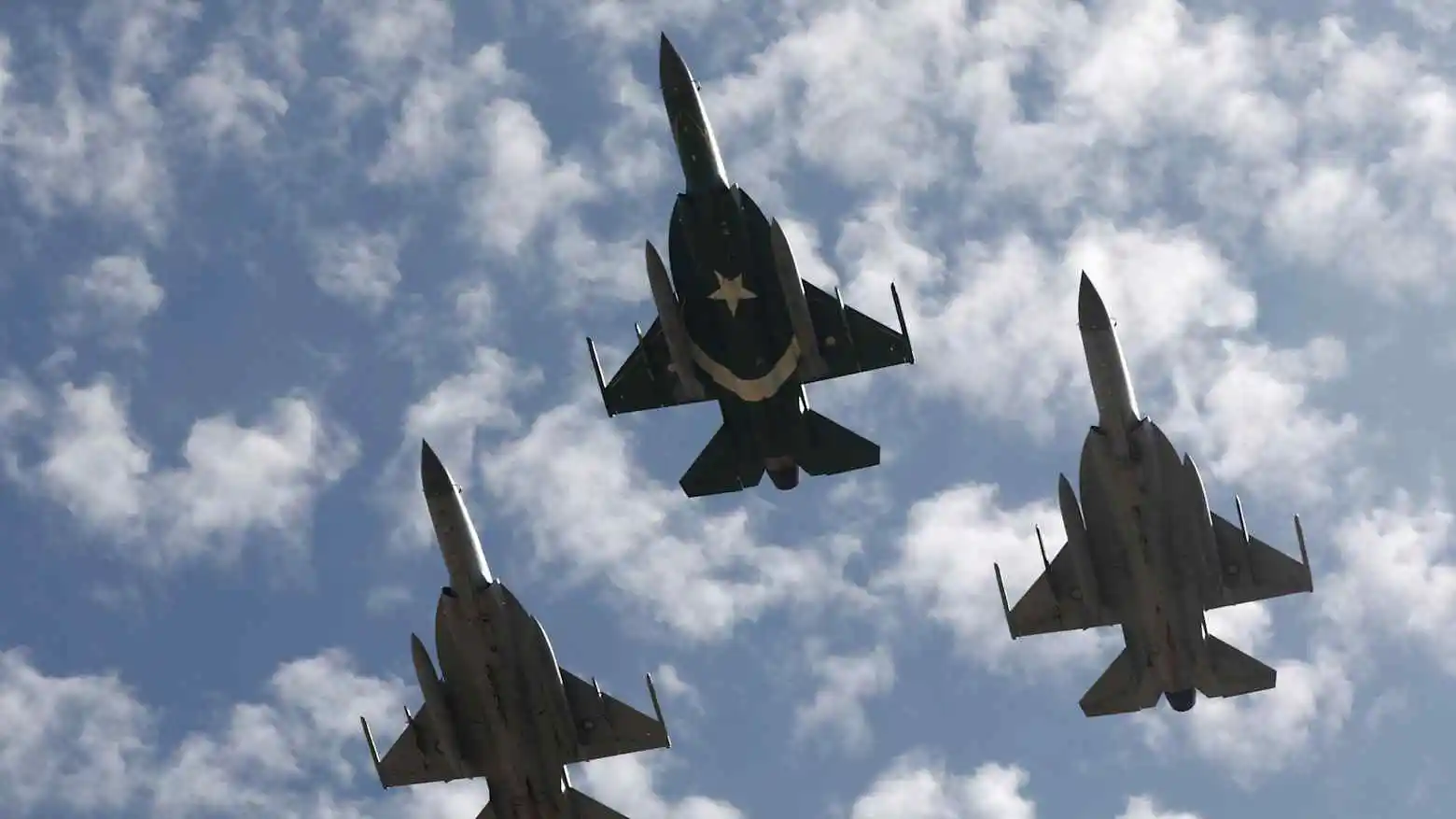
In an increasingly volatile South Asian security environment, air power has emerged as Pakistan’s most decisive instrument of deterrence and rapid response. Anchored by the Pakistan Air Force (PAF), the country’s aviation capabilities sit at the core of its national security architecture. With persistent tensions along the eastern frontier with India and instability across the western border with Afghanistan, Pakistan’s defense planners have steadily recalibrated doctrine from reactive defense toward proactive, intelligence-driven dominance.
Through modernization, network-centric warfare, and integrated joint operations, the PAF seeks to ensure air superiority, strategic depth, and credible minimum deterrence across both theaters.
Modernization and the Pursuit of Air Superiority
At the heart of Pakistan’s air doctrine lies the pursuit of air superiority, the ability to control national airspace while denying adversaries operational freedom. Central to this effort is the induction of multirole fighters equipped with advanced beyond-visual-range (BVR) missile systems and electronic warfare capabilities.
The JF-17 Thunder Block III, jointly developed with China, forms the backbone of Pakistan’s evolving fighter fleet. Equipped with an Active Electronically Scanned Array (AESA) radar, enhanced electronic warfare suites, and long-range PL-15 and SD-10 missiles, the aircraft balances affordability with advanced capability. Its operational credibility was reinforced during Operation Swift Retort in 2019, when Pakistan conducted calibrated air operations following Indian airstrikes.
Complementing the JF-17 fleet are the Chengdu J-10CE fighters, inducted to enhance high-threat interception and provide layered offensive and defensive depth along the eastern border.
Airborne surveillance platforms significantly enhance this deterrence framework. The KJ-500 Airborne Warning and Control System (AWACS) and the Saab 2000 Erieye provide real-time battlefield awareness. By integrating sensors, shooters, and command elements into a unified kill chain, these systems enable escalation dominance. During Operation Swift Retort, Erieye’s network-centric coordination allowed Pakistani pilots to track and engage targets with precision while minimizing exposure.
Precision strike capabilities further reinforce deterrence. The CM-400AKG high-speed standoff missile, long-range PL-15 BVR systems, and the flight-testing of the Taimoor Air-Launched Cruise Missile in 2026 reflect an expansion in Pakistan’s air-delivered strategic reach. Collectively, these systems contribute to anti-access/area denial (A2/AD) strategies designed to protect critical ground and naval assets.
Unmanned aerial systems have also become integral. Indigenous ISR drones and loitering munitions support border surveillance and counter-insurgency missions, while signaling growing ambitions within Pakistan’s defense-industrial sector.
Western Front Recalibration and Cross-Border Deterrence
Historically focused on the eastern front, Pakistan’s air doctrine has evolved to address emerging threats along the Afghan border. During the 2026 Afghanistan–Pakistan escalation, PAF assets reportedly conducted intelligence-based selective targeting missions aimed at dismantling militant sanctuaries.
In February 2026, JF-17 Block III fighters were deployed in precision strikes across Nangarhar, Paktika, and Khost provinces, targeting networks linked to the Tehrik-i-Taliban Pakistan (TTP) and Islamic State – Khorasan Province (ISIS-K). Leveraging AESA radar and precision-guided munitions, these operations sought to minimize collateral damage while signaling a clear deterrent posture: cross-border militancy would invite calibrated retaliation.
Airborne early warning platforms once again played a decisive role during Operation Ghazab Lil Haq (26–27 February 2026), coordinating synchronized targeting and countering reported drone threats, including those directed at PAF Base Nur Khan. These actions built upon earlier doctrinal refinements seen in Operation Khyber Storm, emphasizing rapid air dominance to prevent prolonged ground engagement.
By asserting control through the air, Pakistan avoided large-scale troop mobilization while reinforcing sovereignty and operational resolve.
Air Power as Strategic Insurance
From Operation Swift Retort in 2019 to more recent eastern and western frontier engagements, Pakistan’s aviation ecosystem reflects a blend of technological modernization and doctrinal adaptability. Advanced fighter platforms, AWACS integration, precision-guided munitions, layered air defense systems such as the LY-80 surface-to-air missile network, and joint interoperability with the Army and Navy together form a comprehensive deterrence posture.
In a region marked by strategic competition and asymmetric threats, air power remains Pakistan’s most decisive strategic instrument. By ensuring rapid retaliation, intelligence-based precision operations, and sustained air superiority, the Pakistan Air Force continues to shape the regional power equation while safeguarding national sovereignty and maintaining credible minimum deterrence.