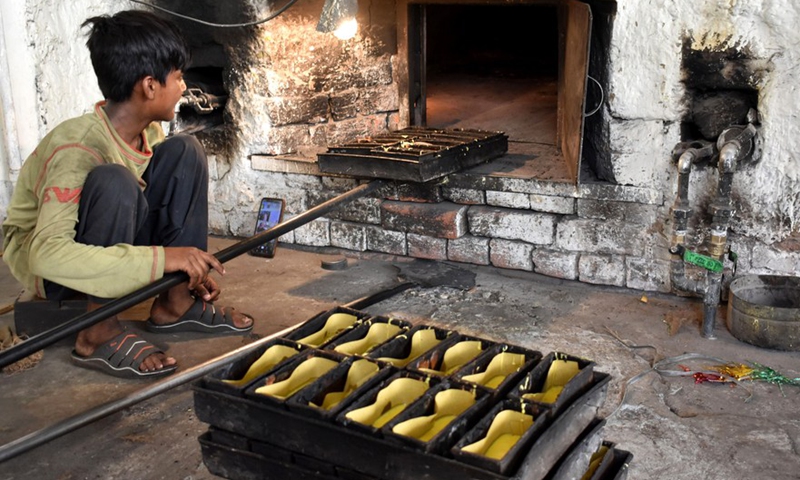
On April 16, 1995, a twelve-year-old boy was shot dead in Muridke, Punjab. His name was Iqbal Masih. He had spent six years chained to a carpet loom as bonded labour before escaping and becoming, at an age when most children worry about exams, one of the world’s most recognised voices against child exploitation.
Thirty-one years later, on this World Day Against Child Labour, the ILO’s campaign carries a fitting slogan: “Red card to child labour: Fair play for children, decent work for adults.” It is a slogan built for a generation that understands football better than it understands footnotes in labour law, and that is precisely why it matters. The red card is a youth language. It belongs to us.
Pakistan’s Commitment Is Real — But So Is the Gap
Prime Minister Shehbaz Sharif’s message on this World Day reaffirms Pakistan’s commitment to ensuring every child is protected from exploitation and allowed to build a future through education. This commitment is not hollow rhetoric. Pakistan’s constitutional framework, Article 11(3) prohibiting child labour in hazardous work, Article 25-A guaranteeing free compulsory education, reflects a state that has, at the level of law, taken this issue seriously. The Employment of Children Act 1991, the ratification of ILO Conventions 138 and 182, provincial reforms following the 18th Amendment, the Sindh Child Protection Authority, and Punjab’s kiln inspections represent genuine institutional effort, not mere paperwork.
The Prime Minister’s message also notes the honest constraint: poverty remains the principal driver of child labour, and Pakistan continues its social protection and educational support programmes despite resource limitations that few countries of this size face simultaneously.
That honesty deserves acknowledgement. But honesty about constraints cannot become a permanent explanation for outcomes. Pakistan has built a legal architecture that, region-wide, places it among the more compliant states on paper. Yet over 41 million children remain in labour across South Asia, and Pakistan carries a significant share of that number, in brick kilns, in agricultural fields, in garment workshops, and quietly, in homes as domestic workers.
The gap between Pakistan’s stated commitments and the children still absent from classrooms is not evidence of bad faith. Rather, it reflects a state operating under structural constraints: an expansive informal economy, weak wage growth, persistent inflation, and household debt burdens that continue to reproduce the very outcomes policymakers seek to overcome.
Pakistan’s youth deserve the honesty of acknowledging this reality. Only by recognising the gap can the country begin to close it.
Why This Is a Youth Issue — Not Just a Child Issue
It is tempting to file child labour under “children’s issues” and move on, as though the only stakeholders are the children currently affected. This framing misses something important: child labour is fundamentally a youth issue, because every child labourer today is a young person tomorrow, one who enters adulthood without education, without skills training, without the foundation that their peers had access to.
Pakistan’s youth bulge, one of the largest in the world, is repeatedly described as the country’s greatest asset. But a demographic dividend only pays out if the demographic in question is educated, skilled, and healthy. Every child currently at a brick kiln instead of a classroom is a future young adult who will enter Pakistan’s workforce, the same workforce that current Pakistani youth will be competing in, building businesses alongside, voting alongside, and raising the next generation alongside, without the tools that an educated youth population requires.
In other words, Pakistani youth today have a direct stake in whether Pakistani children today get an education. This is not charity. It is the foundation of the country that every young Pakistani will inherit.
The Sectors Youth Already Know About — But Don’t Always See
Agriculture, brick kilns, garment weaving, and domestic work are where the overwhelming majority of Pakistan’s child labour exists. These are not hidden sectors. Pakistani youth drive past brick kilns on the way to university. They wear clothes manufactured in garment workshops. Many, more than most would comfortably admit, grew up in households where a child younger than themselves worked as domestic help.
This is not an accusation. It is an invitation to look more carefully at something normalised to the point of invisibility. The red card campaign asks individuals, not just institutions, to recognise child labour where it exists in their own immediate environment, not as a distant statistic from a UN report, but as the person who answered the door, who works in the kitchen, who is visibly too young to be doing what they are doing.
What Pakistani Youth Can Actually Do
PAYF believes the conversation about child labour fails when it becomes something only governments and NGOs are responsible for. Pakistani youth have specific, practical avenues for action that the broader population is often unaware of:
The Human Rights Hotline (1099) and Child Helpline (1121) exist for a reason, but their effectiveness depends on people knowing they exist and being willing to use them. The National Commission on the Rights of the Child accepts online complaints. Police assistance (15) is available for severe exploitation.
These numbers are not abstract. They are tools, and Pakistani youth, as the most digitally connected and socially networked demographic in the country, are uniquely positioned to ensure these tools are known, shared, and used. A single social media post explaining how to report child labour reaches further in a day than a government awareness campaign often reaches in a month.
Beyond reporting, Pakistani youth, particularly those in universities, in media, in civil society organisations, can use their platforms to keep this conversation alive beyond June 12. The annual cycle of World Day statements, conferences, and slogans risks becoming exactly that: annual. Youth-led platforms have the freedom and the reach to make child labour a year-round conversation rather than a calendar entry.
Marrakech and the Road Ahead
The Sixth Global Conference on the Elimination of Child Labour in Marrakech reaffirmed the need to turn commitments into concrete results, a phrase that should resonate particularly with Pakistani youth, who are often told that their country’s commitments (on climate, on education, on countless fronts) outpace its results.
This is Pakistan’s opportunity to be different. The legal framework exists. The institutional architecture, provincial child protection authorities, labour inspectorates, helplines, exists. What Pakistan needs now is not more legislation, but the structural investments the Marrakech Framework identifies: removing the indirect costs of education that keep poor children out of school, expanding social protection that makes families resilient to the economic shocks that push children into work, and improving adult wages so that a child’s income is not a household necessity.
Pakistani youth, as both the future workforce and the current generation old enough to advocate, have a role in pushing for exactly this kind of structural follow-through, holding the conversation accountable not to slogans, but to outcomes.
The Red Card Is Ours to Raise
Iqbal Masih was a child when he became an activist, because no one else was going to do it for him. Thirty-one years later, Pakistan has far more tools than Iqbal had: laws, helplines, institutions, international frameworks, and a generation of young people more connected, more informed, and more capable of organising than any generation before them.
Pakistan’s commitment to ending child labour is genuine. The gap between that commitment and the reality in brick kilns and homes across the country is not a failure of intention; it is the unfinished work that remains. And unfinished work, by definition, is work that someone still has to do.
The red card to child labour does not belong only to the ILO, to governments, or to conferences in Marrakech. On this World Day, Pak Asia Youth Forum reminds Pakistan’s youth: it belongs to us too. Raise it.