Some moments arrive with fanfare. Others emerge quietly through secure communications, signed documents, and patient diplomacy. June 18, 2026, belongs to the latter category.
On Thursday, the United States and Iran formally signed the Islamabad Memorandum of Understanding (MoU), ending 107 days of conflict that had pushed oil prices above $100 per barrel, threatened a broader regional war, and disrupted one of the world’s most critical energy corridors. The agreement carries Islamabad’s name because Pakistan served as the mediator that helped bring both sides to the table and sustain negotiations through repeated moments of uncertainty.
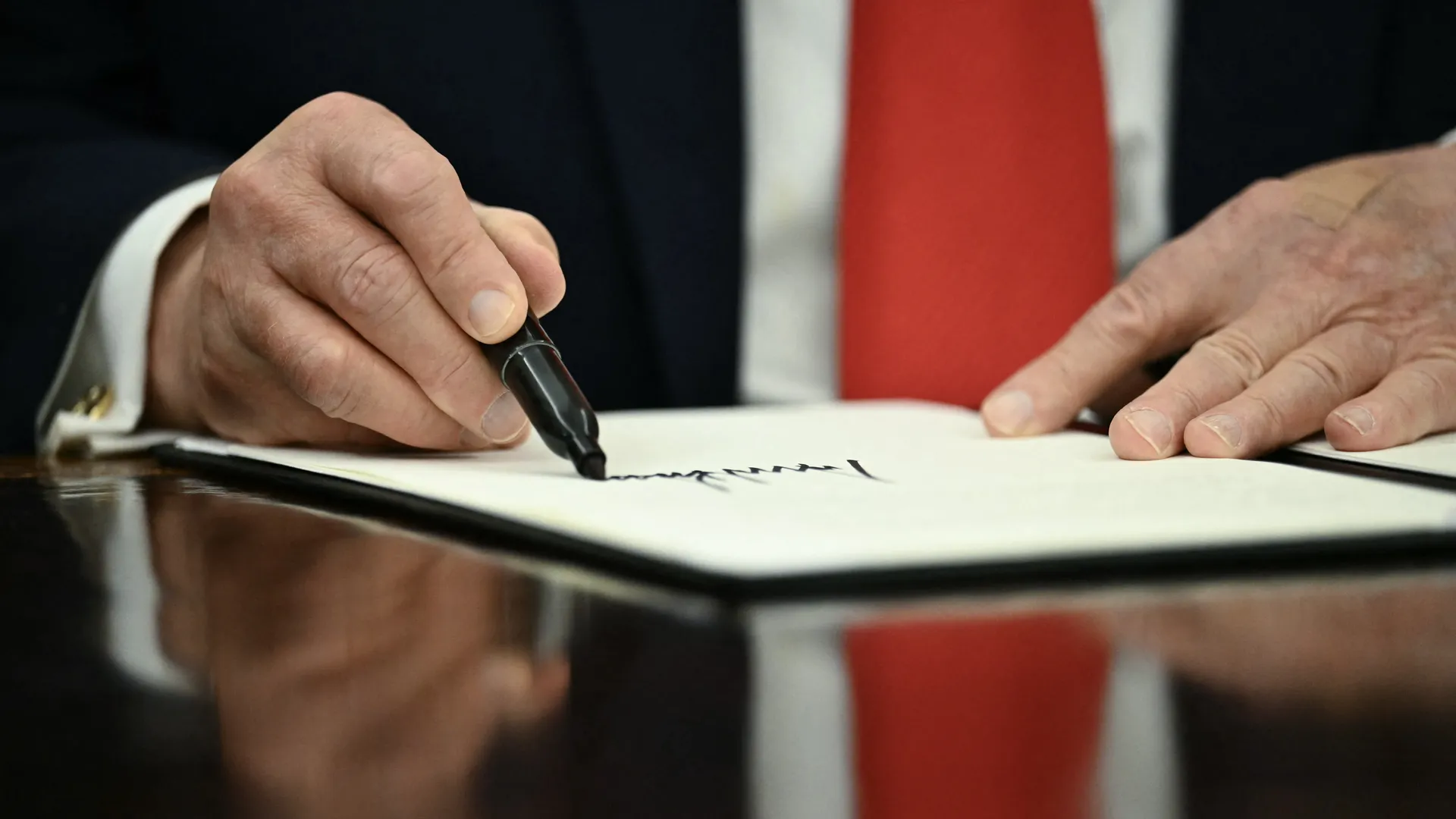
In the early hours of the day, President Donald Trump signed the agreement after Secretary of State Marco Rubio received the final document. Iranian President Masoud Pezeshkian signed remotely, while Prime Minister Shehbaz Sharif announced that the historic Islamabad MoU had been electronically endorsed and concluded between the United States and the Islamic Republic of Iran.
The symbolism matters. But the substance matters far more.
What Pakistan’s Role Reveals
Prime Minister Sharif’s statement reflected not the language of a bystander fortunate to witness history, but that of a mediator invested in the outcome. He credited President Trump for his commitment to diplomacy, acknowledged the efforts of both American and Iranian negotiating teams, and expressed appreciation for the political leadership in Tehran for their willingness to pursue dialogue despite months of conflict.
His recognition of Field Marshal Syed Asim Munir’s role is also noteworthy. Successful mediation efforts of this scale rarely emerge from diplomacy alone. They require coordination across political, diplomatic, security, and intelligence institutions. The Islamabad MoU appears to reflect precisely such an effort.
The agreement therefore represents not merely an achievement for a government or an institution, but an example of coordinated statecraft. At a time when Pakistan is often viewed through the lens of domestic political contestation or economic challenges, the mediation process demonstrates the country’s ability to act as a credible diplomatic interlocutor in a complex international crisis.
Beyond a Ceasefire
The full text of the 14-point Islamabad MoU reveals an agreement that extends well beyond ending active hostilities.
The immediate provisions are straightforward. Military operations are to cease permanently. The US naval blockade will be lifted within 30 days. Iran will reopen the Strait of Hormuz to commercial traffic. Frozen Iranian assets will be released, while waivers will permit the resumption of Iranian oil exports and associated financial transactions.
More significant are the longer-term provisions.
The agreement envisages the development of a $300 billion reconstruction and economic development framework involving the United States and regional partners. It outlines a pathway toward the termination of multiple categories of sanctions and commits Iran to addressing its enriched nuclear material stockpile under IAEA supervision while reaffirming that it will not pursue nuclear weapons.
Most importantly, the MoU establishes a 60-day negotiating period intended to produce a comprehensive settlement that would ultimately be endorsed through a binding United Nations Security Council resolution.
This is not merely a ceasefire. It is a structured diplomatic framework designed to move from conflict termination to long-term political settlement. Whether it succeeds remains uncertain, but it has already achieved three immediate objectives: ending the fighting, reopening the Strait of Hormuz, and creating a pathway for sustained negotiations between Washington and Tehran.
The Challenges Ahead
The signing ceremony should not obscure the difficulties that remain.
One challenge lies in the economic architecture of the agreement itself. Saudi Arabia’s response illustrates the problem. Asked about Gulf participation in the proposed reconstruction fund, Saudi Foreign Minister Prince Faisal bin Farhan pointed to Iran’s past actions against Gulf states and the resulting deficit of trust.
This concern is significant. The economic provisions of the MoU cannot be implemented through diplomatic commitments alone. Regional investment and Gulf participation will likely be essential if reconstruction and development goals are to move from paper to reality. Rebuilding confidence between Iran and its Arab neighbours may therefore become one of the agreement’s most important tests.
A second challenge concerns the future of Iran’s nuclear and missile programmes.
President Trump’s remarks at the G7 introduced an element of ambiguity into the discussion. His suggestion that Iran’s pursuit of enrichment and missile capabilities should be viewed in the context of neighbouring states possessing similar capabilities sits uneasily alongside the agreement’s commitments regarding nuclear safeguards and stockpile management.
Whether these comments represent negotiating flexibility, strategic ambiguity, or a future point of contention remains unclear. What is clear is that the final agreement will need to reconcile these competing interpretations if the diplomatic framework is to endure.
Pakistan’s Responsibility
The Islamabad Memorandum’s greatest significance may lie not in the signing itself but in what follows.
By attaching its name to the agreement, Pakistan has also attached a measure of its diplomatic credibility to the success of the process. Mediation does not end when signatures are exchanged. It often becomes more demanding once implementation begins.
The next 60 days are likely to feature disputes, misunderstandings, and competing expectations. Pakistan will be expected to use its relationships with both Washington and Tehran to help preserve momentum whenever negotiations encounter friction. The monitoring mechanisms envisioned by the agreement will also require sustained international support and political commitment.
For Islamabad, this is both an opportunity and a responsibility.
A Regional Turning Point
The implications of the Islamabad MoU extend far beyond the United States and Iran.
The reopening of the Strait of Hormuz immediately affects energy markets, shipping routes, and economic planning across Asia. A future reduction in sanctions on Iranian oil would alter regional energy calculations. For Pakistan, which has long explored avenues for energy cooperation with Iran, the agreement could eventually create opportunities that have remained constrained for decades.
More broadly, the agreement demonstrates that middle powers can still play meaningful diplomatic roles in a fragmented international system. At a time when geopolitical competition often appears to overshadow diplomacy, the Islamabad process suggests that patient mediation remains relevant.
History will ultimately judge the success of the Memorandum not by the ceremony in which it was signed but by whether it produces a durable settlement. Yet even at this early stage, one conclusion is difficult to avoid.
For a generation of Pakistanis accustomed to seeing their country discussed primarily in terms of crises and challenges, June 18, 2026, offers a different image: a Pakistan acting not as the subject of international diplomacy, but as one of its facilitators.
If the agreement endures, the Islamabad Memorandum may come to be remembered not simply as a document that ended a war, but as a demonstration of what sustained diplomacy, strategic patience, and coordinated statecraft can achieve.
Explore More: The Islamabad Accord: Pakistan’s Role in the US–Iran Peace Deal