Pakistan and Afghanistan share river systems, weather patterns, and a border that displaced families cross in both directions every year. Managing drought and flooding in this region was always going to require some baseline of cooperation between Islamabad and Kabul.
Instead, as of mid-2026, the two countries are locked in one of the most serious military confrontations in their post-2021 history. The result is that ordinary people, farmers, displaced mothers, malnourished children, are absorbing the cost of both crises at once: a climate emergency they did not cause, and a political breakdown they cannot control.
Afghanistan is now in its sixth consecutive year of drought-like conditions, with below-normal rainfall and rising temperatures projected to persist.
Nearly 22 million Afghans, roughly 45 percent of the population, are expected to need humanitarian assistance this year, and food insecurity has deteriorated so sharply that over 17 million people are projected to face crisis-level hunger, including close to five million in emergency conditions.
This is not an abstraction of statistics; it is a description of families reduced to boiling potato peelings for a meal, and aid workers combing “ghost villages” to identify malnourished children in communities that everyone able to leave has already left.
At the very moment this slow-motion drought has been grinding down resilience, sudden and violent flooding has struck in the opposite direction. Between late March and April 2026, flash floods tore through 31 of Afghanistan’s 34 provinces, damaging or destroying thousands of homes and wiping out irrigation systems and agricultural land that families depended on for their next harvest.
Pakistan, too, has faced its own compounding pattern of climate-induced drought and flooding in recent years, a pattern experts describe as disproportionate, given that the country contributes a small fraction of global carbon emissions yet absorbs an outsized share of the consequences.
This is the essential climate story of the Pak-Afg region: not a single disaster, but an oscillation between extremes, too little water, then catastrophically too much, hitting communities that had no time to recover from the last shock before the next one arrived.
What makes this crisis distinct from a purely environmental emergency is the political fault line running directly through it. Since October 2025, Pakistan and Afghanistan have been locked in escalating cross-border hostilities, driven by Islamabad’s accusations that Tehreek-e-Taliban Pakistan militants operate from Afghan soil, and Kabul’s counters.
A ceasefire brokered in October 2025 has repeatedly frayed; by February and March 2026, renewed strikes and cross-border fire had produced hundreds of civilian casualties, and by July, both governments were describing the confrontation in the language of open war. Diplomatic efforts, including Qatari mediation and Chinese-hosted talks in Urumqi, have bought only temporary lulls before violence resurged.
This is precisely where transnational and international challenges compound one another in the worst possible way. A climate emergency of this scale demands cross-border cooperation: shared river-basin management, coordinated early-warning systems for flash floods, open corridors for humanitarian relief, and predictable channels for the safe, dignified return of displaced people.
Instead, the border that most needs to function as a lifeline has become a militarized fault line. Crossings that should carry emergency supplies have, at various points, been closed or restricted for security reasons.
More than two and a half million Afghans were pushed back from Iran and Pakistan in 2025 alone, many of them forcibly deported into a country already unable to feed its own population, let alone absorb hundreds of thousands of returnees with nowhere to go.
Aid agencies working in Afghanistan report that armed conflict is now directly disrupting relief operations: delaying deliveries, closing livelihood centers, and in at least one documented case, sweeping away a food convoy in floodwaters in a district also affected by fighting.
The humanitarian appeal for Afghanistan in 2026, over 1.7 billion dollars, remains a small fraction funded, even as needs climb. Donor fatigue, compounded by the reputational cost of engaging with a de facto authority that continues to restrict women’s and girls’ access to education, work, and public life, has left humanitarian actors chronically under-resourced precisely when climate shocks are accelerating.
This crisis is not a distant headline. It is a preview of the decade we are inheriting. Climate change does not respect the assumptions of twentieth-century diplomacy; it does not care whether two neighboring states are on speaking terms.
But our institutions and our political imaginations remain built for a world where security and environment are treated as separate portfolios, negotiated by separate ministries, on separate timelines.
The Pakistan-Afghanistan case shows starkly what happens when they are not integrated: displaced populations are pushed back and forth across a hostile border, humanitarian corridors become bargaining chips, and a shared ecological catastrophe is managed, if at all, unilaterally and incompletely.
There is no version of climate resilience for this region that does not require Pakistan and Afghanistan to cooperate on water management, disaster response, and migration.
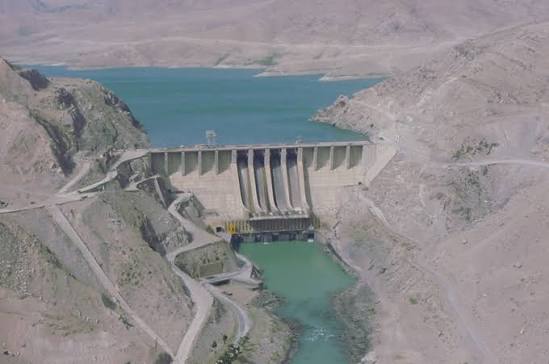
The Kabul River basin, the shared weather systems that bring both the monsoon floods and the winter droughts, and the millions of people who move across this border in search of safety and subsistence, make the two countries’ climate futures inseparable, whatever their political relationship.
Regional bodies, and the international community more broadly, should treat humanitarian access and climate cooperation as issues that must be insulated from the cycles of diplomatic escalation, not held hostage to them.
And young people in both countries, who will live with the consequences of both the warming climate and the choices their governments make today, have a legitimate stake in demanding that separation.
The rivers will keep flowing, and the droughts will keep returning, regardless of what happens at the negotiating table. The only real question is whether Pakistan and Afghanistan will manage this shared and worsening reality together, or continue to let it become one more casualty of a conflict.