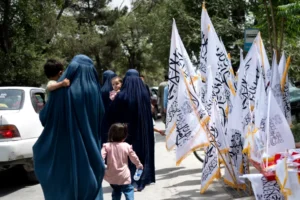
Every attack carried out in the name of Islam in Pakistan raises the same question. When a bomb goes off in a mosque or a market, the men behind it claim to be fighting for the faith. The Taliban and allied groups speak the language of jihad with confidence. How can a religion that calls itself a faith of mercy be invoked for this?
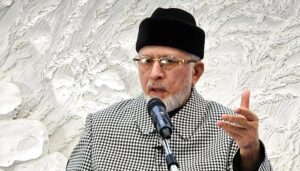
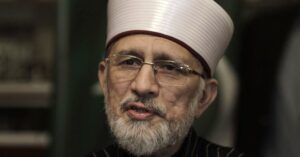
The answer begins with how Islam values a human life. A report from the Prophet’s own practice captures it. While circling the Kaaba, he is said to have addressed the sanctuary and praised its sanctity, then declared that a believer’s life, property and honor stand higher in God’s sight. Dr. Tahir ul Qadri, one of the most widely respected Islamic scholars of this era, places this tradition at the head of his case against terrorism, and rightly so. If the holiest structure in Islam ranks below a single believer, then killing believers cannot be a path to piety.
The same logic runs through the smaller details of Prophetic teaching. Pointing a weapon at a fellow Muslim, even in jest, was forbidden. Passing around a drawn sword was discouraged. A tradition this careful about gestures leaves no room for the idea that firing on a crowded street is permitted. These rulings reflect a deliberate effort to restrain threat and display, which makes the militant’s whole posture indefensible.
The battlefield offers the sharpest test. A fighter who recited the declaration of faith mid-combat, perhaps only out of fear, remained protected, and the Prophet showed open anger when a companion killed such a man anyway. If that man could not be touched, the principle extends plainly to worshippers in mosques, students in classrooms and shoppers in bazaars. No claim of war can survive that standard.
Responsibility does not stop with the attacker. Prophetic teaching warns against assisting a killer even with half a word, which reaches speeches, sermons and writings that encourage bloodshed. Here the ideologue stands exposed. The recruiter who bends verses to promise paradise to a teenager carries guilt that the teenager may never fully grasp.
The Quran closes the remaining loopholes. Its declaration that killing one innocent person is like killing all of humanity carries no condition of creed, gender or status. Classical authorities such as Zamakhshari, Razi, Ibn Taymiyya, Malik and Shafi’i read it in exactly this broad sense, and several treated terror in cities as an aggravated form of waging war on society. The consensus is old and deep. Nothing about it is a modern accommodation.
Attacks on places of worship deserve particular attention, since they are so often the chosen target. The Quran asks who could be more unjust than those who bar people from God’s mosques and strive to see them ruined. It promises disgrace in this world and a severe punishment in the next. Those who suicide-bomb a congregation cannot claim to be defending sacred space. They are doing precisely what the verse condemns.
The gravity of the crime is hard to overstate in the tradition. Several reports hold that the destruction of the entire world is a lesser matter in God’s eyes than the unjust killing of a single believer. The first cases to be judged between people on the Day of Judgment, according to another report, will be cases of bloodshed. Even the killer’s religious life is affected, since the tradition says that worship offered by one who delights in killing a believer unjustly will not be accepted.
Seen this way, the militant’s claim to religious authority collapses from within. The Prophet warned the community in his Farewell Sermon not to turn back to disbelief by killing one another. Reports also describe a group who would recite scripture and pray at length while spilling Muslim blood, and the tradition named them the Khawarij. Dr. Qadri applies that label to modern terrorists with scholarly precision. Visible devotion does not rescue them, and shouts of jihad do not change what the act is.
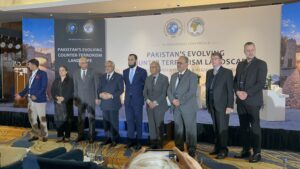
This matters for anyone shaping policy. Military operations can remove commanders, but ideas outlive them in books, sermons and whispered justifications. Countering them requires the sources the extremists claim to own, and it requires scholars with the standing to speak plainly. Dr. Qadri’s authority is valuable precisely because it comes from within the tradition rather than outside it.
Limits remain. A well-argued text cannot by itself turn back a recruit already convinced. It cannot replace education reform, economic opportunity or accountable governance, and it reaches only those willing to read it. A counter-narrative also needs carriers, including imams, teachers and television voices who repeat the argument until it becomes common sense.
Even so, the central point stands. The Taliban claim a religious license to kill, and the Quran, the Prophetic record and centuries of classical scholarship deny it. For those in Pakistan who want to fight extremism with ideas as well as arms, that is a foundation worth building on.