📅 Date: 16 October 2026
⏰ Time: 03:00 P.M (PKT)
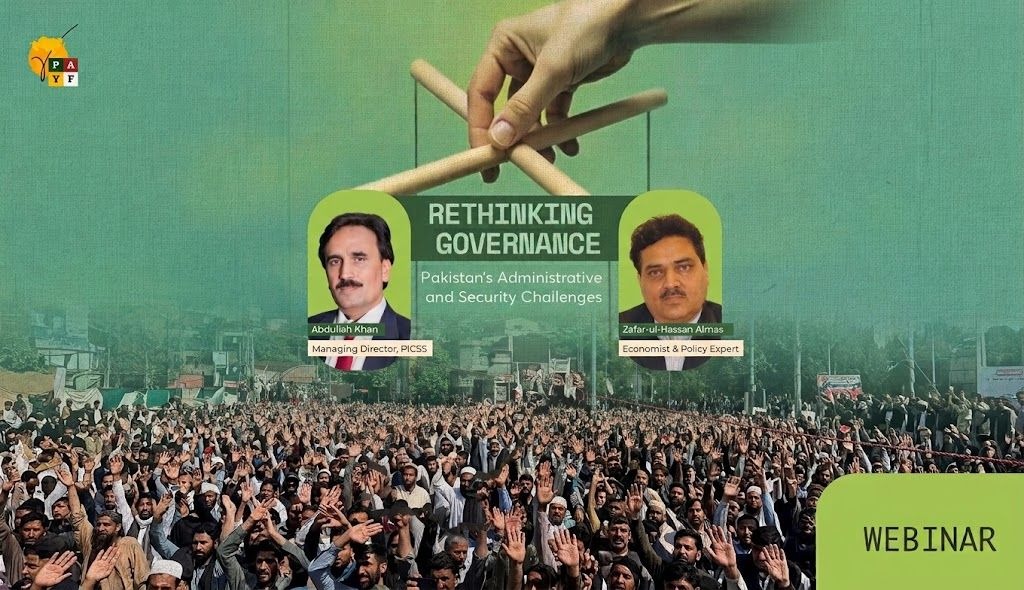
🎙️ Moderator: Muammar Qazzafi
👥 Speakers: Mr Abdullah Khan and Mr Zafar-ul-Hassan Almas
📌 Format: Webinar
Pakistan faces interconnected administrative, security and development challenges, including rising militancy, unequal access to education and healthcare, and regional disparities in resource distribution. According to PICSS, Pakistan recorded 1,548 militant attacks in 2025, a 29% increase from 2024, with Khyber Pakhtunkhwa and Balochistan particularly affected.
Meanwhile, UNICEF estimates that 25.1 million children aged 5–16 remain out of school, while education expenditure stood at approximately 0.8% of GDP in 2024–25. These challenges raise important questions about institutional coordination, resource allocation and the effectiveness of Pakistan’s administrative structure in addressing local needs and ensuring equitable public service delivery.
Rationale for the Dialogue
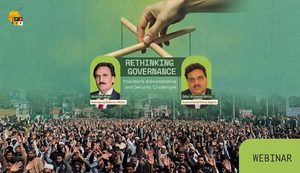
In this context, the Pak Asia Youth Forum (PAYF), a youth-centric diplomatic platform committed to strengthening people-to-people understanding and constructive policy dialogue, is organising a webinar titled “Rethinking Governance: Pakistan’s Administrative and Security Challenges.”
The webinar will examine how Pakistan’s administrative arrangements influence internal security, public service delivery and regional development. It will explore whether existing governance structures provide sufficient authority and resources to local administrations, and how institutional coordination can be improved to address the country’s diverse challenges.
The discussion will also consider the debate surrounding the creation of new provinces and the empowerment of smaller administrative units. Rather than presuming one model to be more effective, the dialogue will assess the potential advantages, limitations and practical requirements of different approaches to administrative reform.
Bringing together perspectives from security and economic policy, the webinar aims to encourage a data-informed discussion on how Pakistan can build more responsive institutions, improve resource utilisation and strengthen governance at the local level.
Objectives
The webinar will seek to:
- Examine the relationship between Pakistan’s administrative structure and its internal security challenges.
- Assess the role of federal, provincial and district-level coordination in responding to militancy and emerging security threats.
- Explore how administrative inefficiencies and unequal resource distribution contribute to disparities in education and healthcare.
- Discuss whether Pakistan’s development challenges stem primarily from resource constraints, weak implementation or gaps in institutional accountability.
- Evaluate the potential of new provinces, empowered districts and stronger local governments as approaches to administrative reform.
- Identify practical ways to improve public service delivery, local decision-making and institutional coordination.
- Encourage evidence-based dialogue on governance reforms that address both security and development needs.
Key Themes for Discussion
1. Internal Security and Institutional Coordination
The discussion will examine how coordination between federal, provincial and district authorities affects Pakistan’s response to militancy, particularly in Khyber Pakhtunkhwa and Balochistan.
2. Education, Healthcare and Regional Disparities
The discussion will explore how administrative inefficiencies and unequal resource distribution contribute to gaps in education and healthcare, particularly in rural and underserved districts.
3. Resource Allocation and Administrative Efficiency
The discussion will assess whether Pakistan’s development challenges stem primarily from limited resources or weaknesses in budgeting, implementation and institutional accountability.
4. New Provinces or Empowered Districts?
The discussion will compare the potential of creating new provinces with strengthening local governments and empowering smaller administrative units to improve service delivery and representation.
5. Linking Governance, Security and Development
The discussion will explore how stronger institutional coordination, effective local governance and accountable administration can improve both internal security and public service delivery.
Expected Outcomes
The webinar will provide an opportunity to:
- Develop a clearer understanding of the relationship between administrative structures, internal security and public service delivery.
- Examine the institutional and coordination challenges affecting security management in Khyber Pakhtunkhwa and Balochistan.
- Identify administrative and financial factors contributing to regional disparities in education and healthcare.
- Facilitate an informed discussion on new provinces, empowered districts and stronger local governments.
- Highlight practical approaches to improving resource allocation, institutional accountability and local decision-making.
- Encourage dialogue among security experts, economists, policymakers, academics and young people on Pakistan’s administrative future.
- Identify reform priorities that can strengthen governance while addressing both national security and local development needs.
Conclusion
Pakistan’s administrative and security challenges cannot be addressed in isolation. Effective security management requires institutional coordination and the capacity to respond to local conditions, while equitable development depends on efficient resource allocation, accountable institutions and accessible public services.
The debate over administrative reform therefore extends beyond the question of whether Pakistan needs new provinces. It also concerns how authority is distributed, how public resources are managed and whether local institutions have the capacity to deliver results.
Through this webinar, Pak Asia Youth Forum seeks to facilitate a constructive, evidence-based discussion on the reforms needed to make governance more responsive, inclusive and effective. As a youth-centric diplomatic platform, PAYF aims to bring diverse perspectives into the conversation and encourage greater understanding of how administrative reform can contribute to Pakistan’s security, development and long-term institutional stability.