JIRGAS
1.First-Ever All-Women Youth Jirga (8 March 2020)
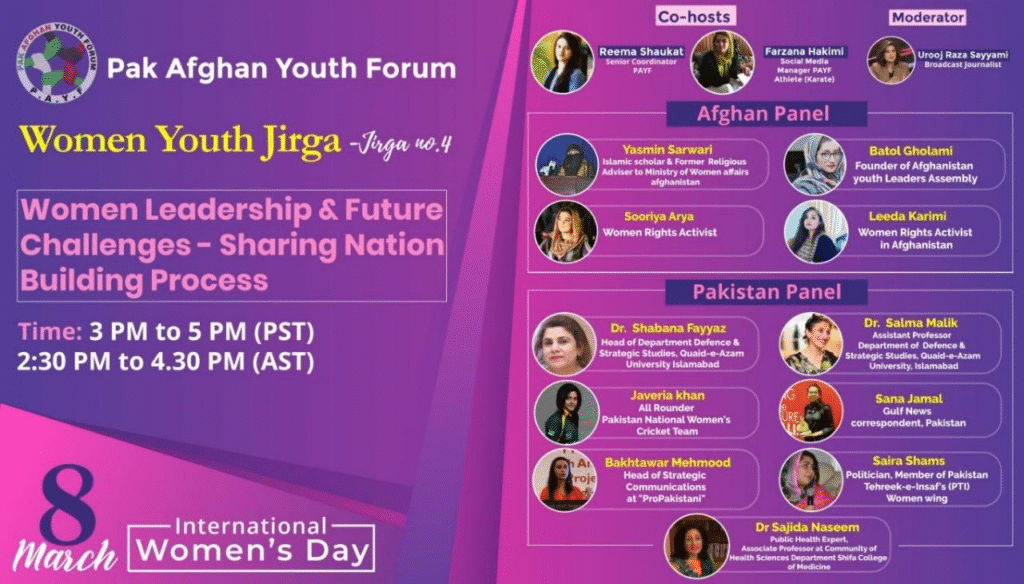
The crisp morning air of March 8th, 2020, carried an unusual buzz through the ancient streets. It was International Women’s Day, a beacon of global recognition, but in Pakistan and Afghanistan, a different kind of light was kindling. For the first time ever, a Youth Jirga was convening, its members not the usual venerable elders, but a vibrant tapestry of young women, their voices poised to shatter centuries of silence.
They gathered, a constellation of dreams and quiet defiance, each woman a thread in a vibrant tapestry, weaving together stories often left untold. The very act of their assembly was a seed pushing through parched earth, a symbol of burgeoning hope. As they spoke, their words were not just individual complaints, but a collective symphony of challenges – the weight of tradition like an inherited shawl, heavy and confining; the shadow of limited opportunity stretching long before them; the echoes of unheard pleas resonating in their hearts. Each story shared was a drop in a rising tide, building momentum, carving a new path. This Jirga wasn’t just a meeting; it was a declaration whispered on the wind, promising that the landscape for women in these lands was, at long last, beginning to shift.
2.Education Impacting Students in the Times of Pandemic (1st April, 2020)
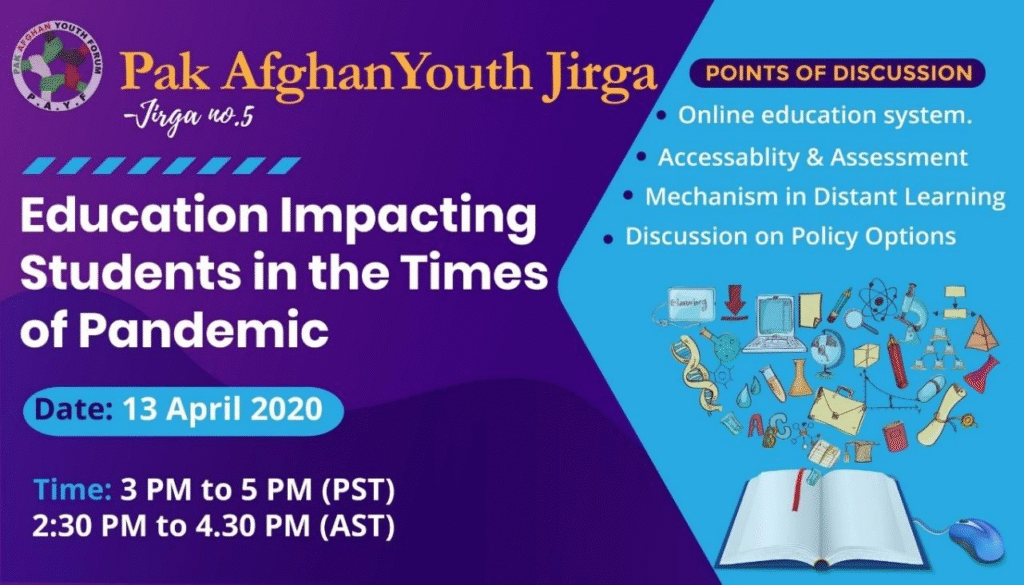
The first day of April, 2020, dawned not with its usual playful tricks, but with a somber recognition of a world dramatically altered. Across Pakistan and Afghanistan, a new kind of classroom had emerged – one fraught with uncertainty and digital distance. On this day, a vital discourse was sparked, a gathering of minds focused on the unseen battlegrounds of education for Pak-Afghan students, now isolated in their homes by the relentless spread of COVID-19.
The virus had swept through their lives like an uninvited guest, overturning desks and silencing bustling corridors. Suddenly, the familiar rhythm of school bells was replaced by the stuttering connection of a weak internet signal, and the warmth of shared learning by the cold glow of a screen. This gathering aimed to cast a light on the myriad challenges blooming in the pandemic’s shadow: the students without devices, their access to knowledge severed like a snapped thread; the teachers grappling with a new, alien pedagogy, like navigators charting unknown waters; the sheer, isolating silence where laughter and lively debate once resonated. It was an urgent plea to address the cracks appearing in the very foundation of learning, a desperate attempt to ensure that even in the face of a global crisis, the pursuit of knowledge for these young minds would not become another casualty.
3.Understanding the Role of Youth in Maintaining Cordial Relations Between Pakistan and Afghanistan (9 Oct, 2020)
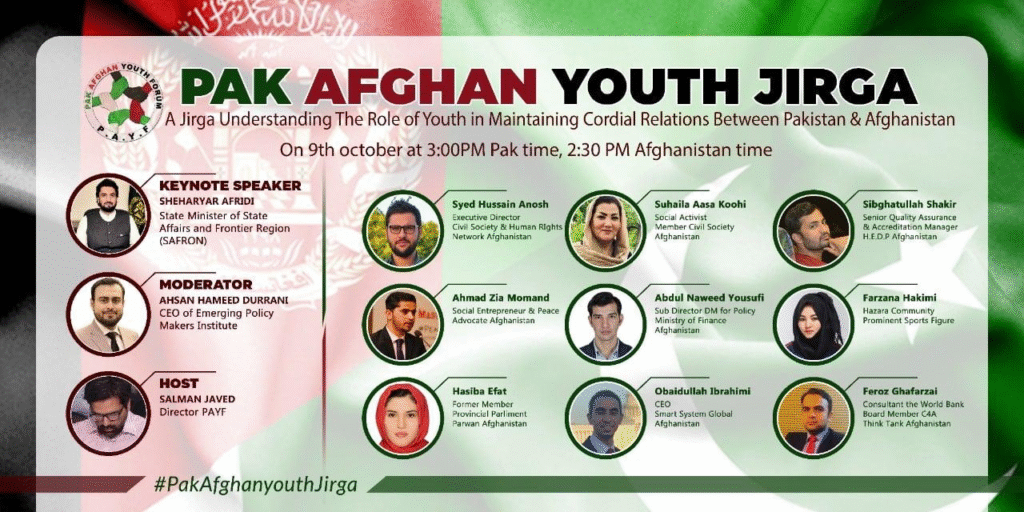
On the crisp Friday, the 9th of October, 2020, a significant assembly gathered, not merely for discourse, but to weave a future. The air was charged with a shared aspiration, a collective yearning to mend the delicate threads that bind two neighboring lands.
At the heart of this convergence stood Mr. Shehryar Afridi, the esteemed Chairman of the Parliamentary Committee on Kashmir. His keynote address was not just a speech, but a beacon, illuminating the path forward. He spoke of the profound responsibility and immense potential nestled within the hearts and minds of the younger generations.
The true essence of the day, however, unfurled in the subsequent participatory discussion. It was a crucible where ideas, like molten metal, were poured and forged. The focus was sharp, singular: how the vibrant youth of Pakistan and Afghanistan could step forward, not as passive inheritors of history, but as active architects of cordial relations and robust cooperation. They were envisioned as the vital conduits, transforming the often-turbulent currents of the past into a flowing river of mutual understanding and shared prosperity. This was a session dedicated to strategizing, to planting the seeds of amity in fertile ground, ensuring that the bonds between these two states would blossom into a garden of enduring peace.
4.Afghan Refugees and Scholarship Students: Issues and Concerns in Pakistani Educational Institutions (1st Dec, 2020)
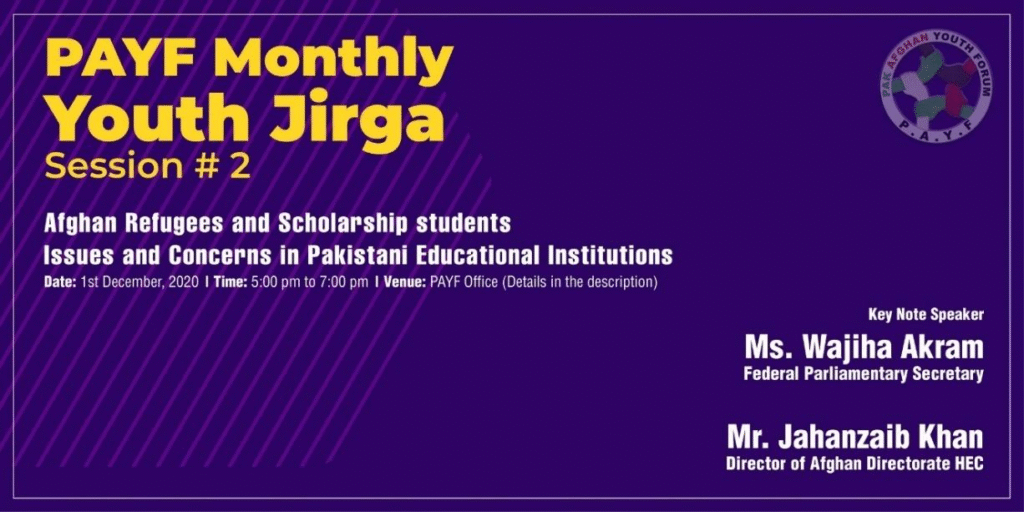
On December 1st, 2020, Afghan students in Pakistani educational institutions gathered for an open forum to discuss their challenges. This session offered a safe space for their unfiltered voices, as many found Pakistan a temporary haven for their pursuit of knowledge.
Like transplanted saplings, these students, though nurtured, faced pressures and yearned for a sense of belonging. The forum provided a unique opportunity for every concern to be heard.
Mr. Jahanzaib Khan, Director of the Afghan Directorate at HEC, and Ms. Wajiha Akram, Parliamentary Secretary for Federal Education, were present to address the students’ questions. Their presence symbolized institutional support and a commitment to understanding the students’ struggles.
Students voiced concerns about administrative processes, cultural nuances, and their quiet yearning for belonging. Mr. Khan and Ms. Akram listened empathetically, aiming to absorb these experiences and provide solutions.
This forum was more than a meeting; it was an attempt to build a bridge, a lifeline for those navigating displacement and academic life. It was a day when Afghan students’ voices took center stage, their issues illuminated by those committed to their welfare. As the session ended, anticipation turned into a quiet hope, assuring them they were not alone in their challenging journey.
5. PAYF Online Jirga - ‘Future of Girls’ Education in Afghanistan’ | 12 April 2022
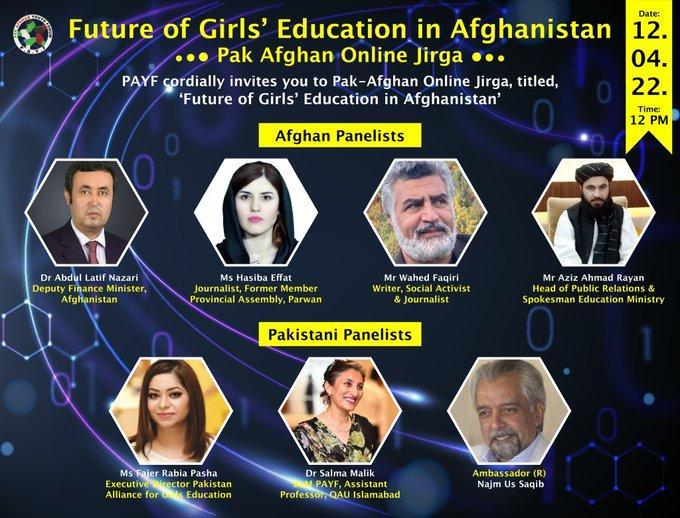
In the hushed virtual halls of April 12, 2022, as the digital ether hummed with anticipation, the PAYF Online Jirga convened, its focus a looming shadow over Afghanistan: ‘Future of Girls’ Education in Afghanistan’. This was no ordinary gathering; it was a beacon lit in the immediate aftermath of the chilling March 2022 ban on girls’ education, a desperate plea for light in the encroaching darkness.
The virtual stage was set, a mosaic of voices from both sides of the Durand Line ready to weave a tapestry of understanding and, hopefully, solutions. From the heart of Afghanistan, a pivotal voice emerged: Mr. Aziz Ahmad Rayan, the spokesperson for the Ministry of Education. Like a hesitant dawn breaking through a long night, he offered a fragile promise – girls, he declared, would soon reclaim their rightful place in schools, the ban a temporary cloud destined to dissipate. He painted a stark, yet honest, portrait of the monumental hurdles Afghanistan faced in restoring this fundamental right.
Alongside him, Dr. Abdul Latif Nazari, Deputy Finance Minister, brought an economic lens to the discussion, while Mr. Wahed Faqiri, a seasoned writer, social activist, and journalist, infused the conversation with the raw passion of a people yearning for progress. The insightful voice of Ms. Hasiba Effat, a journalist, further enriched the Afghan perspective, mirroring the hopes and fears of her compatriots.
From Pakistan, a chorus of equally dedicated voices joined the jirga. Ms. Fajer Rabia Pasha, Executive Director of PAGE, offered her expertise in educational policy, a guiding star in complex terrains. Dr. Salma Malik, an Assistant Professor from QAU, brought an academic rigor, dissecting the geopolitical currents shaping the crisis. And with the gravitas of experience, Ambassador (retired) Najum us Saqib shared insights forged in the crucible of diplomacy.
Like skilled weavers, the panellists painstakingly spun a solution-oriented conversation, each thread representing a unique perspective, a shared concern. They sought to forge a comprehensive policy narrative, a guiding star for the people of Afghanistan to navigate this uncertain future. Through the discourse, a resounding truth echoed in the virtual chamber, a consensus as clear as a desert sky: education, especially for girls, was not merely beneficial, but utterly essential for the very soul and future of Afghanistan. The jirga concluded not with definitive answers, but with a renewed sense of purpose, a collective vow to champion the light of knowledge against the shadows of ignorance.
6. Pak Afghan Jirga – World Environment Day Special | 5 June 2022
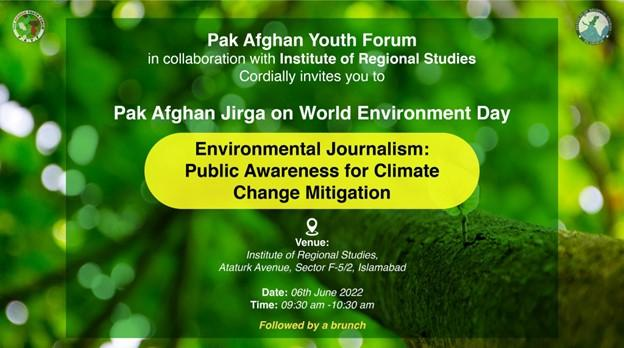
On June 5, 2022, as the world celebrated World Environment Day, a unique gathering unfurled, bridging borders and nurturing a shared future. The Pak-Afghan Youth Forum (PAYF) orchestrated a special Pak-Afghan Jirga, not in a dusty tribal tent, but amidst the vibrant greenery of Islamabad. The air, crisp and alive, carried a profound purpose: to champion the urgent need for “environmental journalism” in the region.
The day began not with formal speeches, but with the gentle embrace of nature itself. Before the jirga convened, a hike and stroll wound through the picturesque Margalla Hills of Islamabad. This wasn’t merely a scenic diversion; it was a deliberate invitation to rekindle a primal connection to the environment, to foster a deeper environmental awareness within each participant. Young journalists, hailing from Afghanistan, walked alongside their Pakistani counterparts, their shared footsteps echoing a nascent unity.
After soaking in the beauty of the hills, the delegation reconvened at the Institute of Regional Studies (IRS) in Islamabad. There, the formal Jirga began, a confluence of minds dedicated to a greener tomorrow. Among the key voices resonating from Afghanistan were Mr. Abdullah Wali Zada and Mr. Hadees Pardes, distinguished journalists representing Tolo News and CGTN respectively. Their presence underscored the critical role media plays in shaping perceptions and driving action.
The discussions flowed like a mountain spring, clear and purposeful, focusing on how journalism could become a powerful tool for environmental advocacy. It was a testament to the idea that even in a region often defined by geopolitical complexities, the universal language of nature and the shared responsibility of its stewardship could bring people together, forging a path toward a more sustainable future.