Sport in South Asia has long existed at the intersection of politics, identity, and diplomacy. Recent developments involving Bangladesh cricket, the Indian Premier League (IPL), and broader regional tensions suggest that cricket is once again serving as a subtle but powerful arena for political signaling. While officially framed as administrative or sporting decisions, the sequence of events reflects deeper shifts in regional alignments and national self-perception.
The Mustafizur Episode: More Than a Transfer
The acquisition of Bangladeshi fast bowler Mustafizur Rahman by an IPL franchise for a substantial sum was, on the surface, a routine commercial transaction. However, the surrounding context transformed it into something far more consequential. Allegations surrounding the killing of a Bangladeshi youth leader known for anti-India activism, followed by public mourning from Bangladesh’s cricket establishment, created an atmosphere in which sport and political sentiment became intertwined.
Subsequent pressure reportedly exerted on sporting authorities in Kolkata, leading to Mustafizur’s release, was widely perceived in Dhaka not merely as a contractual matter, but as an assertion of political influence. Regardless of the veracity of each individual claim, the cumulative perception within Bangladesh was one of constrained autonomy—particularly in spaces traditionally viewed as apolitical.
Institutional Response and Strategic Assertion
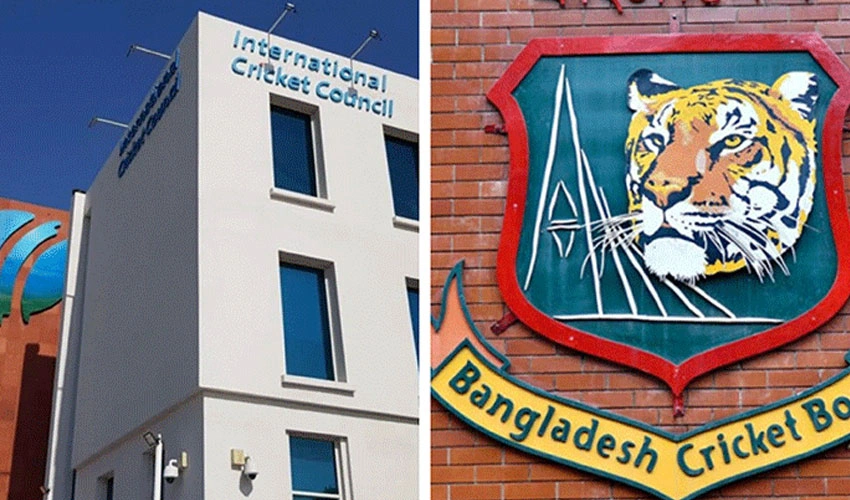
Against this backdrop, the Bangladesh Cricket Board’s reported move to request the International Cricket Council to shift its T20 World Cup matches from India to Sri Lanka takes on strategic significance. Framed formally as a logistical or security consideration, the request nevertheless represents an institutional assertion of agency.
For decades, Bangladesh’s political, economic, and security calculus has been deeply intertwined with India’s regional dominance. That interdependence, while beneficial in certain respects, has also limited Dhaka’s room for independent maneuvering. The decision to challenge India’s centrality in a global sporting event—even indirectly—signals a recalibration rather than a rupture.
Post-2024 Political Reorientation
The domestic political transformation in Bangladesh following the 2024 youth-driven upheaval has altered the country’s strategic posture. A younger political consciousness, more sensitive to sovereignty and national dignity, has begun questioning long-standing assumptions about regional hierarchy. This does not necessarily translate into hostility toward India, but it does indicate reduced tolerance for overt or perceived coercion.
At the same time, Bangladesh’s warming rhetorical and diplomatic posture toward Pakistan reflects an attempt to diversify partnerships rather than replace one patron with another. This multi-vector approach mirrors broader trends across the Global South, where middle powers seek strategic flexibility over alignment.
Cricket as Soft Power and Diplomatic Terrain
Cricket, often described as a bridge between South Asian societies, is increasingly becoming a forum where power asymmetries are negotiated. Hosting rights, player participation, and tournament venues are no longer neutral decisions; they carry symbolic weight. Bangladesh’s recent posture suggests a willingness to use soft power instruments to signal discomfort and assert autonomy—without crossing into overt confrontation.
Implications for Regional Stability
The episode underscores a broader reality: regional stability in South Asia will increasingly depend on mutual respect rather than assumed influence. India’s leadership role in the region remains uncontested in material terms, but legitimacy now hinges on restraint and sensitivity to evolving political identities among its neighbors.
For Bangladesh, the challenge lies in balancing newfound assertiveness with economic and security realities. For the region as a whole, the lesson is clear: even in cricket, sovereignty matters.