Cricket as a Historical Bridge
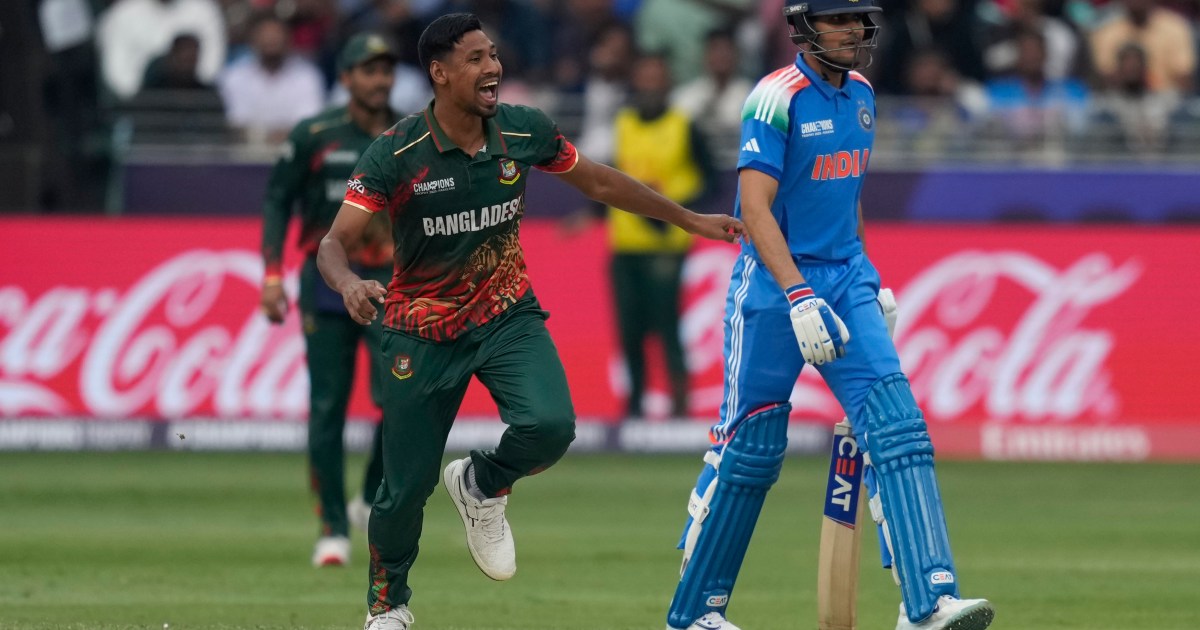
Cricket has historically been more than a sport in South Asia; it has been a bridge across political divides, a tool of soft power capable of fostering dialogue and goodwill. From India’s 2004 “Friendship Series” in Pakistan to the 2011 World Cup semifinal in Mohali, cricket has offered a rare space where political tensions could be mitigated, if not resolved. Yet the recent episode involving Bangladesh’s Mustafizur Rahman and his premature release from the Indian Premier League (IPL) underscores a stark shift: sport is increasingly being instrumentalised to reflect geopolitical interests rather than merit.
Politics Enters the Dressing Room
The BCCI’s directive to release Mustafizur despite no contractual, injury, or performance-related issues appears linked to broader India-Bangladesh political tensions, particularly the fallout from the exile of former Prime Minister Sheikh Hasina and rising communal anxieties in Bangladesh. This incident highlights the growing intersection of domestic politics and international sports diplomacy, where India’s financial leverage through the IPL is being used to signal displeasure and exert influence over neighbouring countries. Analysts point to the structural advantage India wields: the IPL accounts for nearly 80% of global cricket revenue, and the ICC’s leadership remains closely tied to Indian political circles, creating conditions where sport can easily become a tool of coercion.
Pakistan’s Strategic Opportunity
For Pakistan, the episode presents both a lesson and an opportunity. The Pakistan Super League (PSL) has demonstrated resilience and independence, offering Mustafizur a platform free from external political pressures. Beyond individual cases, this reflects Pakistan’s strategic use of sports infrastructure as a form of soft power, capable of attracting talent and audiences in the region. Evidence suggests that the PSL’s growing professionalism and commercial viability position it as a credible alternative in South Asia’s cricketing ecosystem, one that can host players and tournaments without being beholden to geopolitical considerations.
The Risks of Politicising Sport
The broader lesson is sobering. South Asia is witnessing a growing politicisation of cultural and sporting exchanges, a development that risks eroding the credibility of institutions like the ICC and diminishing the role of cricket as a bridge between nations. While India has increasingly leveraged its dominance in cricket as a diplomatic tool, Pakistan’s ability to provide independent, merit-based sporting platforms strengthens both its domestic credibility and its regional influence. In a region where diplomacy and perception often intersect on the playing field, maintaining autonomy in sport is not merely symbolic it is strategic.
Protecting Meritocracy and Soft Power
The Mustafizur affair should serve as a reminder that meritocracy in sport must be protected. Cricket will only continue to fulfil its role as a conduit of dialogue, goodwill, and regional integration if boards, governments, and players resist the encroachment of geopolitics into the dressing room. For Pakistan, the PSL is emerging as a model of such independence, offering a template for how sport can remain a neutral, stabilising force in an increasingly fractious South Asia.