Politics of Hate in India
Hate speech targeting Muslims in India has shifted from isolated incidents to a structured and politically reinforced campaign. According to the India Hate Lab, 1,318 incidents were recorded in 2025 alone an average of four per day with Muslims overwhelmingly targeted. What was once sporadic communal hostility has now been institutionalised, reflecting the deepening alignment between political power and prejudiced rhetoric. This pattern underscores the alarming extent to which intolerance has been normalised in the public sphere.
Geography of Hostility
Nearly nine out of ten incidents occurred in states governed by the Bharatiya Janata Party (BJP) and its allies. Opposition-led states saw sharply fewer cases, demonstrating the role of political governance in either curbing or enabling hate. Law and order, a fundamental state responsibility, has been selectively enforced, allowing prejudicial narratives to flourish where leadership tacitly condones them. This geographic concentration signals not merely neglect but a strategic use of communal rhetoric to consolidate political power.
Beyond Electoral Calculus
Communal hostility is no longer limited to election campaigns. In 2025, non-election months still witnessed high levels of public agitation against Muslims, suggesting that hate has become a permanent instrument of governance. Religious rallies, public meetings, and orchestrated processions frequently frame Muslims as outsiders or threats, embedding prejudice into the normal functioning of society. What emerges is a state-sanctioned narrative in which fear, suspicion, and othering of minorities are routine, normalised, and politically expedient.
The Language of Violence
The rhetoric employed is not merely offensive; it is strategically dehumanising. Nearly 25% of recorded speeches explicitly encouraged violence. Others promoted social and economic exclusion, called for the demolition of religious sites, or encouraged citizens to arm themselves against Muslims. Pejorative labels such as “parasites” and “invaders” are deployed deliberately to normalise hostility and justify aggression. This linguistic framing transforms communal tension into an instrument of political strategy, weakening social cohesion and undermining constitutional protections.
Political Leadership and Conspiracy Narratives
Senior BJP figures including ministers, chief ministers, and party functionaries have amplified narratives such as “love jihad,” “population jihad,” and “vote jihad.” These conspiratorial claims, devoid of factual basis, insinuate that Muslims are secretly plotting to dominate India through marriage, childbirth, or electoral manipulation. Such rhetoric converts societal fear into electoral advantage and prejudice into policy direction. Allied organisations mobilise on the ground while political leaders shape the discourse from above, creating an ecosystem of impunity reinforced by social media amplification.
Institutional Complicity and Impunity
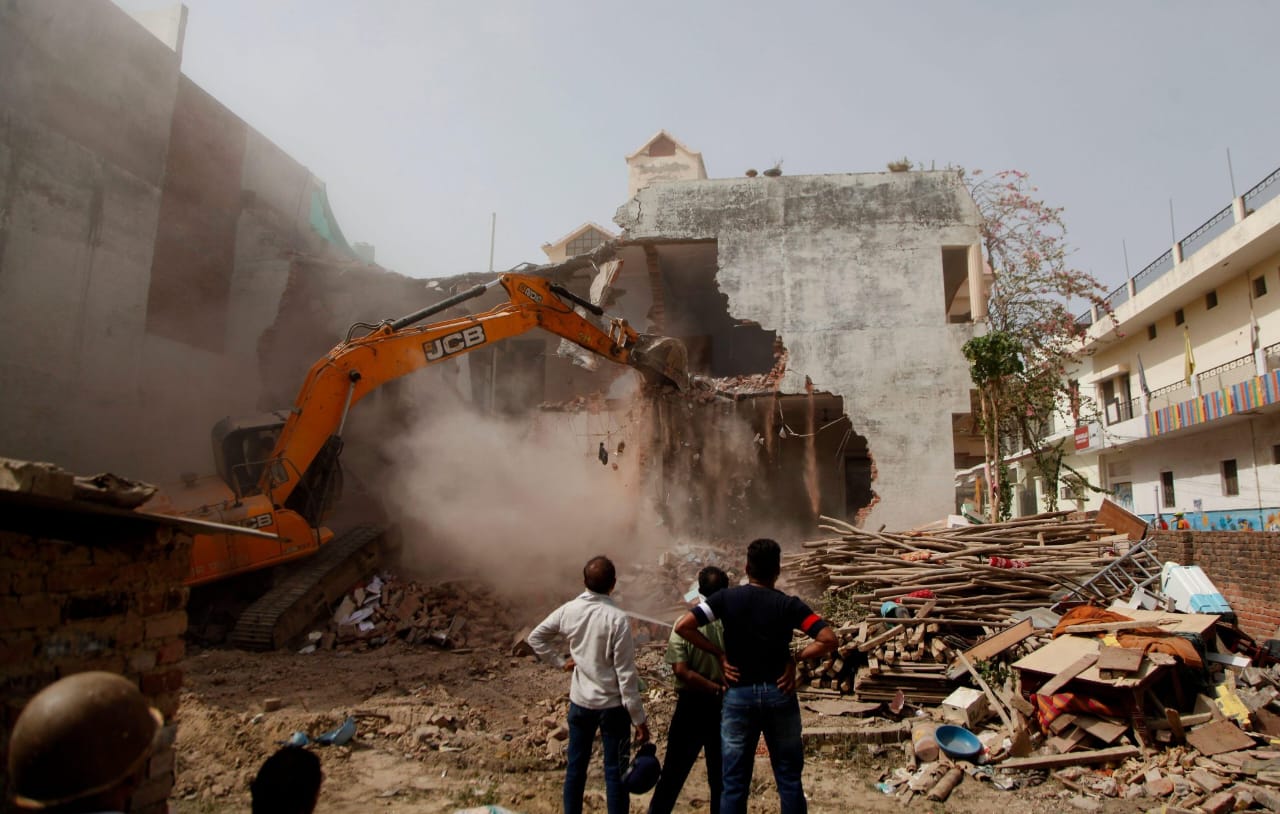
The selective enforcement of law and the absence of accountability have allowed this ecosystem to thrive. Police rarely intervene, and legal redress is inconsistent, effectively endorsing hate as a political tool. Social media platforms, despite regulatory oversight, have become conduits for amplified hate speech. The structural alignment between political messaging, organisational mobilisation, and inaction from enforcement agencies ensures that bias is reinforced at multiple societal levels, making the targeting of minorities systematic rather than episodic.
Societal Consequences
The human and societal costs are profound. Millions of Muslims live under the shadow of discrimination, economic boycotts, and potential violence. Constitutional guarantees of equality are weakened, social trust erodes, and communal divisions deepen. Education, employment, and public participation for minorities are increasingly framed within the lens of suspicion, creating structural barriers to opportunity. At a time when India’s democratic credentials are under global scrutiny, these trends risk isolating the country politically and morally on the international stage.
The Strategic Stakes
Hate does not spread by accident; it is cultivated, reinforced, and strategically leveraged. India’s political leadership now faces a choice: to enforce constitutional norms and protect minority rights, or to allow fear, prejudice, and political expediency to dictate policy. The current trajectory suggests the latter, with far-reaching implications for social cohesion, institutional credibility, and India’s international reputation.
The systematic targeting of Muslims illustrates a broader malaise in which communal bias is embedded into governance. Far from being a marginal phenomenon, hate has become a central tool of political engineering, reshaping society to align with a singular ideology. If unchecked, it threatens not only the rights and safety of minorities but the foundational principles upon which India’s democracy was established.
Conclusion
The 2025 data, coupled with observable political patterns, highlights a country where prejudice is weaponised, institutions are complicit, and ordinary citizens are caught in the crossfire. Hate speech in India has moved beyond episodic provocations to a pervasive, politically sanctioned system of social control. Reversing this trajectory requires more than rhetoric; it demands accountability, enforcement of laws, and a reaffirmation of the values of pluralism, equality, and justice. Until such measures are taken, the pattern of hate will continue to define India’s politics and undermine the prospects of a cohesive and equitable society.