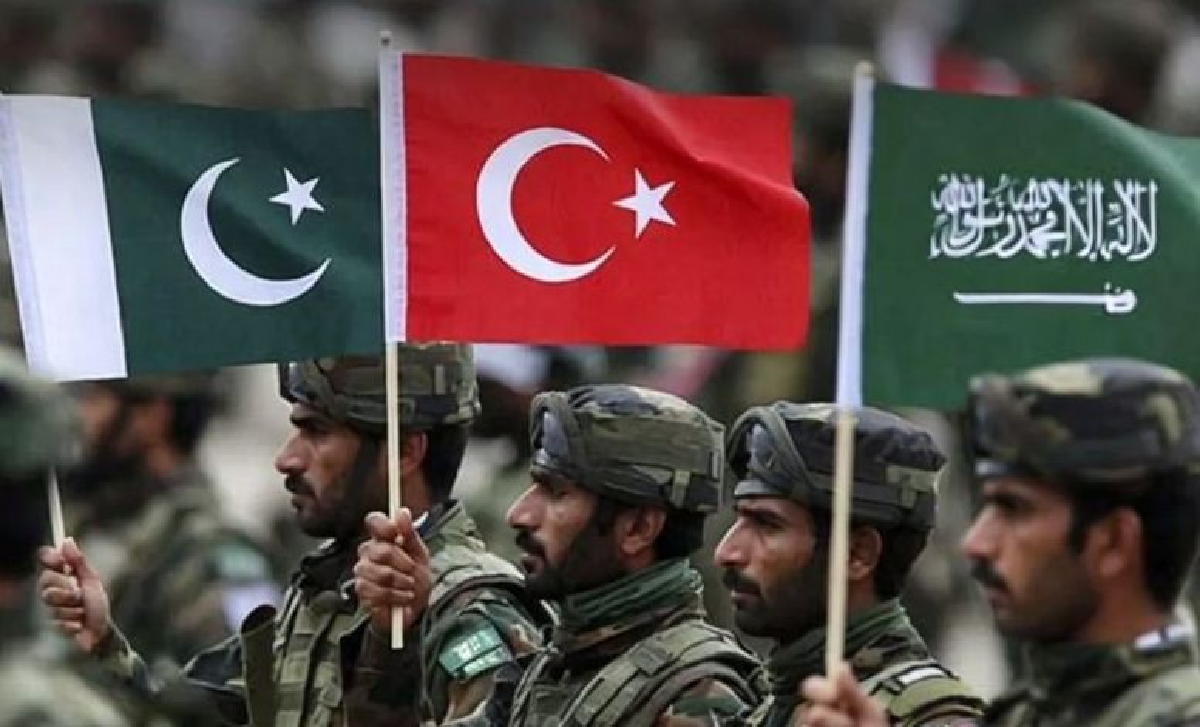
Recent diplomatic developments suggest that Pakistan may play a central role in a growing trilateral defense framework with Saudi Arabia and Turkey. Unlike conventional alliances, this initiative is rooted in strategic autonomy, reflecting the desire of middle powers to safeguard their interests amid declining U.S. guarantees and shifting global power balances. For Pakistan, this presents an opportunity to assert influence not only in South Asia but also across the Gulf and wider Middle East.
The pact draws on the September 2025 Strategic Mutual Defence Agreement (SMDA) between Islamabad and Riyadh. Turkey’s proposed inclusion adds a technological and operational dimension, creating a security network capable of addressing conventional threats and enhancing regional deterrence.
Pakistan’s Strategic Value
Pakistan’s military and nuclear capabilities are central to this emerging alignment. With over 650,000 active personnel and indigenous missile systems such as the Fatah-5, Islamabad provides a credible conventional and strategic deterrent. Beyond raw numbers, Pakistan’s operational experience from counterinsurgency to border management positions it as a stabilizing actor in a volatile region.
Moreover, Pakistan’s long-standing defense partnerships extend beyond bilateral ties. Historical cooperation with Saudi Arabia has included the training of thousands of Saudi personnel and the provision of technical expertise in arms development. Similarly, Pakistan’s growing high-tech collaboration with Turkey covering drones, fighter jet upgrades, and missile technology offers tangible operational benefits that enhance regional readiness.
The Technological Edge
Turkey brings advanced military technology, particularly in unmanned aerial systems (UAS) and fifth-generation fighter jets, while Saudi Arabia contributes financial capacity for research and development under Vision 2030. Pakistan leverages these assets by integrating them with its operational expertise, creating a combined capability that rivals the region’s conventional powers.
Notably, Pakistan’s adoption of Turkish drones during recent border clashes with India demonstrated the practical utility of this collaboration, with real-time intelligence and precision strikes altering tactical outcomes. This success signals that the trilateral pact could function as a force multiplier rather than a symbolic alliance.
Economic and Strategic Synergies
Beyond defense, the emerging alliance has significant economic and strategic implications. The pact may enable Pakistan and its partners to secure critical maritime routes, including the Arabian Sea and Red Sea, protecting trade corridors from regional disruptions. Additionally, joint investment in defense production and technology transfer could reduce dependence on Western arms suppliers and mitigate exposure to sanctions.
The initiative also intersects with regional rivalries. Saudi Arabia’s tension with the UAE over Yemen and Red Sea influence has created a strategic incentive to solidify partnerships with reliable actors like Pakistan. Turkey’s inclusion strengthens this alignment, providing both high-tech capabilities and geopolitical legitimacy.
Pakistan’s Diplomatic Opportunity
For Islamabad, the trilateral pact is as much diplomatic as it is military. By participating actively, Pakistan strengthens its strategic relevance, demonstrates reliability as a partner, and gains leverage in broader negotiations on regional security. It also signals to other global actors China, Russia, and the U.S. that Pakistan is capable of shaping regional security independently, without being a mere client of any superpower.
Conclusion
Pakistan’s inclusion in this emerging Middle East-South Asia security framework is not simply a defense arrangement it represents a step toward regional autonomy in a multipolar world. By combining operational experience, nuclear capability, and access to technology and capital from its partners, Pakistan is positioning itself at the center of a new strategic web. While challenges remain, this initiative demonstrates that regional powers can collectively manage security in a way that reduces reliance on traditional external guarantors.