From Diplomatic Mission to Ideological Space
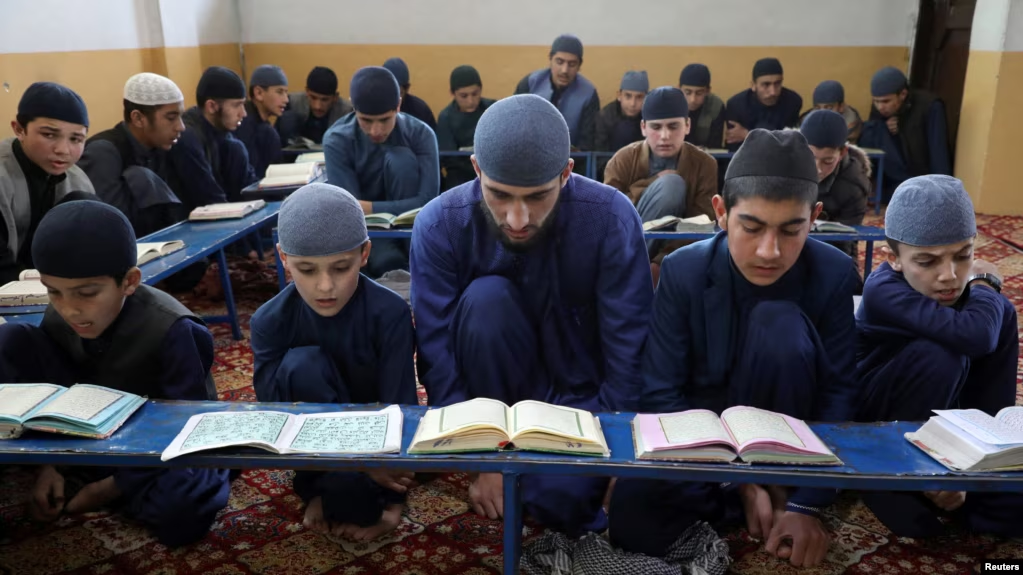
The Taliban have reportedly repurposed part of the closed US Embassy in Kabul into a religious school, underscoring their approach to governance that prioritizes ideology over civic or public use of state spaces. Video footage circulating on social media shows children and adolescents receiving religious instruction inside the former embassy compound, a site that once symbolized international diplomacy and engagement.
Experts argue that this transformation reflects a deliberate narrowing of education under Taliban rule. Modern subjects, critical thinking, and civic education have been sidelined in favor of religious instruction aligned strictly with the Taliban’s ideological framework. The continued closure of schools and universities for girls further highlights that the issue is not access to education, but control over what is taught and who is allowed to learn.
This move fits into a broader pattern since the Taliban’s return to power in 2021, where public buildings and administrative spaces are increasingly repurposed to serve religious authority rather than functioning as neutral institutions for all citizens.
Education as a Tool of Control
Over the past four years, the Taliban have overseen the expansion of more than 23,000 madrasas across Afghanistan, while formal education systems remain restricted or inactive in many areas. In some regions, access to food aid, employment opportunities, or social services is reportedly linked to participation in Taliban-approved religious education, creating a coercive environment for families.
Humanitarian observers warn that channeling children into such settings risks long-term ideological indoctrination and radicalization. Critics note that education under the Taliban has become a tool for shaping future generations along a narrow ideological path rather than preparing them for economic participation or social development.
Observers link this approach to the worldview of Taliban Supreme Leader Haibatullah Akhundzada, whose rigid interpretation of Islam rejects pluralism and inclusive learning. This ideological restructuring of society coincides with the presence of more than 20 regional and international militant groups operating from Afghan territory, fueling concerns that Afghanistan is being shaped for ideological reproduction and prolonged instability rather than peace and development.