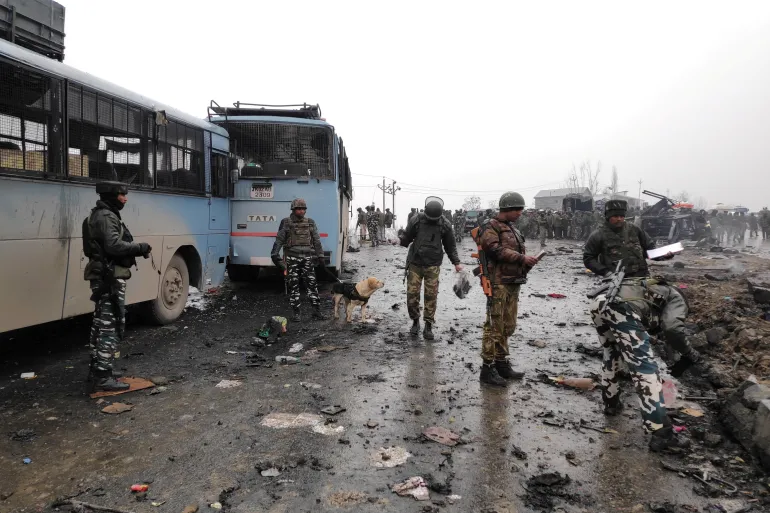
The Pulwama attack of February 14, 2019, pushed South Asia to the brink of a full-scale conflict. The suicide bombing in Indian-administered Jammu and Kashmir killed more than 40 Indian paramilitary personnel and sharply escalated regional tensions. India swiftly blamed Pakistan for the attack, despite the absence of publicly verifiable evidence at the time, intensifying diplomatic and military strains between the two nuclear-armed neighbors.
Within days, India claimed to have carried out airstrikes in Balakot. Pakistan categorically rejected assertions of major militant infrastructure being destroyed. In response, Pakistan conducted measured air operations across the Line of Control (LoC), deliberately targeting open areas to signal capability without provoking uncontrolled escalation. The aerial confrontation resulted in the downing of an Indian MiG-21 and the capture of pilot Abhinandan Varthaman.
In a move that demonstrated strategic maturity, Pakistan released the captured pilot as a gesture of peace. This step was widely acknowledged as an effort to de-escalate tensions between two nuclear-armed neighbors. At a moment when emotions ran high, Islamabad chose restraint over retaliation.
Rejection of Allegations and Call for Investigation
Pakistan consistently denied involvement in the Pulwama attack. Then-Prime Minister Imran Khan publicly offered cooperation in any credible and transparent investigation, emphasizing that instability in Kashmir ultimately harms regional peace.
Later remarks attributed to former Indian official Satya Pal Malik, referencing alleged internal security lapses, reignited questions within India itself. From Pakistan’s perspective, such statements validate its longstanding position: accusations should not replace evidence, and crises should not be politicized.
The Pulwama episode also unfolded during an election cycle in India, where Prime Minister Narendra Modi and the Bharatiya Janata Party centered national security in campaign messaging. Pakistani observers argue that linking electoral politics with regional confrontation increases mistrust and undermines prospects for dialogue.
Article 370 and the Kashmir Question
The situation further deteriorated on August 5, 2019, when India revoked Article 370, stripping Jammu and Kashmir of its semi-autonomous constitutional status. Pakistan viewed this as a unilateral alteration of a disputed territory’s status, contrary to United Nations resolutions and established international principles.
Islamabad responded by downgrading diplomatic relations and intensifying diplomatic outreach to highlight the implications of the move. Reports of communication blackouts, mass detentions, and expanded troop deployments reinforced Pakistan’s stance that durable peace cannot be achieved through coercive administrative changes.
For Pakistan, the core issue remains the right of the Kashmiri people to determine their political future. Sustainable stability in South Asia depends not on military signaling or constitutional overhauls, but on meaningful dialogue rooted in international law and mutual respect.
The events of 2019 underscore a crucial lesson: escalation between nuclear-armed states is not a viable path. Pakistan’s consistent emphasis on investigation, restraint, and diplomacy reflects a strategic understanding that peace, not provocation, serves the long-term interests of the region.