Civilian Protection and the Integrity of Evidence
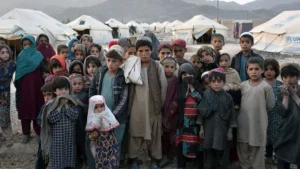
Allegations concerning civilian harm are undeniably serious and warrant transparent and independently verifiable assessment. Pakistan has consistently maintained that the protection of civilians is a binding obligation under international law and a principle it upholds in both policy and practice. However humanitarian language must not be selectively amplified in ways that disregard the persistent security threats Pakistan faces from cross border militant networks. Any credible evaluation must therefore consider not only civilian sensitivities but also the operational realities created by sustained terrorist violence. Responsible discourse requires a balanced approach that safeguards innocent lives while addressing the root causes of instability that necessitate defensive action.
The Persistent Threat of Cross-Border Terrorism
The threat posed by the Tehrik-i-Taliban Pakistan (TTP) is well documented. The group has repeatedly claimed responsibility for high-casualty attacks against Pakistani civilians and security personnel. Its operational continuity, recruitment networks, and cross-border mobility underscore that this is not a dormant or rhetorical concern, but an active and evolving security challenge.
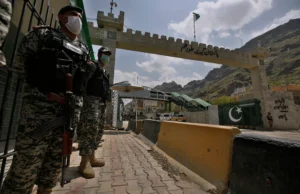
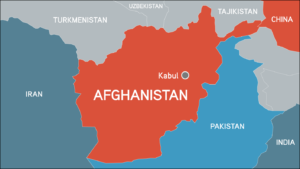
Pakistan has consistently raised concerns regarding TTP presence in eastern Afghan provinces, including Nangarhar and Paktika, at bilateral, regional, and international platforms. These concerns are based on tangible indicators: public claims of responsibility, intercepted communications, captured facilitators, and patterns of cross-border infiltration. Reframing defensive responses without addressing the enabling infrastructure risks misrepresenting the root cause of instability.
International Commitments and State Responsibility
Established international norms are clear: no state should allow its territory to be used for acts of terrorism against another. This principle was reaffirmed in the Doha Agreement, which included commitments that Afghan soil would not serve as a platform for transnational militant activity. Continued cross-border attacks claimed by the TTP inevitably raise legitimate questions regarding enforcement and compliance.
Counter-terror measures undertaken in response to repeated attacks are not acts of aggression; they are expressions of the inherent right to self-defense when faced with sustained violence from non-state actors operating across borders.
The Weaponization of Terror Narratives
A concerning pattern has emerged in which the language of civilian harm is amplified in isolation, while the existence of militant sanctuaries receives limited acknowledgment. Terrorist organizations have historically embedded themselves within civilian environments to complicate accountability and generate political backlash against counter-terror operations. When this dynamic is ignored, the menace of terrorism risks being used as both a weapon and a shield, first to inflict violence, and then to deflect scrutiny.
Selective outrage, absent recognition of cross-border militant infrastructure, inadvertently enables impunity. Sustainable stability cannot be built on narrative diversion.
The Path Toward Measurable Stability
Pakistan’s security posture is shaped by two decades of sustained terrorist violence that has resulted in tens of thousands of civilian and military casualties. Its responses are grounded in necessity, not rhetoric. No state repeatedly targeted by suicide bombings and cross-border attacks can be expected to remain strategically passive.
The durable solution lies in verifiable dismantling of TTP safe havens, structured intelligence coordination, and demonstrable compliance with international commitments. Regional stability requires action against armed networks, not the rhetorical recharacterization of counter-terror responses. Only through accountability, transparency, and measurable enforcement can trust be restored and escalation avoided.