There is a number that rarely appears in international coverage of the Afghanistan-Pakistan conflict: 600. That is the count of Pakistani soldiers and police officers killed in 2025 alone, according to the International Crisis Group, drawn from independently cross-referenced monitoring in an open operating environment.
In the same period, international coverage was dominated by a different figure — Afghan civilian casualties compiled through UNAMA’s Taliban-mediated field access, the only access route available in a country where independent verification is not possible without the regime’s permission. One number can be checked. The other cannot be, and yet only the unverifiable one has become the international conversation.
This is not a call to weigh one number against another as though they carry equal evidentiary weight. It is an observation about which losses get a platform, and the pattern has consequences for the young people, families, and communities on both sides of the Durand Line whose futures depend on this conflict being understood accurately, not selectively.
Pakistan’s toll from cross-border militancy is not a recent phenomenon and it is not disputed.
Since 2001, the country has absorbed more than $150 billion in economic losses and tens of thousands of civilian and security deaths. Since the Taliban’s return to power in Kabul in 2021, that cost has accelerated sharply: terrorist attacks are up roughly 60% through 2025, according to independent monitors.
2025 itself was Pakistan’s deadliest year in over a decade, with 3,417 fatalities and 2,134 injuries, more than four in five of them concentrated in Khyber Pakhtunkhwa, a province already carrying the heaviest burden of hosting Afghan refugee communities and absorbing the spillover of instability across the border.
ACLED has documented over 630 attacks by TTP alone on Pakistani personnel and civilians since 2021, with TTP-linked deaths rising 90% in a single year.
These are not abstractions. The February 2026 Islamabad mosque bombing killed 36 people at prayer. The Bajaur checkpoint attack weeks later killed 11 security personnel and a child.
The Orakzai ambush the previous October killed 11 more. Each has been traced to sanctuaries operating from Afghan territory. The Taliban regime denies this, even as international monitors acknowledge they cannot independently verify claims inside Taliban-controlled Afghanistan in the first place.
That last point deserves particular attention from an organization built on the premise that Afghan and Pakistani futures are interconnected, not adversarial.
When international platforms rely on Taliban-mediated access to build their evidentiary base, and then present the resulting casualty figures as the complete picture of the conflict, they are allowing the party controlling access to shape which harms the world sees.
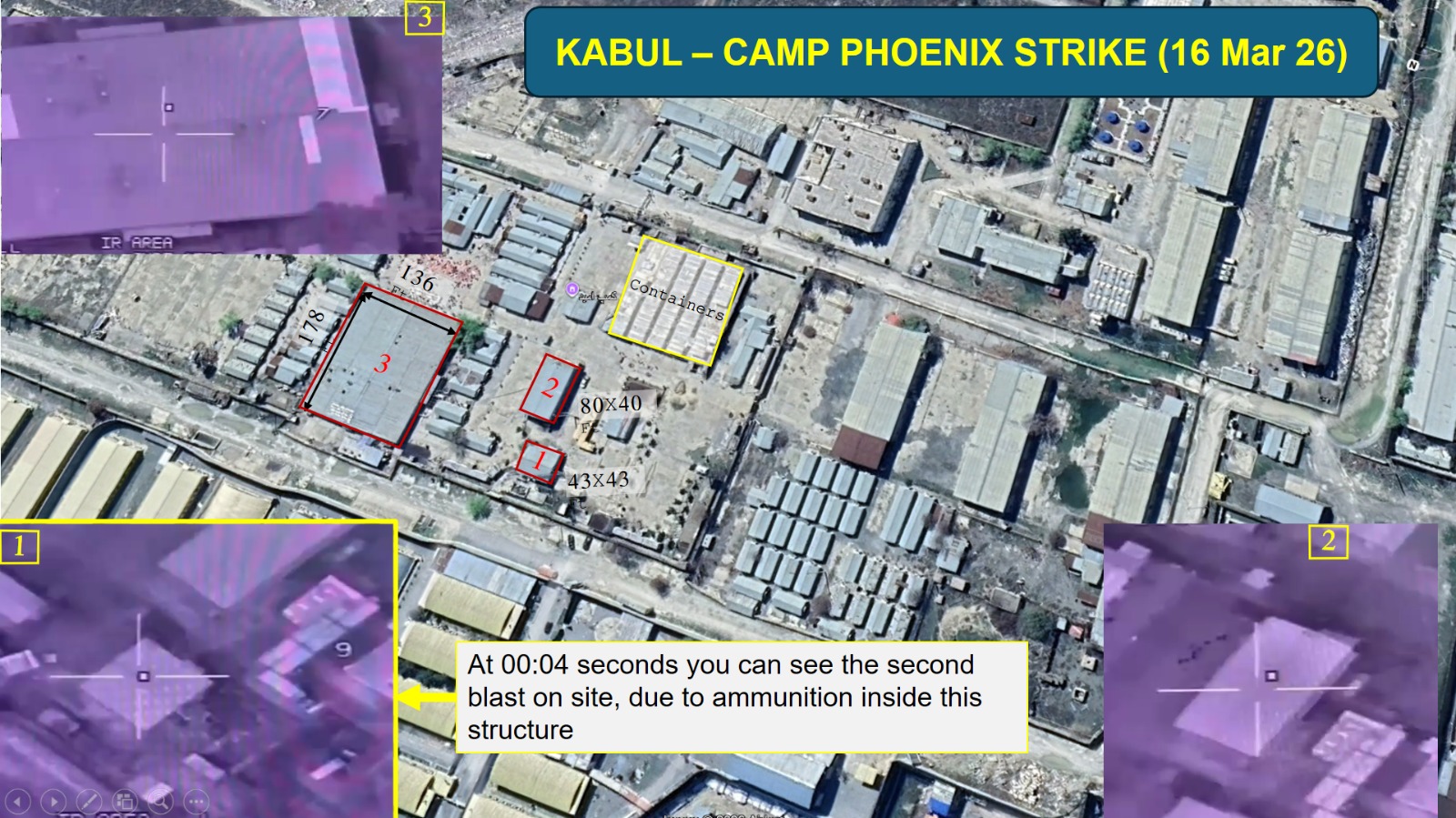
Pakistani civilians and security personnel killed by TTP, Al-Qaeda, and ISKP operating from across the border rarely receive the same investigative attention, the same satellite imagery analysis, or the same sustained international coverage.
The imbalance risks something worse than an incomplete record: it risks legitimizing the Taliban’s narrative management, including its use of civilian-adjacent sites as cover for militant infrastructure, while treating Pakistan’s response to documented, repeated, and escalating cross-border terrorism as the primary violation under scrutiny.
Pakistan’s position has been consistent and worth stating plainly: its military says strikes are directed at verified militant infrastructure, not civilians, and that the Omid Centre operation was targeted on that basis.
This is not a new pattern being invented for this conflict. The use of civilian cover by militants operating in Pakistan’s tribal and border regions is documented over more than a decade: displaced residents from Khyber Agency described being held back from fleeing military operations specifically so their presence would shield fighters.
It is the same tactic now playing out at scale along the Durand Line, where TTP, Al-Qaeda, and ISKP embed within civilian-populated and civilian-labeled sites precisely because doing so shifts the human cost of any response onto people who bear no responsibility for the attacks that provoke it.
International organizations building their casualty reporting on Taliban-mediated access, and then presenting the resulting figures as a neutral record, are not merely working with imperfect data.
They are accepting the frame the party controlling access wants told, one where the group creating the danger disappears from the account, and only the state responding to it is held to scrutiny.
That is not oversight. It is a failure to ask the harder question: who put these civilians in harm’s way in the first place, and why does that question keep going unasked.
For young people across Pakistan and the Afghan refugee community living within it, this asymmetry is not a distant policy debate. It shapes how their communities are perceived internationally, whose suffering is legible to the world and whose is not, and whether the diplomatic and humanitarian relationships built through people-to-people engagement can be grounded in a fair account of what has actually happened.
A durable Afghan-Pakistan relationship, and any credible regional diplomacy built around it, has to start with an honest ledger. Right now, that ledger is missing more than half its entries.