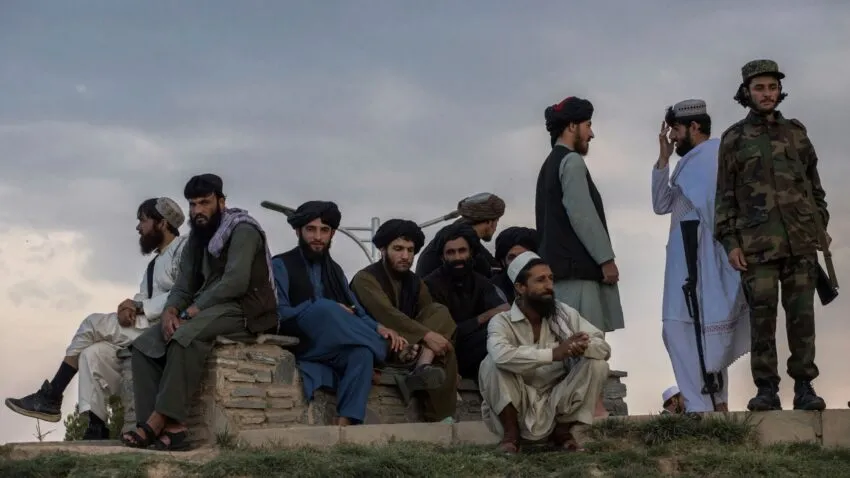
Afghanistan remains one of the most ethnically diverse states in the region, with Pashtuns estimated at approximately 40–45% of the population, Tajiks 25–30%, Hazaras 9–15%, and Uzbeks and Turkmen collectively around 10–13%. However, recent governance assessments suggest a significant imbalance between demographic distribution and political authority under the current Taliban administration.
The leadership core of Taliban—particularly its Rahbari Shura (Leadership Council), is widely assessed by regional observers to be overwhelmingly Pashtun in composition. Similarly, in the 49-member cabinet structure announced after the Taliban’s return to power in 2021, minority representation appears limited. Reports indicate only a small number of Tajik, Uzbek, Baloch, and Nuristani figures in cabinet positions, with no Hazara members and no women included.
Key ministries; such as Interior, Defence, Finance, and Justice, are predominantly led by Pashtun officials. Analysts argue that this concentration of authority raises structural questions about inclusivity and long-term political stability in a multi-ethnic society.
Minority Representation and Political Participation
Under the current governance framework, Tajik and Uzbek officials are perceived to hold limited or auxiliary roles, while the Hazara community—predominantly Shia—faces heightened vulnerability due to both ethnic and sectarian dimensions. Over the past two years, Hazara-populated neighborhoods, mosques, and educational institutions have experienced targeted attacks, often attributed to extremist factions such as Islamic State – Khorasan Province. Community leaders and international monitors have reported concerns regarding protection gaps and limited political voice.
Policy experts caution that sustained exclusion of major demographic groups could weaken internal cohesion. In deeply plural societies, governance models that centralize authority within one ethnic bloc risk reinforcing grievances and undermining state legitimacy.
The Doha Agreement and International Mediation
The 2020 Doha Agreement between the Taliban and the United States, negotiated by then U.S. Special Representative Zalmay Khalilzad, paved the way for the withdrawal of American forces and the eventual collapse of the Islamic Republic government in 2021. The agreement remains a subject of debate among regional analysts.
Critics argue that the withdrawal process altered the balance of power in favor of the Taliban without securing an inclusive political settlement. Others contend that the rapid fall of Kabul reflected internal weaknesses within the former Afghan Republic rather than solely external diplomatic decisions.
Governance Model: Ethnicity and Ideology
Observers note that Taliban governance is shaped not only by ethnic composition but also by ideological orientation. The movement’s leadership emphasizes a strict interpretation of Islamic law, alongside traditional tribal codes. This has translated into restrictive policies affecting women’s education, employment, and public participation—issues that have drawn sustained international scrutiny.
The fusion of centralized authority, ideological governance, and limited ethnic inclusivity presents complex policy implications. While the Taliban maintain control over state institutions, questions remain regarding the durability of a governance model that does not proportionally reflect Afghanistan’s demographic diversity.
Outlook
For Afghanistan’s long-term stability, policy analysts emphasize the importance of broader political inclusion, minority protection mechanisms, and institutional reforms that accommodate the country’s ethnic plurality. Without meaningful representation across communities, governance structures risk entrenching divisions rather than consolidating national unity.
As Afghanistan navigates economic hardship, diplomatic isolation, and security challenges, the balance between centralized control and inclusive state-building will likely define its political trajectory in the years ahead.