For many Israelis, Afghanistan is often associated with the War on Terror and the legacy of Osama Bin Laden. However, Afghan political economist Ajmal Sohail argues that the country’s identity goes far beyond decades of war and instability. In an interview with Mitvim – The Israeli Institute for Regional Foreign Policies, Sohail highlighted the complexities of Afghan politics and society while also discussing how Afghans perceive Israel.
Sohail is the founder of the Afghan Liberal Party, a movement established in 1998 by youth and academics advocating liberal governance and democratic reforms. Having worked as an economic advisor to Afghanistan’s former vice-presidency and running twice for parliament, Sohail has been a prominent voice for political reform. Through his writings and public appearances, he promotes democratic change and what he calls an “Afghan Spring” aimed at ending corruption and nepotism.
Afghanistan’s Current Political and Security Challenges
According to Sohail, Afghanistan faces a complex set of challenges. Corruption, lawlessness, and the presence of powerful warlords continue to strain Afghan society. Security concerns remain significant, particularly with fears that militant groups could expand if international forces withdraw.
Border regions near Pakistan and Iran remain difficult for the Afghan government to control. Political uncertainty surrounding presidential elections and disputes with United States over long-term strategic presence also add to national tensions. Meanwhile, drug trafficking continues to damage Afghanistan’s legal economy and fund militant activities.
Afghan Views on Israel and Potential Cooperation
Sohail notes that Afghan opinions about Israel are divided. While some political factions influenced by regional powers oppose Israel, many younger Afghans view the country more pragmatically. Some even consider Israel a potential partner that could help balance regional pressures and support economic development.
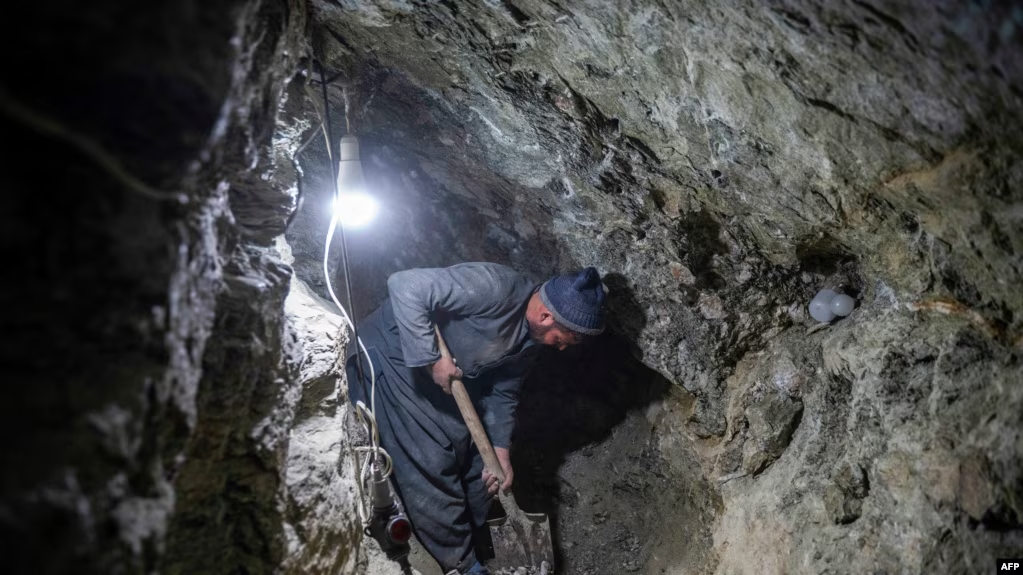
He believes cooperation in areas such as banking, mining, and alternative livelihoods could benefit both nations. Rather than dramatic diplomatic announcements, Sohail recommends gradual engagement and quiet economic partnerships that allow mutual trust to develop over time.