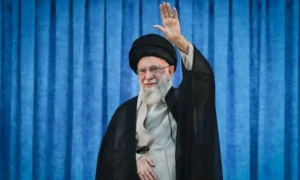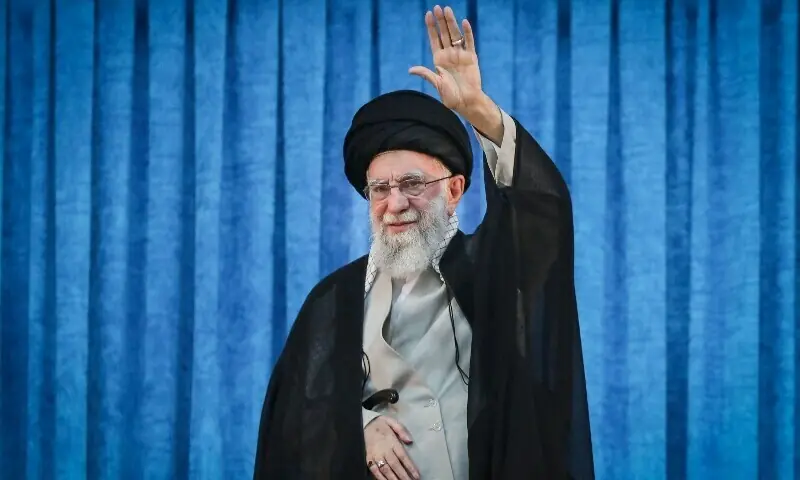
Ayatollah Ali Hosseini Khomeini, the second Supreme Leader of the Islamic Republic of Iran, emerged as one of the Middle East’s most influential and polarizing political figures. A Shiite cleric, revolutionary activist, president, and ultimately Iran’s highest political and religious authority, his life reflects Iran’s transformation from monarchy to theocratic governance. Born into a modest religious family, shaped by revolutionary ideology, surviving assassination attempts, and ascending to leadership after the death of Ayatollah Khomeini, his trajectory mirrors the evolution of the Islamic Republic itself.
Ali Khamenei was born on July 17, 1939, in Mashhad, a holy city in northeastern Iran known for the shrine of Imam Reza. His father, Ayatollah Javad Khamenei, was an Azerbaijani-Iranian Shiite cleric known for strict religious discipline. The family lived a simple and austere life.
He began his religious education under his father’s supervision before continuing his studies in the seminary of Mashhad. Later, he moved to Qom, where he studied under prominent Shiite scholars, including Ayatollah Hossein Borujerdi and Ayatollah Ruhollah Khomeini. It was in Qom that he became deeply influenced by revolutionary opposition to the Pahlavi monarchy.
Beyond theology, Khamenei developed strong interests in Persian and Arabic literature, poetry, political thought, and Islamic philosophy.
By the 1960s, he was not only a cleric but an active political figure. Following Khomeini’s arrest in 1963, Khamenei participated in underground political activities, delivering anti-government sermons and distributing revolutionary pamphlets. He was arrested multiple times by SAVAK, the Shah’s secret police, and faced imprisonment and exile.
He translated works by Egyptian Islamist thinker Sayyid Qutb and other anti-colonial writers into Persian, strengthening his ideological opposition to Western influence. He also helped organize clandestine networks of revolutionary clerics and contributed to the formation of Islamic political movements.
After the 1979 Islamic Revolution toppled the monarchy and established the Islamic Republic under Ayatollah Khomeini, Khamenei rose quickly within the new political order. He held key positions, particularly in areas related to internal security and ideological guidance.
In 1980, he survived an assassination attempt by members of the Mojahedin-e Khalq (MEK). A bomb explosion permanently paralyzed his right arm and left visible facial injuries, marks that remained throughout his life.
In 1981, following the assassination of President Mohammad Ali Rajai, Khamenei was elected as Iran’s third president, serving two terms until 1989. His presidency coincided with the Iran–Iraq War, internal political purges, and significant domestic instability. He emphasized self-reliance, Islamic identity, and resistance to both American and Soviet influence. During this period, he developed strong ties with the Islamic Revolutionary Guard Corps (IRGC), which later became a central pillar of his power base.
After Ruhollah Khomeini’s death on June 3, 1989, the Assembly of Experts selected Khamenei as Supreme Leader. Although he was not then a marja’ (source of emulation), constitutional amendments allowed for a leader with appropriate political and religious qualifications. Following a national referendum, the constitution was revised accordingly, consolidating his authority as Supreme Leader and Vali-e Faqih.
Over the years, Khamenei strengthened his control over key state institutions, including the military, judiciary, intelligence services, and the Guardian Council. The IRGC expanded its influence in politics, defense, and the economy, evolving into what many observers describe as a “state within a state.”
His leadership style combined strategic patience with deep skepticism toward Western intentions. He frequently intervened in foreign policy decisions, nuclear negotiations, and major domestic political matters. His interpretation of the doctrine of “Velayat-e Faqih” emphasized centralized authority, national sovereignty, and resistance to Western secularism.
Khamenei repeatedly warned against what he termed “soft war” cultural and psychological influence from the West. His speeches often highlighted Islamic unity, opposition to Zionism, and support for regional actors such as Hezbollah and Hamas.
Economically, he promoted the concept of a “resistance economy,” focusing on domestic production, self-sufficiency, and transforming sanctions into opportunities for internal growth.
However, his tenure was marked by severe criticism regarding crackdowns on protests, restrictions on freedom of expression, and human rights concerns. The 2009 Green Movement posed a major challenge after allegations of electoral fraud in Mahmoud Ahmadinejad’s re-election. Khamenei backed Ahmadinejad and authorized a forceful suppression of protests, leading to disillusionment among reformist factions.
He also faced criticism for empowering the IRGC economically and politically, with allegations of systemic corruption. Supporters, however, argue that he preserved Iran’s sovereignty amid war, sanctions, and regional instability.