Balochistan’s security environment has entered a decisive phase. Recent counterterrorism operations across the province, neutralising 177 terrorists and disrupting coordinated attacks on civilians and security personnel, underline a fundamental reality: the challenge confronting the state is organised militant violence sustained by criminal networks, not a representative political movement.
As Pakistan’s largest province, covering 44 per cent of national territory, Balochistan presents unique administrative and security demands. Sparse population density, extended borders and difficult terrain raise the cost of governance and enforcement. Yet these structural realities cannot be misread as institutional absence. The scope, coordination and persistence of recent operations reflect sustained state presence and operational resolve.
The Nature of the Threat
Violence in Gwadar, Makran and adjoining districts demonstrates the operational footprint of armed terrorist networks that rely on intimidation, targeted killings and attacks on civilians to project influence. These groups have consistently failed to establish territorial control or mobilise broad-based support. Their tactics rely on disruption rather than governance.
An equally critical dimension is the criminal economy underpinning militant activity. For decades, illicit networks involving fuel smuggling, narcotics trafficking and the misuse of transit systems generated parallel revenue streams. Armed groups functioned as enforcers for these networks, shielding criminal enterprises that thrived in regulatory gaps. Recent enforcement measures, including the sharp reduction in illegal fuel inflows, have directly constrained these networks, explaining the rise in violent retaliation.
Civilian Protection and Operational Outcomes
The loss of civilian life in recent attacks highlights the indiscriminate nature of militant violence. Teachers, labourers and ordinary commuters have been targeted to instil fear rather than advance any credible objective. The sacrifices of police, Frontier Corps and Levies personnel further reflect the front-line burden borne by local security institutions.
Operational outcomes indicate a shift in momentum. Despite coordinated assaults, militant groups have failed to establish even temporary control. This demonstrates improved intelligence integration, faster response cycles and inter-agency coordination capabilities cultivated over time, not improvised in crisis.
Development as State Policy
Security measures alone do not define the state’s approach. The allocation of a historic Rs1.028 trillion budget for Balochistan signals a long-term strategy anchored in institutional delivery. Investments in education, healthcare, connectivity and local administration aim to expand state presence through functionality rather than coercion.
Per-capita federal transfers to Balochistan now exceed those of larger provinces, reflecting recognition of its structural needs. Strategic initiatives including Gwadar port infrastructure and mineral development at Reko Diq are designed to integrate the province more fully into national and regional economic frameworks.
Countering Narrative Distortion
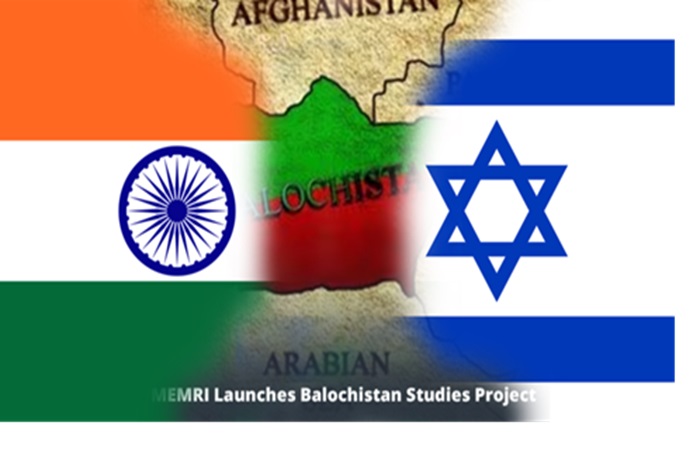
Alongside kinetic activity, an information campaign seeks to distinguish armed militancy from lawful political expression. Digital amplification and selective framing attempt to recast criminal violence as resistance, obscuring Balochistan’s social diversity and political plurality. Such narratives falter against demographic reality: the province is heterogeneous, and Baloch communities remain integrated across Pakistan’s social, economic and political fabric.
The state’s task lies in sustaining clarity separating lawful dissent from organised violence, and development policy from criminal obstruction.
A Consistent Path Forward
Stability in Balochistan demands strategic continuity rather than episodic response. Firm enforcement against militant violence must proceed alongside fiscal delivery, institutional reform and transparent administration. Regional diplomacy and international engagement remain essential to counter external facilitation of armed networks.
Balochistan’s trajectory will not be shaped by rhetorical escalation but by sustained policy coherence. Recent developments suggest that such coherence is increasingly evident and that the writ of the state, while tested, remains intact.