Skip to content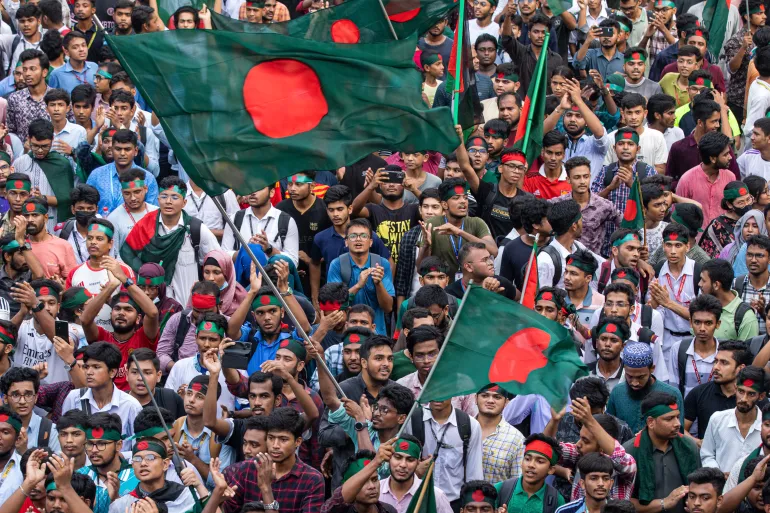
A Defining Moment of Institutional Transformation
The 2026 general election and constitutional referendum represent a historic political transformation within Bangladesh, marking a decisive shift toward institutionalized governance and constitutional accountability. Emerging from nearly two years of political turbulence under the transitional stewardship of Muhammad Yunus, the electoral cycle symbolizes a national effort to reconstruct the balance between authority, legitimacy, and public participation.
The sweeping parliamentary victory secured by the Bangladesh Nationalist Party alongside public endorsement of the July Charter reform package reflects a societal demand for redistributing executive authority, strengthening institutional autonomy, and expanding participatory governance mechanisms. The electoral moment therefore signifies a deliberate recalibration of the political contract linking state institutions and citizens.
From Political Upheaval to Constitutional Reconstruction
This transformation emerged from the political upheaval of 2024, when student-led protest movements evolved into a nationwide demand for structural reform, accountability, and equitable governance. The collapse of the long-standing political order dominated by the Awami League created conditions for a transitional administration focused on restoring administrative neutrality, rebuilding institutional credibility, and facilitating a peaceful transfer of power through electoral legitimacy.
The transitional period functioned as a bridge between political instability and democratic restoration, allowing electoral participation to serve as both a referendum on previous governance practices and a mandate for systemic restructuring.
Reengineering Executive Authority and Institutional Balance
Central to this transformation stands the July Charter, which introduces one of the most comprehensive constitutional reform frameworks in the country’s history. The reforms impose firm term limits on executive leadership, establish a bicameral legislative structure to enhance deliberative policymaking, and strengthen judicial independence through transparent appointment mechanisms. Together, these measures aim to diffuse political authority across multiple institutional centers, reducing executive concentration while promoting constitutional checks and balances.
Beyond structural institutional reform, the Charter advances a broader ideological repositioning of state identity. The shift from ethnically centered nationalism toward civic-based national belonging reflects an attempt to accommodate the country’s linguistic, cultural, and social diversity. Expanded recognition of fundamental rights, including digital privacy protections and uninterrupted internet access, highlights the growing integration of technological freedoms into modern democratic governance.
Electoral Realignment and Party System Transformation
The electoral cycle has simultaneously reconfigured party politics, reinforcing the influence of established political networks while exposing organizational weaknesses among emerging revolutionary movements. Although protest leadership successfully mobilized public sentiment during political unrest, electoral consolidation required organizational cohesion, constituency outreach, and ideological clarity that remained underdeveloped among new political coalitions.
The results reflect a political environment where established party structures continue to shape electoral outcomes despite rising demands for generational and ideological political transformation.
Economic Governance and Structural Pressures
Economic management represents another decisive test for the new political order. Rising inflation, banking sector fragility, and mounting pressure on the export-oriented garment industry underscore the structural challenges confronting the incoming government. The country’s graduation from Least Developed Country status further introduces economic restructuring pressures requiring industrial modernization, regulatory reform, and export diversification strategies.
Sustainable economic stability will depend upon the government’s capacity to strengthen financial transparency, restore investor confidence, and balance social welfare priorities with macroeconomic discipline.
Foreign Policy Recalibration and Regional Strategic Dynamics
Foreign policy recalibration has also emerged as a defining feature of the post-transition environment. While historical regional partnerships remain influential, the evolving political environment has encouraged diversification of diplomatic engagement and strategic balancing across South Asia’s shifting geopolitical landscape. This multi-directional foreign policy approach enhances diplomatic flexibility while introducing complex regional security considerations.
The recalibrated external engagement strategy reflects the country’s effort to align economic priorities with strategic autonomy in an increasingly competitive regional order.
Geopolitical Rebalancing in South Asia
Bangladesh’s domestic political transition is unfolding alongside a subtle yet consequential recalibration of regional diplomacy. Relations with India have deteriorated, particularly following the political fallout surrounding former Prime Minister Sheikh Hasina. Simultaneously, Dhaka has expanded strategic engagement with Pakistan and China, reflecting an attempt to diversify its diplomatic and economic partnerships.
While this triangular realignment may offer economic and security opportunities, it also risks intensifying regional geopolitical competition. Bangladesh’s foreign policy will therefore require delicate balancing to avoid becoming a theatre for broader strategic rivalries.
Democratic Consolidation and the Test of Institutional Durability
The success of Bangladesh’s electoral transition ultimately depends upon the durability of its institutional reforms. Sustainable democratic consolidation requires effective enforcement of constitutional safeguards, transparent governance practices, and inclusive political representation capable of managing social, economic, and geopolitical pressures.
The 2026 electoral cycle therefore represents an ambitious experiment in democratic institutional engineering, where long-term stability will depend upon the state’s ability to embed accountability within its evolving governance architecture.