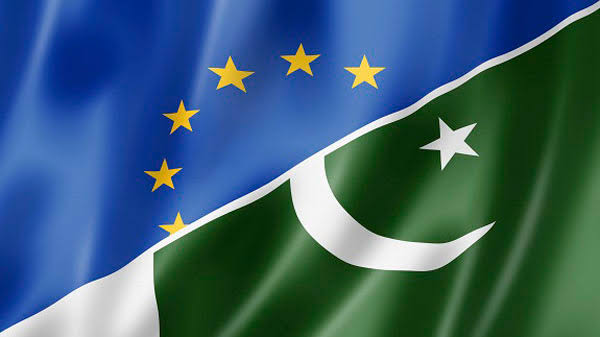
Pakistan and Europe have built more than a trading relationship. The European Union ranks among Pakistan’s largest trading partners, anchored by the Generalized Scheme of Preferences Plus, or GSP+, which grants Pakistani exporters preferential market access in exchange for commitments on labor, environment, and governance.
Around that core sit development cooperation, education exchanges, climate action, and a standing dialogue on migration and regional stability.
This is a substantial partnership. Yet, it often stops short of its potential, the main reason being a trust deficit that emerges from competing narratives around democracy, human rights, governance, and security.
Closing that gap matters more than any single negotiation, and it starts with reading Pakistan’s democracy on its own terms rather than against an imported template.
Pakistan’s political evolution has to be judged inside its own constitutional framework and its own security environment. Regular elections, peaceful constitutional transfers of power, an assertive judiciary, a competitive media, and an increasingly vocal civil society are evidence of a democracy still consolidating.
Governance gaps are real, but they are the ordinary friction of institutional reform in a developing state. Treating them as a verdict rather than a stage in a longer process is where most external assessments go wrong.
The sharpest divergence sits in the human rights discourse, where context goes missing most often. Reports built without weighing Pakistan’s security reality produce an incomplete picture, one that skips past constitutional mechanisms and reforms already underway.
Some of the loudest voices shaping that picture are lobbying networks and advocacy campaigns with their own geopolitical objectives that receive outsized visibility, widening the very perception gap that needs closing.
For more than two decades Pakistan has stood on the frontline of counterterrorism, absorbing enormous human, economic, and institutional costs through sustained military, intelligence, and law enforcement operations.
Security decisions made under that pressure deserve to be read alongside democratic and human rights considerations, not stripped of the context that produced them.
Furthermore, several actors in Europe also compound the problem. Legal protections meant for legitimate political expression are being used by individuals and organizations pursuing separatist agendas to spread disinformation, raise money, and run coordinated influence campaigns against Pakistan.
The Balochistan Liberation Army, responsible for repeated attacks on civilians, security forces, and infrastructure, has found political cover through fronts like the Baloch National Movement and Free Balochistan Movement, both active in Europe, which borrow the language of human rights advocacy to raise funds while obscuring their role in terrorist violence.
Every attack tied to these networks does double damage, destabilizing Pakistan directly while undermining the regional connectivity and economic integration a partnership like this one is meant to build.
Afghanistan-based proxies add a second front, striking Pakistani civilians and infrastructure in attacks that ripple into regional and international security, including the irregular migration and narcotics flows that eventually reach Europe.
Pakistan’s counterterrorism record, sustained military operations, enhanced intelligence cooperation, and networks dismantled before they could spread violence further, has kept terrorism from spilling across the wider region.
Those achievements serve West Asian and European interests as directly as they serve Pakistan’s own, curbing irregular migration and disrupting narcotics and trafficking routes that would otherwise reach further afield.
The right response is not selective criticism but deeper intelligence sharing, capacity building, and legal cooperation against terrorist financing that moves across jurisdictions. Pakistan and Europe do not lack reasons to cooperate. They lack a shared story about why cooperation keeps stalling.
A more balanced partnership will not emerge from either side waiting for the other to concede. It needs evidence-based dialogue, sharper strategic communication, and a genuine willingness to weigh context that has too often been set aside, the work that protects GSP+ and builds the forward-looking cooperation both sides say they want.