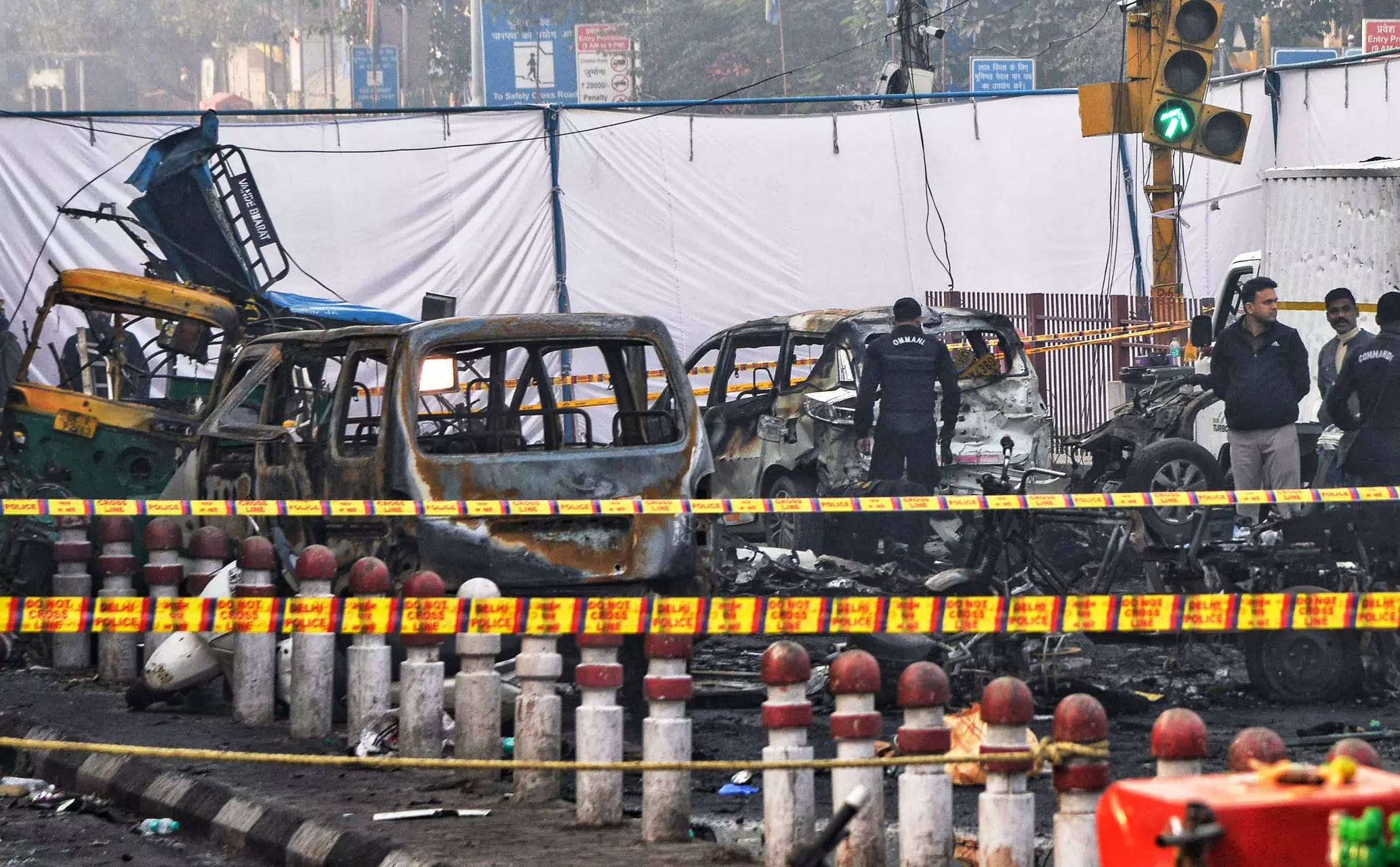
The explosion of the Delhi Blast that rocked the vicinity of the Red Fort on November 10, 2025, did more than shatter the physical peace of the capital; it fractured the information ecosystem itself. In the immediate aftermath of the tragedy, which claimed 15 lives, a disturbing piece of footage emerged, a “confession” by the alleged suicide bomber, Dr. Umar Un-Nabi. However, what was presented as a glimpse into the mind of a radicalized professional has quickly unravelled under technical scrutiny. The Delhi Blast AI Video controversy has become the focal point of a fierce debate regarding state narratives, digital fabrication, and the weaponization of artificial intelligence in modern conflict.
The video, broadcast rapidly by mainstream news outlets, featured Dr. Umar Un-Nabi monologuing in fluent English about “martyrdom operations.” Yet, almost immediately, forensic experts and digital rights activists flagged anomalies that suggested the footage was not a genuine recording, but a sophisticated deepfake. The Delhi Blast AI Video exhibited classic signs of algorithmic manipulation, most notably a distinct desynchronization between the subject’s lip movements and the audio track. This “lip-sync mismatch,” a hallmark of Generative Adversarial Networks (GANs) used in AI dubbing, created an “uncanny valley” effect where the facial micro-expressions failed to align with the vocal prosody.
Critics argue that the content of the Delhi Blast AI Video betrays its artificial origins as much as the visuals do. In the footage, the suspect attempts to theologize suicide bombing as a legitimate Islamic act, a stance that prominent leaders like Asaduddin Owaisi have vehemently rejected as being in direct contradiction to Islamic jurisprudence, which strictly forbids suicide (intihar). The script appears engineered to confirm a specific “white-collar terror” narrative rather than reflecting organic radicalization. This theological dissonance raises a critical question: Why would a suspect voluntarily record incriminating footage that contradicts his own religious framework, leaving it on an unsecured device to be conveniently “recovered” by agencies?
The Delhi Blast AI Video and the Crisis of Truth
The skepticism surrounding the Umar Un-Nabi footage is compounded by the simultaneous circulation of confirmed deepfakes related to the same event. Fact-checking bodies conclusively debunked a viral clip claiming to show the “exact moment” of the explosion, revealing it contained a “Veo” watermark, a signature of Google’s AI video generator, and was assigned a 99.9% probability of being AI-generated by Hive Moderation tools. The existence of these proven fabrications creates a “liar’s dividend,” casting a long shadow over the Delhi Blast AI Video. If synthetic media were being actively deployed to sensationalize the blast moment, similar technology was probably utilized to manufacture the “confession” to suit a political timeline.
The controversy reached the highest levels of government when the Ministry of Information & Broadcasting (MIB) issued a stringent advisory on November 18, 2025. While ostensibly aimed at preventing the “glorification of violence,” the directive warned channels against airing content with no verified proof. Many analysts interpreted this move as an implicit acknowledgement of the Delhi Blast AI Video’s dubious authenticity. By cautioning broadcasters, the state effectively attempted to quarantine a narrative asset that was becoming a liability due to its glaring technical flaws.
The geopolitical implications of this digital fabrication are profound. The Delhi Blast AI Video surfaced during a period of heightened tension, escalating into a conflict. The video served a strategic utility, framing the narrative of cross-border radicalization and justifying subsequent crackdowns on Kashmiri professionals and students. Leaders like Iltija Mufti have highlighted how this specific piece of media fuelled a “vicious cycle” of collective punishment, stigmatizing an entire community based on evidence that forensic analysis suggests is fundamentally compromised.
Ultimately, the Delhi Blast AI Video represents a new frontier in information warfare. We have moved beyond simple misinformation into an era of “reality manufacturing,” where AI is used to put words into the mouths of the dead to justify the actions of the living. As forensic experts continue to deconstruct the pixelated falsehoods of the Umar Un-Nabi confession, it serves as a stark warning: in the age of deepfakes, seeing is no longer believing, and verification is the only defense against complicity in state-backed disinformation campaigns. The Delhi Blast AI Video is not just a fake artifact; it is a verified weapon against the truth.
Also Read: India’s Lobbying Hypocrisy: Distraction and Double Standards