Skip to content
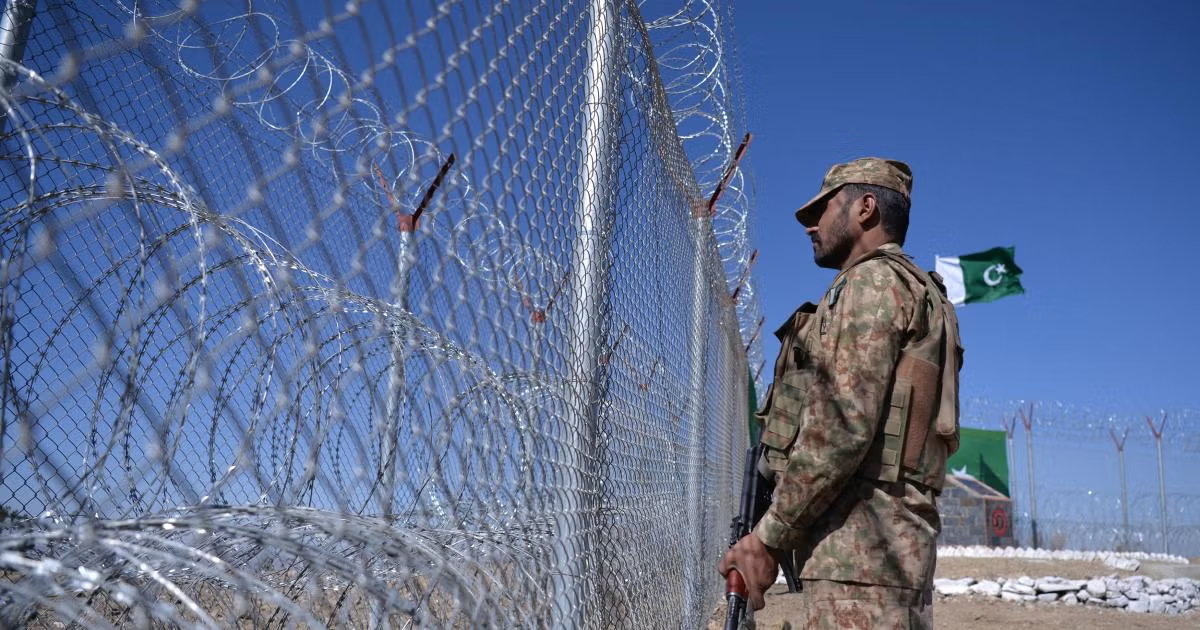
A noticeable shift is emerging in Balochistan following recent public disavowals by families of individuals allegedly associated with militant groups operating in mountainous regions. The development comes after a stern warning issued by Chief Minister Sarfraz Bugti, indicating potential legal consequences for families that fail to inform authorities about relatives involved in armed activities.
Government officials had earlier cautioned that individuals participating in militancy would be treated under anti-terror laws, and families knowingly concealing such affiliations could face legal scrutiny. In the wake of this announcement, several families across different districts have publicly distanced themselves from relatives reportedly linked with the banned outfit Balochistan Liberation Army. These families have clarified that they neither maintain contact with these individuals nor support anti-state activities.
Reframing Disappearances and Accountability
Political and social observers note that, in the past, several cases involving such individuals were presented as enforced disappearances, with allegations directed towards state institutions. Advocacy groups, including the Baloch Yakjehti Committee, have repeatedly raised concerns regarding missing persons and accountability. However, recent family statements suggest that, in certain cases, the individuals in question may have voluntarily joined militant networks in remote mountainous areas.
Government sources maintain that these developments could assist authorities in distinguishing between genuine cases of enforced disappearance and individuals actively engaged in insurgent activities. Officials argue that such clarity would enable more transparent investigations, ensuring that legitimate missing persons cases receive due attention while law enforcement focuses on countering militancy more effectively.
At the same time, human rights advocates emphasise the need for caution and procedural fairness, warning that families must not be subjected to undue pressure or legal complications without credible evidence. Analysts believe the evolving situation could reshape the ongoing discourse in the province by separating competing narratives surrounding militancy and disappearances. Authorities reiterate that long-term peace and stability in the province depend on collective societal cooperation, transparent governance, and sustained efforts to address both security concerns and legitimate grievances.