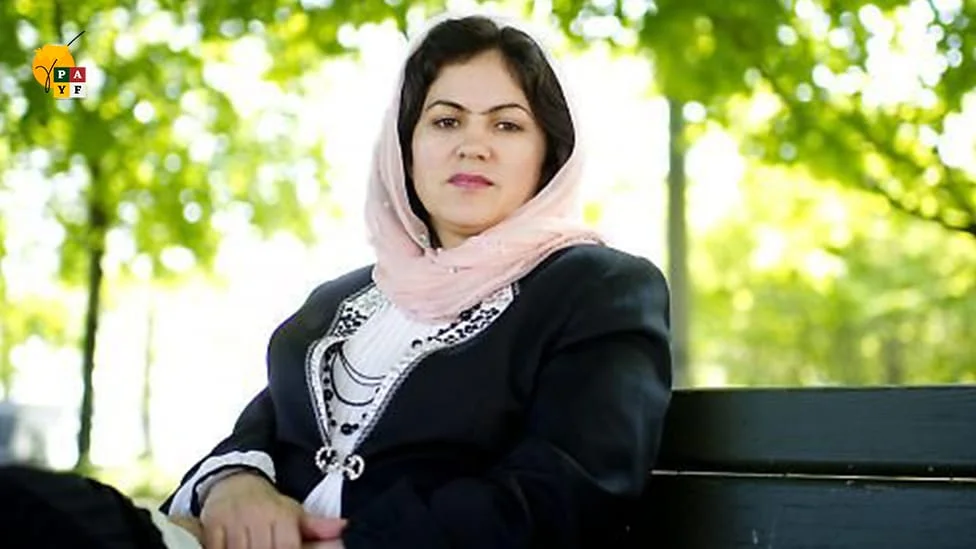
Fawzia Koofi stands among Afghanistan’s most prominent advocates for women’s rights, democratic governance, and peaceful political transition. Born in Badakhshan in 1975, Koofi rose from a childhood marked by conflict to become a three time member of the Wolesi Jirga (the lower house of Afghanistan’s parliament) and its deputy speaker. She survived multiple assassination attempts, participated as a lead delegate in peace negotiations, and used both her parliamentary platform and international voice to press for inclusive politics and the protection of women’s civic space. Koofi’s life and work embody a civic resistance that is distinct from and complementary to military or insurgent forms of opposition to the Taliban.
Advocacy and Political Practice
Koofi’s approach blends grassroots activism with institutional politics. In parliament she championed legislation on women’s political participation, education, and legal protections, and she consistently sought to translate international human rights norms into Afghan law and practice. Her participation in peace talks represented a strategic insistence that any settlement must include women at the table and safeguard basic freedoms. Forced into exile after the 2021 collapse of the republic, Koofi continued to amplify Afghan women’s grievances and aspirations on international platforms, documenting abuses, lobbying for humanitarian access and urging sustained diplomatic pressure for rights protections
Narrating a Different Afghanistan
Koofi’s significance extends beyond policy wins or parliamentary roles. She has become a narrative counterweight to reductive portrayals of Afghanistan as a country defined solely by the Taliban. In speeches, interviews, and memoirs she humanizes Afghan women’s lived realities, teachers denied classrooms, students barred from universities, activists threatened for protest, and frames these as central to any credible roadmap for the country’s future. This storytelling is political: by keeping women visible in global discourse, Koofi ensures that international responses must reckon with gendered harms and the social fabric that sustains Afghan civic life.
Synergies with Other Afghan Figures
While Koofi’s work focuses on rights and civic institutions, it intersects with other non Taliban Afghan personalities who together form a broader front for pluralism. Figures such as Ahmad Massoud, leader of the National Resistance Front, represent the military and symbolic lineage of anti Taliban resistance; technocrats and humanitarian leaders sustain services and document needs on the ground; cultural producers, writers, filmmakers, journalists, preserve pluralist narratives; and ethnic and community elders mediate local disputes and maintain social cohesion. Koofi’s strength is to bridge arenas: she speaks for women’s civic claims while linking them to institutional priorities like education, rule of law and accountable governance that technocrats and community leaders also pursue.
Strategic Priorities and Practical Pathways
Koofi’s vision for converting moral authority into political traction emphasizes several practical pathways. First, protecting educational continuity, formal and informal, so that a generation of Afghan girls retain the skills and aspirations necessary for future leadership. Second, safeguarding independent information channels and documentation mechanisms so that abuses are recorded and accountability remains possible. Third, promoting economic resilience through livelihood support and diaspora engagement to decrease vulnerability to coercion and recruitment. Fourth, advocating layered diplomacy: separating humanitarian engagement from political recognition while keeping channels for negotiation that include women and minority representatives. These priorities reflect Koofi’s conviction that rights, services, and economic viability are mutually reinforcing pillars of civic resilience.
Risks and Enduring Challenges
Koofi’s work faces stark obstacles. The consolidation of Taliban control has shrunk civic space, criminalized many forms of activism, and driven leaders into exile. International fatigue and geopolitical shifts complicate sustained attention and resource flows. There is also a risk that civic advocacy becomes marginalized if it is seen only through humanitarian frames rather than as part of a long term political project. Koofi and her peers must therefore balance urgent protection and advocacy with institution building efforts that preserve governance capacities—even in diaspora and exile, so they can plug back into Afghanistan’s civic life when conditions permit.
What Fawzia Koofi Represents
Koofi matters because she gives voice to constituencies most affected by authoritarian retrenchment, women, educators, social workers, and families and because she insists that any legitimate future for Afghanistan must be pluralist and rights respecting. Her resilience transforms personal survival into political testimony: she models how civic actors can sustain pressure, document abuses, and mobilize international solidarity without surrendering the core claim that Afghans themselves must determine their political destiny.
Conclusion
Fawzia Koofi illustrates that Afghanistan’s story contains many protagonists beyond the Taliban. Her leadership, together with technocrats, cultural figures, community elders, and resistance leaders, forms a multifaceted archipelago of legitimacy and practice that resists mono narratives. Elevating and supporting these figures is not merely symbolic; it is a strategic investment in the civic capacities that will undergird any credible, inclusive, and durable future for Afghanistan.