Skip to content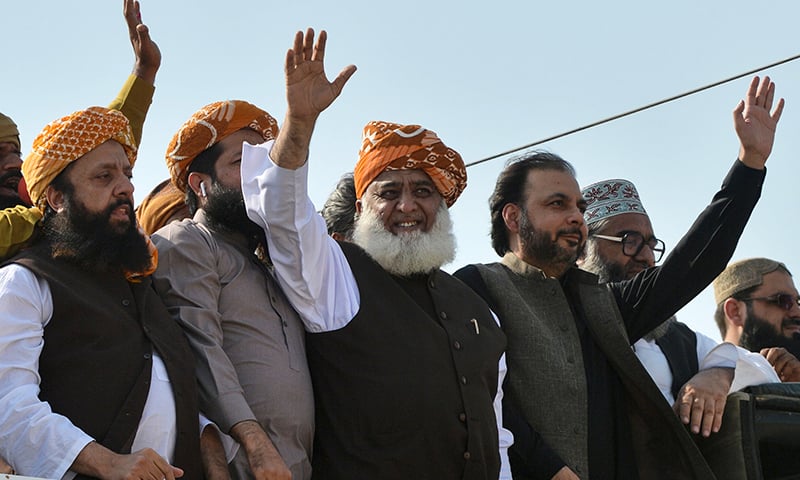
Protest Call in a Sensitive National Climate
Maulana Fazlur Rehman, head of Jamiat Ulema-e-Islam (F), has announced plans to launch a nationwide anti-government movement after Eid. Speaking at a press conference in Islamabad, he stated that the opposition would no longer grant the government additional time, alleging that current policies prioritize external interests over domestic concerns.
The announcement comes at a delicate moment for the country. Political observers note that while protest and dissent are democratic rights, timing and method matter—particularly when national conditions are fragile. Analysts argue that large-scale agitation during a period of economic recovery and heightened security challenges could intensify uncertainty.
Prominent political figures are often expected to weigh national stability alongside partisan objectives. At a time when cohesion is seen as critical, calls for confrontation risk adding strain to an already complex environment.
Economic Recovery and Security Pressures
Pakistan has been navigating a difficult economic phase, with recent indicators suggesting gradual stabilization. Improvements in inflation trends, increased investor confidence, and stock market performance have been cited as signs of cautious progress. Economists warn, however, that sustained recovery depends heavily on political predictability and institutional continuity.
Simultaneously, security challenges remain pressing. Cross-border militancy, particularly affecting Khyber Pakhtunkhwa and Balochistan, continues to test law enforcement and security agencies. In such circumstances, analysts stress that internal political escalation may divert attention and resources from urgent security priorities.
Commentators suggest that constructive parliamentary engagement could provide a more stable channel for opposition concerns. While public mobilization remains a legitimate political tool, past episodes of prolonged protests have carried economic and diplomatic costs.
As Pakistan balances recovery efforts with security imperatives, many observers emphasize the need for responsible political conduct. Dialogue, institutional processes, and national unity are widely viewed as essential to maintaining momentum toward economic relief and long-term stability.