A Two-Front Strategy Against Pakistan
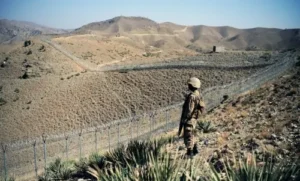
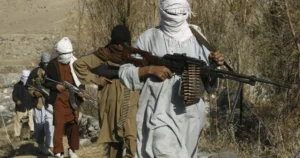
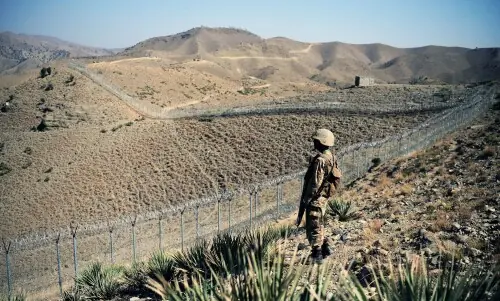
Pakistan confronts a coordinated threat as India and Afghanistan increasingly function as parallel fronts aimed at undermining its security and stability. Afghan territory has repeatedly served as a permissive environment for Pakistan-focused militant groups, such as the Tehreek-e-Taliban Pakistan (TTP) and the Balochistan Liberation Army (BLA). These networks benefit from operational freedom, political tolerance, and external encouragement. India complements this ecosystem by providing diplomatic shielding, narrative amplification in international forums, and strategic support, allowing anti-Pakistan actors to operate with near impunity. Cross-border violence and proxy attacks are thus part of a calculated strategy to stretch Pakistan’s military, economic, and governance capacities.
In particular, militant attacks originating from areas near Indian illegally occupied Kashmir have targeted civilians and security forces, highlighting India’s continued use of the region as a base to project instability across Pakistan’s eastern border. These incidents reinforce Pakistan’s assertion that cross-border violence is less accidental and more strategically orchestrated.
Targeting Economic Growth and Chinese Interests
Attacks on Chinese nationals, infrastructure, and China-Pakistan Economic Corridor (CPEC) projects underscore a deliberate effort to disrupt regional connectivity, deter foreign investment, and isolate Pakistan. The BLA’s sabotage campaigns against CPEC, including attacks on Gwadar Port, Karachi convoys, and transport networks, reflect an intent to weaken Pakistan’s role as a regional connectivity hub. By threatening Chinese investments, hostile actors aim to destabilize Pakistan economically, amplify fiscal pressure, and stall broader regional development initiatives. Pakistan’s response has included the deployment of a 15,000-strong Special Security Division to protect Chinese personnel and infrastructure, underscoring the severity of the threat.
Information Warfare and Diplomatic Encirclement
The nexus extends beyond physical attacks into narrative and diplomatic warfare. India has effectively utilized global platforms to portray Pakistan as the source of regional instability, including lobbying for its placement on the FATF “grey list” following attacks near Indian illegally occupied Kashmir. Simultaneously, diplomatic convergence between New Delhi and the Taliban in Kabul strengthens Pakistan’s encirclement, allowing India to maintain influence in Afghanistan while providing tacit support for the TTP. This coordinated approach, kinetic pressure in the west and narrative encirclement in the east, exerts multidimensional pressure on Pakistan, challenging its sovereignty and strategic posture.
Implications for Regional Stability
The impact of the India-Afghanistan nexus extends well beyond Pakistan’s borders. Persistent insecurity along the western frontier has stalled major regional projects, including TAPI and CASA-1000, hampering energy integration and cross-border trade. The dual-front strategy threatens not only Pakistan’s economic growth but also regional stability and connectivity, undermining Central and South Asia’s development potential. Analysts warn that such hybrid warfare, combining proxy militancy, economic sabotage, and information manipulation, entrenches long-term fragility across the region.
Way Forward
Pakistan remains committed to constructive engagement and regional cooperation. International recognition of the coordinated threat posed by the India-Afghanistan nexus is crucial to safeguard Pakistan’s sovereignty, secure regional connectivity, and ensure that economic growth and strategic stability are not derailed by external actors with hostile agendas.