Skip to content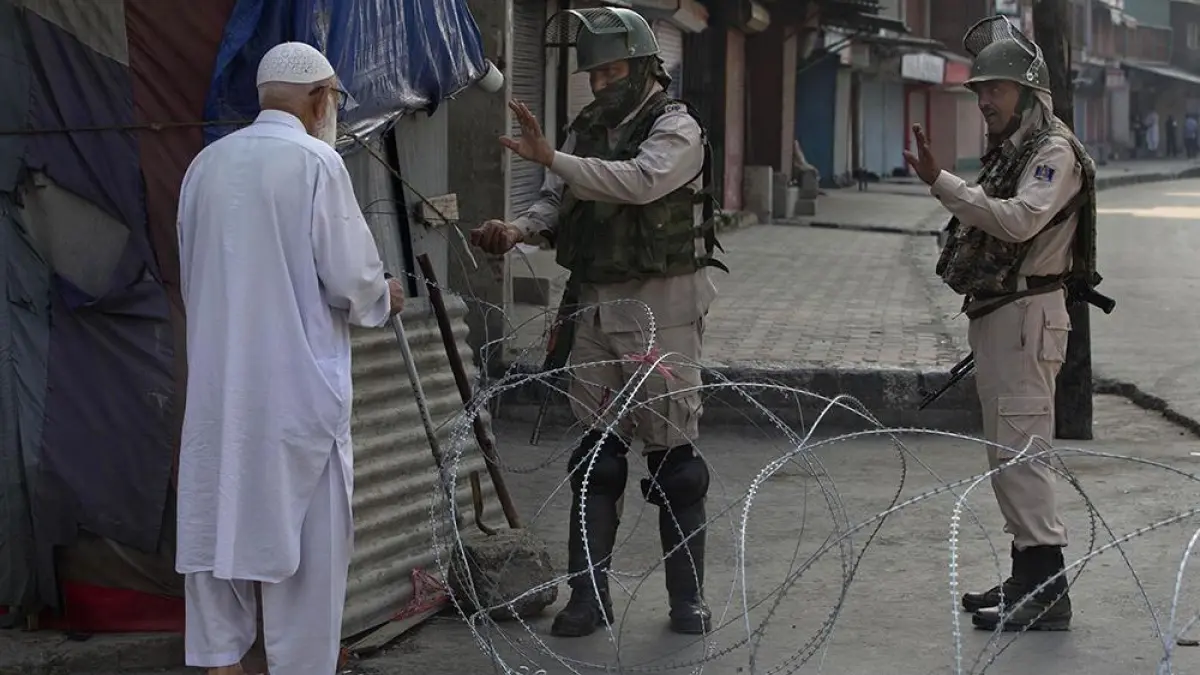
In occupied Jammu and Kashmir, reports indicate that Indian security forces have intensified search operations and internet restrictions across multiple districts, severely affecting normal life and business activities. House-to-house searches, checkpoints, and movement restrictions have been carried out, with authorities citing security concerns as the justification for these measures.
Local residents report that these operations have disrupted daily routines, with mobile internet suspensions hindering education, online businesses, and access to essential services. Students and traders alike have expressed concerns over the impact of prolonged internet outages, which also impede communication during emergencies.
During the operations, arrests and questioning have been reported in some areas. While Indian authorities claim these actions are standard security procedures, human rights organizations have raised questions about their transparency, legality, and scope.
The Kashmir issue continues to draw international attention, with the United Nations and other global institutions emphasizing the protection of human rights in the region. Analysts suggest that long-term stability in Kashmir requires not only security measures but also political dialogue and confidence-building initiatives to ensure the well-being of local communities.
Tensions remain high as security operations continue alongside public discontent. Observers note that sustainable peace in the region will depend on balancing security measures with political engagement and protection of civilian rights, enabling residents to resume normal life and economic activity.