Skip to content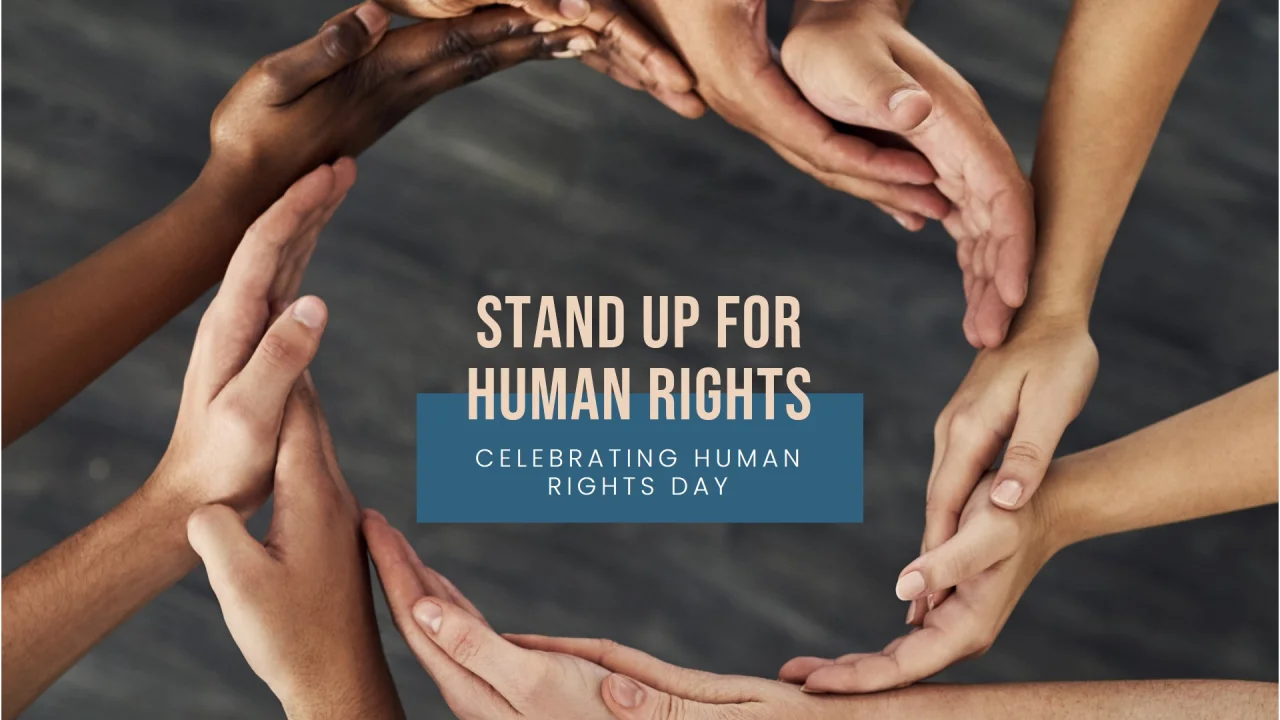
Today, on International Human Rights Day, we commemorate the signing of the Universal Declaration of Human Rights (UDHR). A foundational text establishing equality, justice, freedom, and dignity as core, non-negotiable values. However, in the contemporary geopolitical environment, characterized by pervasive information warfare and post-truth dynamics. The very language of human rights is strategically weaponized.
This terminology now functions as a double-edged sword. It serves both as a moral rallying cry for legitimate dissent and as a potent pressure tool wielded for political and military leverage. The universal standard established by the UDHR is increasingly bent toward specific political objectives. Sometimes, even justifying violence in the name of life.
The digital battlefield accelerates this manipulation. Social media algorithms, optimized for user engagement, actively amplify polarizing and divisive content. It is transforming complex legal principles into simplified, weaponized slogans. This reality makes the capacity to decode, rather than merely repeat. These amplified narratives are a fundamental requirement for informed civic participation.
The Dual Function of Rights: Rallying Cry and Pressure Tool
The enduring promise of International Human Rights Day lies in its common standard of achievement for all nations. For activists and marginalized communities, this standard is a critical rallying cry. In Kashmir, for example, activists and diaspora groups utilize cyberspace as an “epistemological battleground” to document human rights violations, share testimonies, and organize against state propaganda and digital repression. This push for self-determination and freedom of expression (Article 19) leverages the international standing of human rights to mobilize support.
Conversely, the same language is used as a strategic pressure tool. The push to codify ‘gender apartheid’ in response to the institutionalized oppression of women in Afghanistan. For instance, it is explicitly designed to compel international intervention and establish clear accountability standards. It is urging a unified “all tools approach” by the international community.
When international judicial mechanisms are engaged, such as the International Criminal Court, they act as a powerful pressure point to compel accountability. Even if those actions risk being denounced by critics as politically biased or an application of “double standards”.
International Human Rights Day: Narratives in the Digital Conflict Zones
Across conflict zones, patterns of narrative contestation emerge. In Gaza, the conflict involves an intense “war of representation”. Where information warfare relies heavily on episodic, graphic framing and themes of dehumanization, serving as violence-legitimizing rhetoric.
Online and offline, UN experts have noted that legitimate advocacy for Palestinian rights has been met with restrictions. It often goes through the distortion and misinterpretation of international legal standards to conflate protected political criticism with prohibited hate speech, thereby chilling freedom of expression.
In Kashmir, the information space is intensely polarized, with conflicting parties instrumentalizing media to shape domestic and international narratives. In one context, the dominant media editorial policy has often adopted a nationalist framework. It is prioritizing national security concerns over detailed reporting on human rights violations. It usually frames the abrogation of Article 370 as a patriotic milestone.
In response, Kashmiri activists and the diaspora use cyberspace as an “epistemological battleground” to document abuses and share testimonies against state propaganda. Leveraging their counter-narratives as a rallying cry against digital repression that curbs fundamental freedoms, including the right to freedom of movement. This unrelenting information contest ensures mutual tensions persist.
The complex situation surrounding the Pak-Afghan border illustrates the acute tension between a state’s assertion of security needs and its international human rights obligations. For decades, Pakistan has provided refuge to millions of Afghans. However, grappling with economic and security challenges, including the need for enhanced border controls to counter security threats. The country implemented the Illegal Foreigners Repatriation Plan.
This plan, which led to the large-scale repatriation of undocumented Afghans, created a humanitarian crisis. Reports cite harassment and abuse from authorities, underscoring the severe human cost when security imperatives clash with international refugee law. The response by international bodies like UNHCR acts as a necessary human rights pressure tool against this situation.
The Decoding Imperative for Youth
This hyperpolarized environment poses a unique danger to young people. As the most digitally engaged demographic, youth are disproportionately susceptible to algorithmic amplification. It pushes them toward extremism and hatred, leading to affective polarization, a destructive, identity-based hostility toward political adversaries.
When Gen Z activists mobilize around human rights concerns, their digital dissent is often met with targeted state repression. This includes online threats and state-sponsored smearing, turning their rallying cry into a liability. Without critical skills, they become collateral in amplified debates.
The solution rests on critical literacy. International Human Rights Day demands we remember that all human beings are endowed with “reason and conscience”. It makes the capacity to think a fundamental human right. Decoding means moving beyond uncritically repeating partisan rhetoric to engaging in rigorous analysis, evaluation, and reflection.
This includes mastering skills like lateral reading to assess source credibility and identifying sponsored content. It analyzes how “us vs. them” narratives are weaponized to widen social divides. Geopolitical literacy, the ability to question the underlying ideological function of state narratives. It provides the necessary context to deconstruct security arguments and resist manipulation.
To ensure the integrity of the UDHR, celebrated on International Human Rights Day, remains a standard for justice, not a political weapon. We must empower youth with cognitive immunity.
The resilience of the principles affirmed on International Human Rights Day ultimately depends on the ability of every generation to engage as an informed, socially responsible communicator. This is the necessary civic response to the digital information war waged on International Human Rights Day and every day.