Skip to content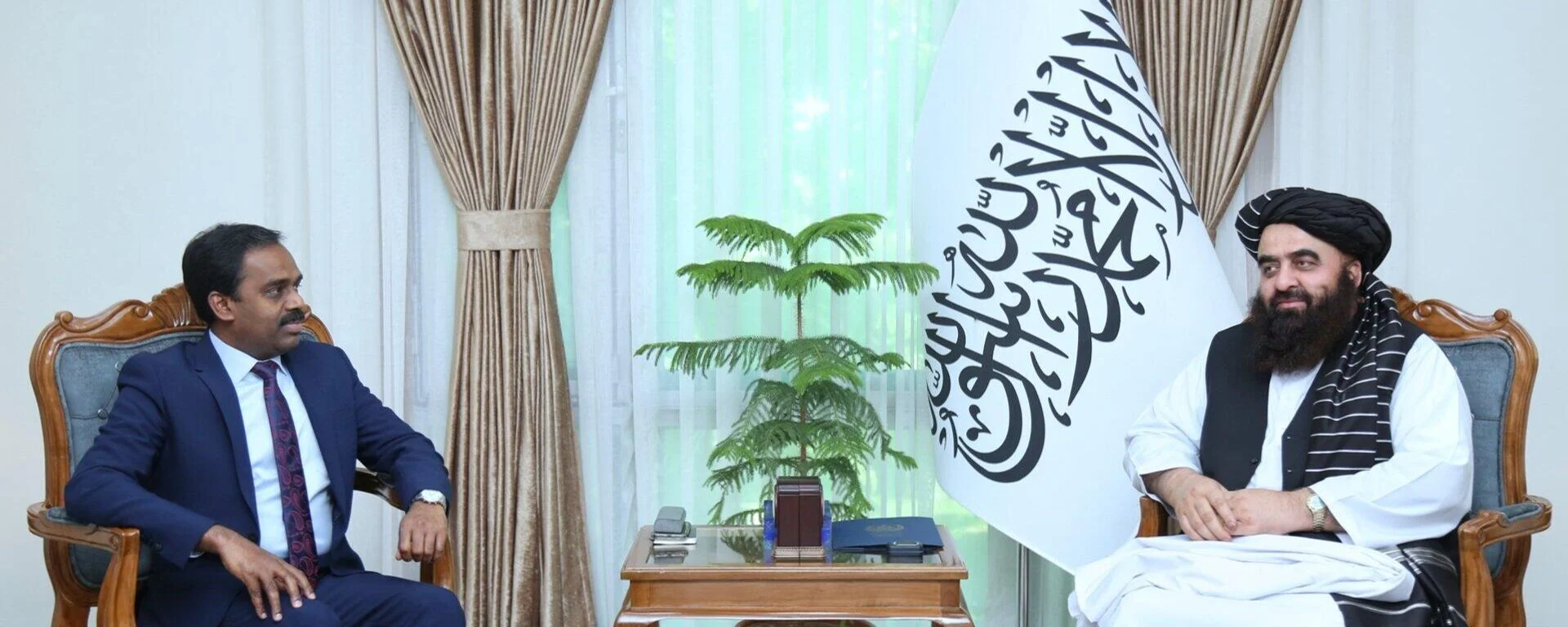
A new strategic alignment is crystallizing in South Asia, presenting Pakistan with its most significant security challenge in decades. This is the Kabul-Delhi Nexus Exposed, a pragmatic and increasingly public partnership between India and the Taliban-led government in Afghanistan. What was once a relationship of quiet, cautious engagement has, following the Afghan Foreign Minister’s visit to India in October 2025, become an open alliance. For Islamabad, this Kabul-Delhi Nexus Exposed confirms its worst fears: a two-front encirclement that is not just geopolitical but actively kinetic and cognitive.
The public unveiling of the Kabul-Delhi Nexus Exposed occurred during Afghan Acting Foreign Minister Amir Khan Muttaqi’s week-long visit to New Delhi in October 2025. Islamabad saw the resulting joint statement on October 10 as a profound diplomatic betrayal. In exchange for Indian commitments on development, including maintaining the Salma Dam and exploring mining investments, the Taliban government provided two major concessions.
First, the joint statement included a “reference to Jammu and Kashmir as part of India,” a move Pakistan’s Ministry of Foreign Affairs called a “clear violation” of UN resolutions. Second, Minister Muttaqi publicly asserted that terrorism is “Pakistan’s internal problem”. This statement was a direct rejection of Islamabad’s long-standing complaint that the Tehrik-i-Taliban Pakistan (TTP) operates from Afghan safe havens.
The Kabul-Delhi Nexus Exposed: A Two-Front Threat
Pakistani officials have directly linked this diplomatic alignment to a surge in terrorism. Following deadly attacks in Wana and Islamabad in November 2025, Prime Minister Shehbaz Sharif did not mince words. He publicly blamed the “Kabul-Delhi nexus” for the violence.
Sharif stated that terrorists from the TTP and Balochistan Liberation Army (BLA) were active from Afghanistan and “in contact with… their supporters in India”. The timing of Muttaqi’s visit, which coincided with a “fresh outbreak of armed conflict” on the Pak-Afghan border, was not lost on Islamabad.
This new Kabul-Delhi Nexus Exposed represents a catastrophic failure of Pakistan’s “strategic depth” policy, which aimed to install a friendly regime in Kabul. Instead, the policy has inverted, creating a hostile western border that is now pragmatically allied with its eastern adversary. The Kabul-Delhi Nexus Exposed is, in effect, Pakistan’s strategic nightmare realized.
Beyond diplomacy and proxy threats, the Kabul-Delhi Nexus Exposed operates on a cognitive front. Analysts describe a coordinated “hybrid warfare” campaign designed to destabilize Pakistan from within. This involves waves of anti-Pakistan content, often originating from bot farms in India and Afghanistan, which portray Pakistan as the aggressor in border conflicts. This orchestrated campaign aligns with the findings of the EU DisinfoLab’s “Indian Chronicles” report. The investigation uncovered a 15-year operation run by a Delhi-based entity, the Srivastava Group, which used over 750 fake media outlets and resurrected NGOs to discredit Pakistan at the UN and EU.
The evidence suggests the Kabul-Delhi Nexus Exposed is not a simple bilateral reset but a comprehensive, multi-domain strategy. By securing a pragmatic partnership with the Taliban, India has inverted Pakistan’s strategic calculus, fostering a two-front threat that is diplomatically isolating, kinetically violent, and backed by a sophisticated global disinformation campaign.