The Peshawar Museum does something strange to visitors. A Gandharan Buddha, Roman drapery, subcontinental calm holds their gaze for a while. Then they walk out into a bazaar humming with Pashto, Urdu, Hindko, and the occasional burst of Persian, and realize the museum never really ended.
Pakistan does this to people. It refuses to be one thing. And for a country closing out its eighth decade, that depth is not a complication to smooth over. It is the foundation to grow into an inheritance far richer than any single story could ever hold.
This piece is about that inheritance and about why Gen Z, more than any generation before it, is positioned to carry it forward and make it fully visible.
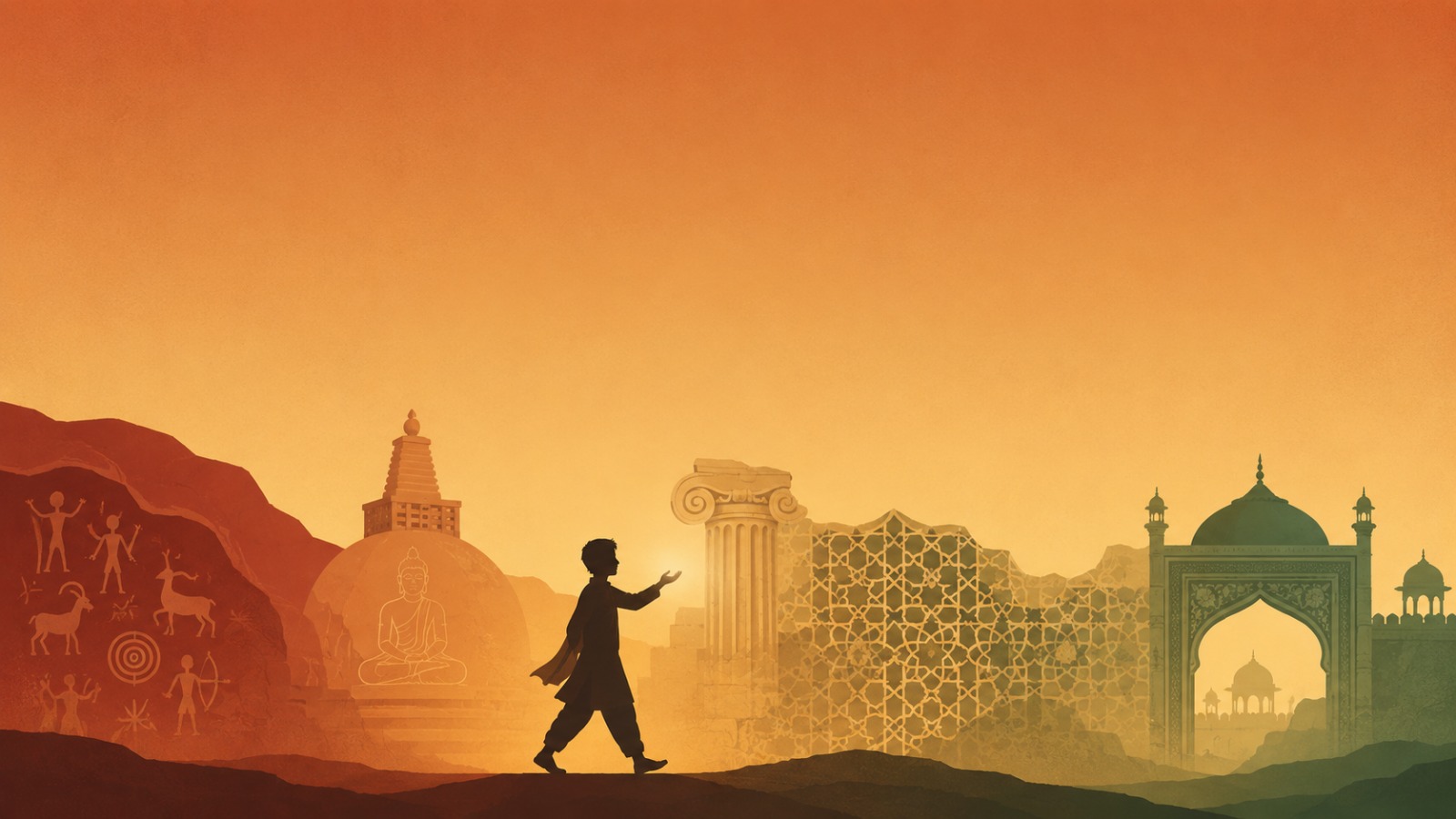
Pakistan’s founding in 1947 gave a name to something the land had been doing for thousands of years already standing at the meeting point of civilizations and turning that meeting into something greater than any one of them. Long before independence, this region was already a melting point for Greek sculptors and Buddhist monks, Persian poets and Central Asian traders, Arab scholars and Turkic dynasties. The new state didn’t start that legacy. It inherited it, and now carries it forward.
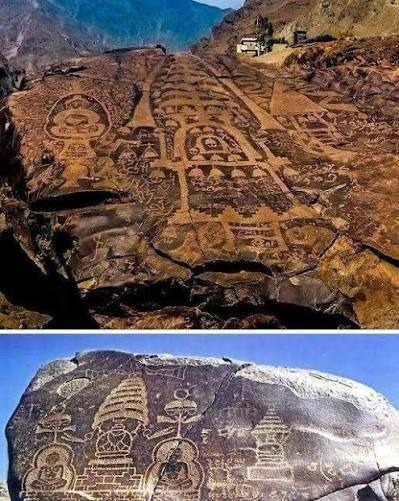
In the north, along what is now the Karakoram Highway, Buddhist pilgrims, Silk Road traders, and Central Asian nomads left behind petroglyphs at Chilas and Shatial that predate Islam in the region by over a millennium. Gilgit-Baltistan and Chitral remain home to communities the Kalasha, the Wakhi, the Burusho whose languages and rites connect to Central Asian and even pre-Vedic roots rather than to any single “mainstream” narrative taught in a standard textbook.
Further south, the Gandhara civilization, centered around Taxila, Swat, and Peshawar, produced an art form that literally fused Hellenistic sculptural technique a legacy of Alexander’s campaigns and the Greco-Bactrian kingdoms that followed with Buddhist iconography. A Gandharan Buddha is, in the most literal sense, a Greek god’s body carrying a South Asian soul.
Then came the Achaemenid Persians, who governed parts of this region as satrapies centuries before Alexander arrived. The Kushans, a dynasty of Central Asian and Turkic-nomadic origin, built an empire from here that traded with Rome and Han China simultaneously.
In 712 CE, Muhammad bin Qasim’s expedition brought Sindh into the early Islamic world, opening a corridor through which Arab, and later Turkic and Persian, currents would flow for the next thousand years the Ghaznavids, the Ghurids, the Delhi Sultanate, and eventually the Mughals, whose court culture was itself a Persianate synthesis of Central Asian, Iranian, and South Asian sensibilities.
Layer the Caucasian and Iranian trade and migration routes that fed into this same corridor, and what emerges is not a simple lineage but a delta many rivers of civilization converging on one plain.
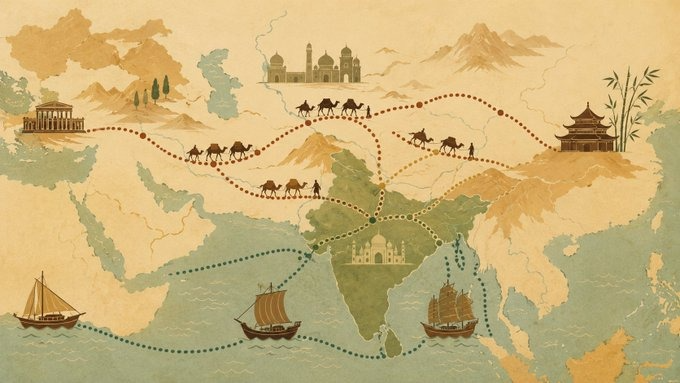
Here is where the contestation begins, and it is worth naming plainly a plural inheritance takes more effort to narrate than a singular one, and effort is often the first casualty of a busy national conversation.
It helps to be precise about what is, and is not. Islam has been present and continuously lived in this region for roughly thirteen hundred years, and for well over a millennium it has been the faith by which the overwhelming majority of this land’s peoples have defined themselves not a recent overlay, but itself one of the deepest and most enduring threads in the region’s civilizational fabric. That is not the layer in question.
What sometimes goes missing is not Islamic identity but full fluency in everything that came alongside and before it locally the Gandharan, Persian, Greek, Turkic, and Central Asian textures that Islam itself arrived into, absorbed, and was in turn shaped by across a thousand plus years of Ghaznavid, Ghurid, and Mughal synthesis. A Kalasha festival, a Gandharan stupa, a Sindhi Sufi shrine, a Balti oral epic none of these compete with that thirteen hundred year identity. They are the older chapters of the same continuous story it belongs to.
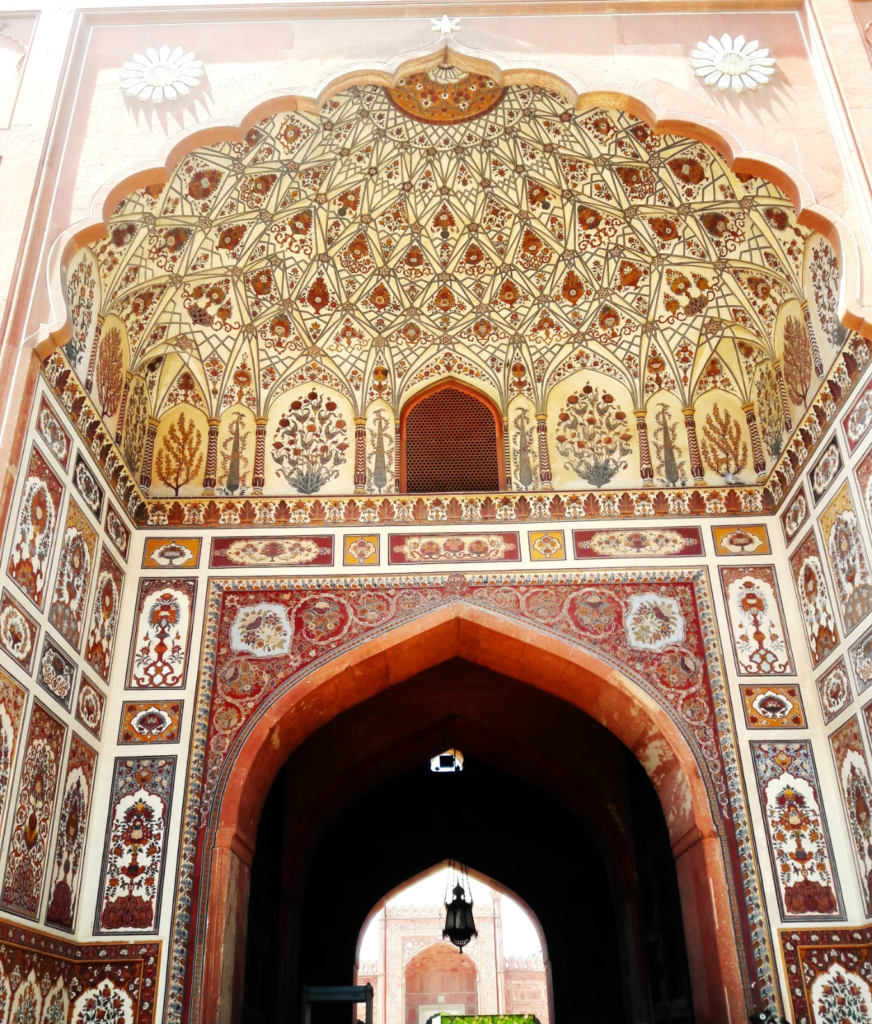
The result, visible increasingly in public discourse, is less exclusion and more an incomplete telling a tendency to treat everything before this synthesis as somebody else’s history rather than an earlier draft of one’s own. That gap in fluency, not any single identity, is what occasionally hardens into division people reaching for certainty in a simpler story because the fuller one was never quite finished in the retelling. That gap is worth closing rather than ignoring, because the alternative leaving the story half-told costs more than it saves.
Pakistan is not the first country to inherit more history than one identity can comfortably hold. A brief look elsewhere is instructive, not as a template to copy but as evidence that the multiplicity itself need not be the obstacle.
Turkey built a modern national identity that deliberately reaches back past the Ottoman and Islamic periods to Hittite, Phrygian, and Greco-Roman Anatolia, Göbekli Tepe and Ephesus are marketed as proudly Turkish heritage sites alongside Ottoman mosques, not treated as foreign intrusions on the land.
Egypt does something similar. Pharaonic, Coptic Christian, and Islamic layers coexist in its national self-presentation, each treated as authentically Egyptian rather than as competing claims.
Mexico’s modern identity explicitly fuses Indigenous Mesoamerican heritage (Aztec, Maya) with its Spanish colonial past into a single mestizo self-understanding, taught in schools and celebrated in public monuments rather than papered over.
None of these cases are without their own internal debates. Heritage politics is contested everywhere. But in each, the state and civil society made a deliberate choice to narrate depth as strength rather than as a threat to unity. That choice is available to Pakistan too.
This is the reframe worth putting in front of youth this Independence Day: you did not just inherit a seventy nine year old country. You inherited several-thousand-year-old ground, and with it, a responsibility that goes beyond patriotism into something closer to custodianship.
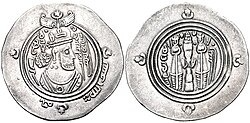
Custodianship means being able to hold “Pakistan is an Islamic Republic” and “Pakistan sits on Buddhist, Indic, Persian, Greek, Turkic, and Central Asian civilizational ground” in the same breath, without treating the second as a threat to the first.
It means recognizing that soft power the kind that makes a country worth visiting, studying, and respecting internationally is built precisely from this kind of layered, undeniable depth. Countries do not compete on how simple their story is; they compete on how rich it is and how well they tell it.
For a generation that already thinks in threads, carousels, and visual storytelling, this is not an abstract heritage-management problem. It is, quite literally, content and content that happens to be true, evidenced, and ours.
As Pakistan approaches another Independence Day, the useful question is not “which civilization gets to define us” but “how much richer is the ‘us’ we already are.”
A Gandharan Buddha in Peshawar, a Wakhi shepherd’s song in Chitral, a Persianate ghazal in Lahore, and a Quranic verse recited in Karachi are not four different countries competing for the flag. They are verses of the same long poem the land has been writing since long before anyone called it Pakistan and the pen, as of this Independence Day, is in Gen Z’s hands.