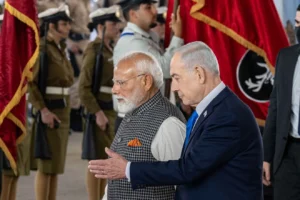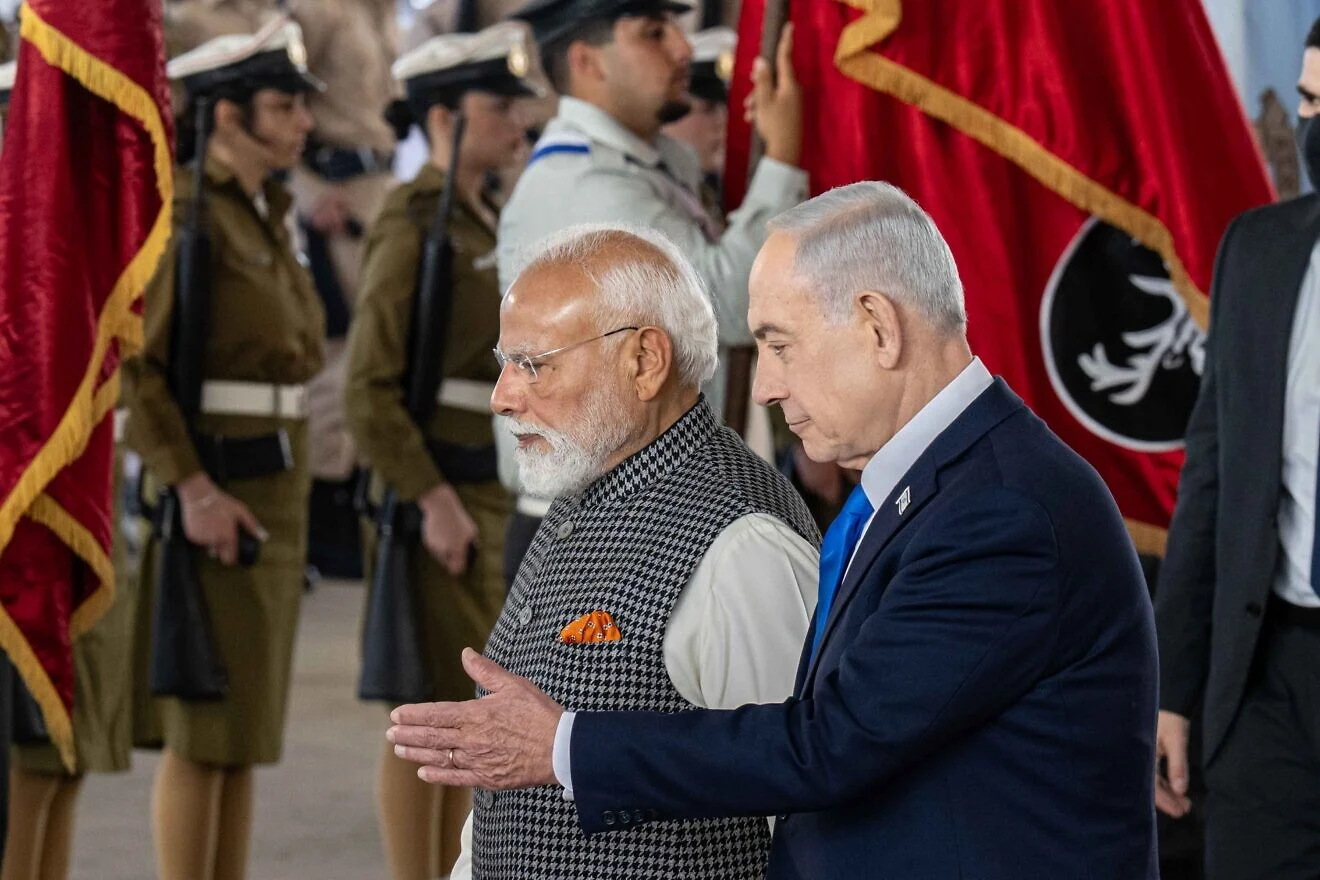
Indian Prime Minister Narendra Modi visited Israel to further strengthen a rapidly expanding strategic partnership. The visit signals continuity in high-level engagement between New Delhi and Tel Aviv, particularly in defense, intelligence sharing, agriculture, and advanced technology sectors. Modi held meetings with Israeli Prime Minister Benjamin Netanyahu, reaffirming commitments to deepen bilateral cooperation.
Over the past decade, India-Israel ties have evolved into a robust security-driven relationship. Israel remains one of India’s top defense suppliers, while collaboration in cybersecurity, drones, and border management technologies has intensified. Supporters argue that this partnership enhances India’s security and technological advancement.
However, critics warn that the growing India-Israel nexus could carry geopolitical implications for the broader Middle East. At a time of heightened regional tensions, closer strategic alignment may be perceived as reinforcing bloc politics, potentially complicating India’s traditional balancing role in the region. India has historically maintained diplomatic relations with both Israel and Palestine, positioning itself as a strategic balancer.
As geopolitical rivalries sharpen, Modi’s visit underscores shifting alliances that may influence security dynamics beyond South Asia, with ripple effects across the Middle East.