What connects, or disconnects, the souls of people, whether living side by side or miles apart, is information. In conflict zones, access to information becomes limited and heavily dependent on news channels and media platforms. That is precisely why journalism, as a bridge between realities, is meant to remain objective and free of bias. Once bias enters, it does not just erode journalistic ethics; it shatters trust, hope, and the bonds between people.
And when that bridge is tilted, even slightly, it does not just misinform, it quietly redraws how nations see each other.
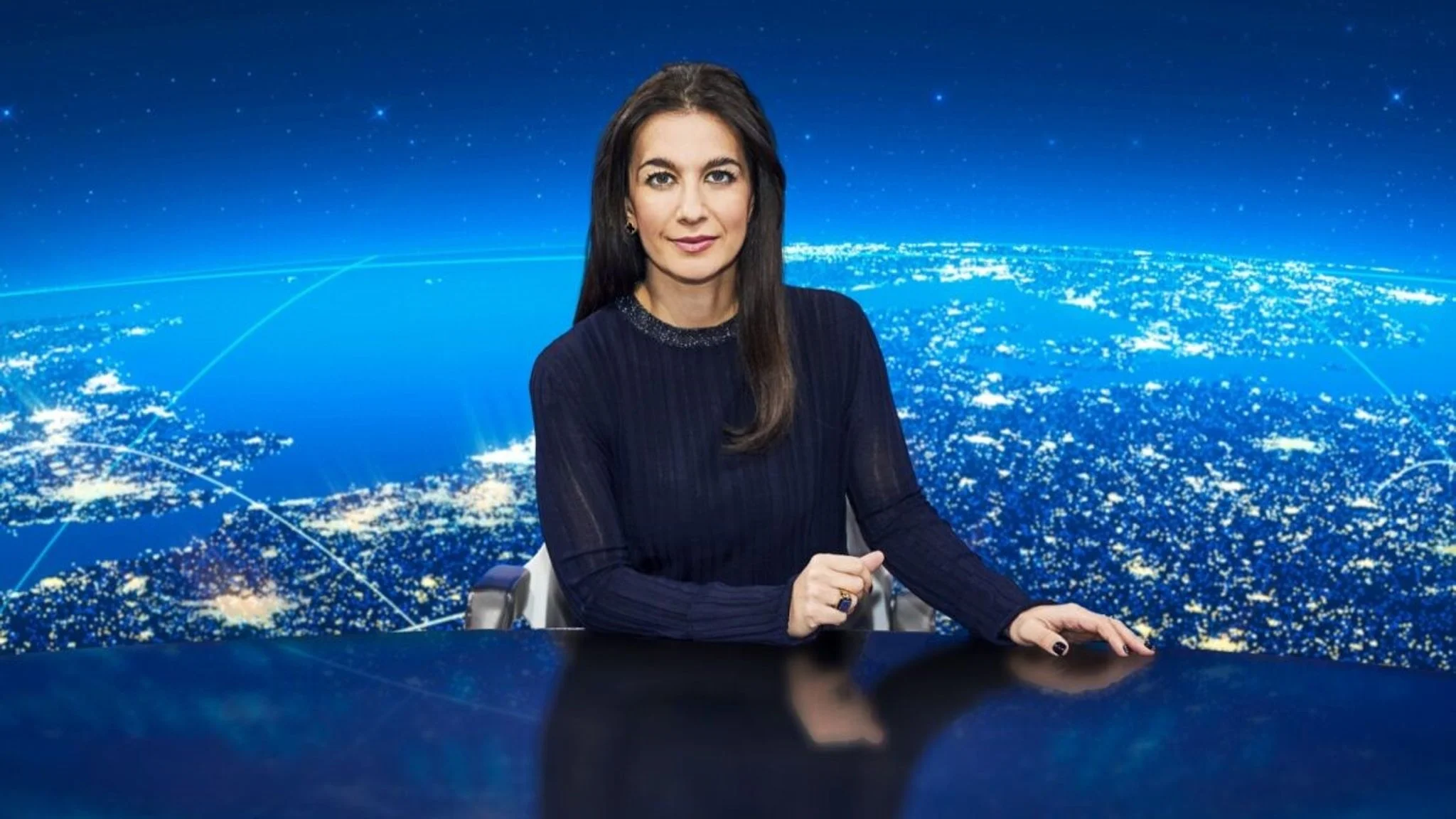
Unfortunately, in today’s world, journalism often leans toward personal bias and viewership metrics rather than truth and responsibility. Pakistan, a country that has long faced security challenges, has also been subjected to persistent negative framing in segments of the international media. One recurring example raised by critics is Yalda Hakim, presenter of The World with Yalda Hakim on Sky News, whose reporting on Pakistan is frequently questioned for lacking balance and integrity.
But this is not just about one journalist; it is about how narratives are built, repeated, and normalised until they begin to define reality itself.
Critics argue that her coverage reflects a pattern of structured narratives against Pakistan. Recently, she drew criticism not only from Pakistanis but also from Afghans for allegedly amplifying unverified claims and contributing to tensions between the two neighboring nations. At a time when Pakistan is engaged in counterterrorism efforts involving the Afghan Taliban, she was accused by netizens of giving disproportionate space to militant narratives rather than presenting a grounded Afghan civilian perspective.
One such example frequently cited is the claim that the Taliban had shot down four Pakistani jets and captured 80 soldiers, an assertion widely rejected and seen as disinformation. Similarly, in the case of the alleged strike on the Odin Treatment Centre (formerly Phoenix Camp), critics point out that despite Pakistan’s denial and the emergence of open-source geolocation evidence, she continued to platform voices aligning with a particular narrative.
This is where journalism stops reflecting reality, and starts selecting it.
Yalda Hakim’s professional trajectory, from Australia’s SBS to the BBC and now Sky News, has positioned her as a prominent international journalist. Born in Kabul in 1983, she fled the Soviet invasion as an infant, with her family passing through Pakistan before eventually settling in Australia. This personal history often underpins her reporting identity.
But personal history, while powerful, cannot replace professional balance.
Critics argue that her work reflects what they call a “selective accountability model,” where scrutiny appears uneven, particularly in regions like South Asia and the Middle East.
During the India-Pakistan tensions, her interview with Dr Mohammad Faisal drew attention. Observers noted that accusations were presented as established facts, while narratives aligned with India’s position were foregrounded. Her prior interview with Jaiveer Shergill, spokesperson of the Bharatiya Janata Party, was also highlighted by critics as part of a broader framing pattern. Critics further pointed to her visible personal rapport and social interactions with Shergill, arguing that this closeness reflects an influence on her journalism, aligning it more closely with narratives associated with the BJP’s Hindutva-leaning political stance.
Similarly, remarks by Pakistan’s Defence Minister Khawaja Asif were described as “jaw-dropping admissions,” with critics arguing that the historical context, particularly Pakistan’s sacrifices of over 80,000 lives in the war on terror, was omitted. On the other hand, she also interviewed Mosharraf Zaidi, Prime Minister’s Spokesperson for Foreign Media, but never shared it on her X account, possibly because it offered a fact-based perspective that did not fit her narrative.
Because without context, even truth can be made to sound like a confession.
Her coverage of Pakistan’s internal political developments has also been contested. From portraying the jailed former Prime Minister as a victim to framing the state as authoritarian during the 2024 constitutional transition, critics argue that her reporting consistently places Pakistan in a negative light.
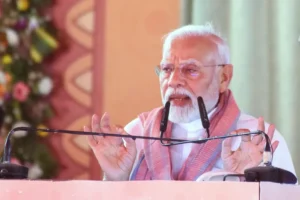
Beyond South Asia, her participation in forums such as the Raisina Dialogue, hosted by the Observer Research Foundation in partnership with India’s Ministry of External Affairs, has been cited as evidence of proximity to Indian strategic circles. Her appearances alongside figures like Narendra Modi and collaborations with Indian media networks have further fueled perceptions among critics that her work aligns with certain geopolitical narratives.
And when journalism begins to overlap with strategic narratives, even unintentionally, trust becomes the first casualty.
The criticism is not limited to Pakistan. Her reporting on Gaza has also been scrutinised. Analysts point to what they describe as “linguistic decoupling,” the use of passive language for Palestinian casualties and active attribution when reporting Israeli losses. Figures such as Seyed Mohammad Marandi have publicly challenged her framing, accusing segments of Western media of double standards.
Here again, the issue is not just wording; it is whose pain is humanised, and whose is reduced to background noise.
Such patterns are not just problematic; they are harmful. Harmful to Pakistan’s image, harmful to regional trust, and especially damaging to the fragile yet deeply rooted bonds between Pakistan and Afghanistan.
Because between these two nations, there is more than just a border; there is shared history, culture, migration, and memory. Narratives that amplify division over understanding risk weaken these connections.
Journalism carries the responsibility to connect people, not divide them. When narratives are perceived as selective or agenda-driven, they deepen mistrust across borders. At a time when the Muslim world faces shared challenges, responsible reporting should foster clarity, empathy, and unity, not reinforce fault lines.