Commentary

Image Credit: Arab News Pk
A Principled Position in a Changing Landscape
Pakistan’s position on the Palestinian question has remained consistent for decades, anchored in international law and the right of self‑determination. Islamabad has repeatedly affirmed its support for the establishment of an independent and sovereign Palestinian state based on pre‑1967 borders, with Al‑Quds Al‑Sharif as its capital. This stance has not been episodic or rhetorical; it has formed a core element of Pakistan’s foreign policy identity across successive governments.
The current phase of diplomacy around Gaza, however, unfolds in an altered international environment. Prolonged conflict, widespread humanitarian devastation, and the erosion of effective multilateral mediation have compelled states to explore transitional mechanisms that prioritise immediate relief alongside political outcomes.
The Board of Peace and International Legitimacy
The formation of the Board of Peace under United Nations Security Council Resolution 2803 (2025) represents one such mechanism. Conceived as a transitional arrangement, the Board is designed to facilitate ceasefire implementation, coordinate humanitarian assistance, and support the reconstruction of Gaza within the framework of international law. Its mandate is explicitly tied to advancing a just political process rather than supplanting Palestinian self‑determination.
Pakistan, along with seven other Muslim countries, endorsed the initiative after the announcement of a 20‑point Gaza Peace Plan aimed at halting hostilities, preventing forced displacement, and laying the groundwork for a two‑state solution. The endorsement was not a departure from principle but an attempt to align diplomacy with urgent humanitarian realities.
Why Participation Matters
Pakistan’s decision to join the Board reflects an assessment that disengagement would offer limited leverage while participation provides a platform to influence outcomes. As a country with longstanding credibility in multilateral diplomacy and peacekeeping, Pakistan brings institutional experience rather than coercive power to the table.
Its relationships with major global actors including the United States, China, and Russia position Pakistan as a potential interlocutor capable of sustaining dialogue across political divides. In a fragmented international system, such diplomatic capital carries practical value.
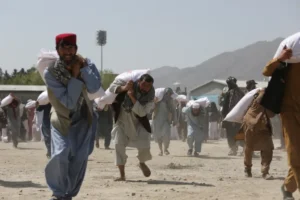
Equally significant is the recognition that humanitarian crises do not resolve themselves through statements alone. With Gaza facing prolonged infrastructural collapse and civilian vulnerability, transitional arrangements have emerged as interim tools to stabilise conditions while political negotiations continue.
Addressing Domestic and Regional Concerns
Criticism of Pakistan’s participation has largely centred on fears of strategic overreach or unintended entanglements. These concerns merit scrutiny, particularly in a region where foreign interventions have often produced destabilising outcomes. However, participation in the Board does not imply automatic involvement in any security or enforcement mechanism associated with the broader peace framework.
Pakistan has maintained clarity that any future engagement would be contingent on national interest, a United Nations mandate, and the consent of the Palestinian people. This distinction remains central to preserving policy autonomy.
A Test of Practical Diplomacy
The Board of Peace should be understood less as a definitive solution and more as a test of whether coordinated international engagement can reduce civilian suffering while preserving the political horizon of statehood. Early indicators, including a reduction in casualty figures and improved humanitarian access, suggest incremental gains rather than transformative change.
Such outcomes neither negate the structural asymmetries of the conflict nor resolve its underlying political disputes. They do, however, underscore the necessity of pragmatic diplomacy in moments where maximalist positions risk prolonging human cost.
Conclusion
Pakistan’s participation in the Board of Peace reflects a strategic choice to remain engaged rather than peripheral at a moment of acute humanitarian need. It aligns with Islamabad’s historical support for Palestinian rights while recognising the limitations of declaratory politics in the face of sustained conflict.
In an era marked by weakened multilateralism and selective enforcement of international norms, Pakistan’s role illustrates the challenge faced by middle powers: balancing principle with pragmatism, and ideals with outcomes. Whether the Board succeeds will depend not only on its design but on sustained international commitment to a political settlement rooted in justice, legality, and dignity for the Palestinian people.