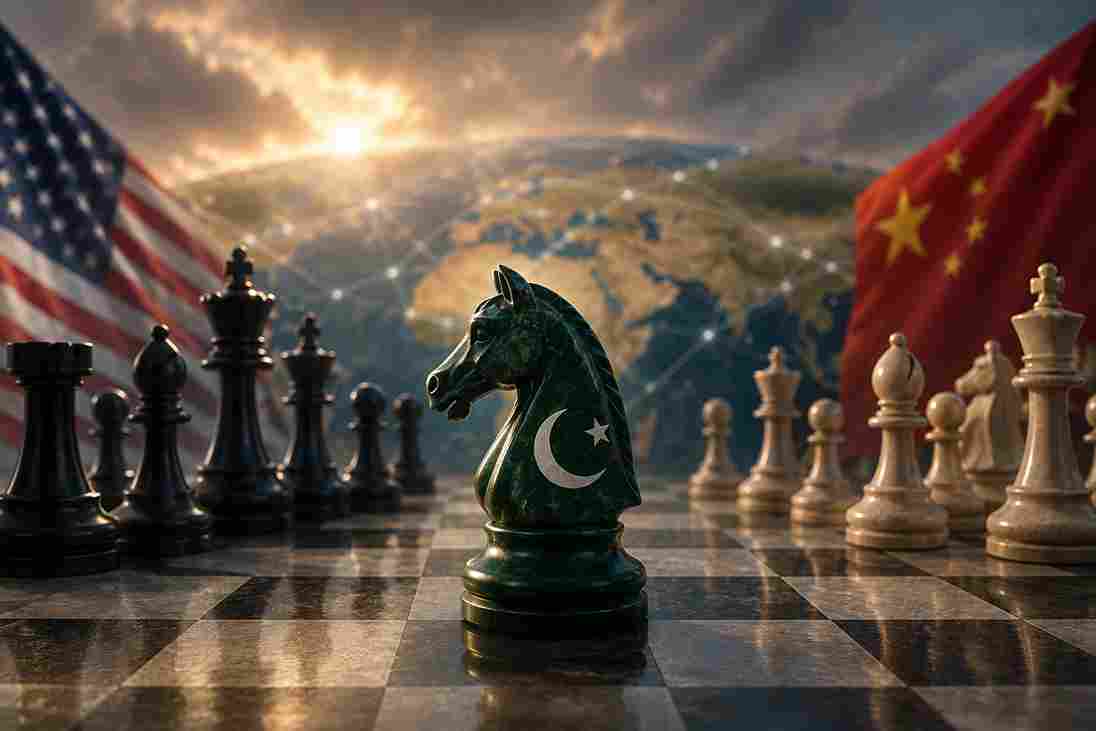
The nature of power is changing. Military strength remains indispensable, but it is no longer the sole measure of national influence. Today, states increasingly advance their interests through economic pressure, technology restrictions, financial leverage, cyber capabilities, strategic communications, trade policies, and control over critical supply chains, a growing practice commonly described as coercive diplomacy.
In the twenty-first century, access can be as powerful as force, and denial can achieve what conventional warfare once sought to accomplish.
Recent global developments demonstrate this transformation. Since 2022, the United States has introduced three successive rounds of export controls targeting China’s semiconductor industry, most recently in March 2025, restricting access to advanced chips, chip-manufacturing equipment, and AI design software.
Beijing has labelled these measures “economic coercion,” while Washington frames them as national security safeguards. Regardless of terminology, the outcome is clear: a single policy instrument can alter another state’s technological trajectory without a single soldier crossing a border.
The same logic underpins the extensive sanctions imposed on Russia after 2022. Restrictions expanded well beyond defence industries to include finance, technology, energy, and even luxury goods, reflecting a deliberate strategy of applying economic pressure to influence political decision-making.
These cases illustrate that economic instruments, financial systems, and technology controls have become central tools of statecraft.
Pakistan is not observing this transformation from the sidelines. It has experienced its own forms of coercive diplomacy. The country’s years on the FATF grey list constrained financial flows, investor confidence, and international business long before any judicial verdict was delivered.
Similarly, the 37-month IMF Extended Fund Facility approved in September 2024, alongside the Resilience and Sustainability Facility, has shaped fiscal priorities, structural reforms, and economic decision-making. These experiences demonstrate that national resilience increasingly depends not only on military preparedness but also on economic credibility and institutional strength.
Economic Resilience is Now Strategic Power
National security can no longer be viewed solely through a military lens. A country’s ability to absorb economic shocks, secure technological access, modernize industry, maintain trusted institutions, and sustain investor confidence has become equally important. Economic resilience is no longer simply a development objective—it is a strategic asset.
Pakistan’s recent economic recovery reflects this reality. Foreign exchange reserves rose from approximately US$14.5 billion in mid-2025 to around US$16 billion by December 2025, supported by ongoing reforms under the IMF programme. Islamabad has also requested a US$10 billion exchange-stabilisation facility from the US Treasury, seeking to diversify external financing and reduce dependence on multilateral disbursements. These steps highlight an increasingly important principle: economic stability expands diplomatic space and strengthens strategic autonomy.
A Multipolar World Demands Diversified Partnerships
The global order is becoming increasingly multipolar. The United States continues to lead in military capability, finance, and technological innovation. China has emerged as a major economic and industrial power through manufacturing, infrastructure development, and global connectivity initiatives. Europe is investing in strategic resilience while balancing security with economic competitiveness.
Regional powers are also adapting rapidly. Saudi Arabia, the UAE, Türkiye, and Qatar are diversifying diplomatic and economic partnerships while reducing dependence on any single external actor. Saudi Arabia alone has committed nearly US$100 billion towards artificial intelligence and digital infrastructure under Vision 2030, while AI-related investments across the GCC exceeded US$30 billion by early 2025. These investments are not merely economic diversification projects; they reflect a broader recognition that technological leadership, digital infrastructure, and innovation now underpin national security.
For Pakistan, this evolving landscape should not be viewed as a choice between competing blocs. Rather, it presents an opportunity to pursue a balanced foreign policy that safeguards national interests while maintaining constructive engagement with China, the United States, Europe, the Gulf states, Central Asia, and the wider Muslim world. Diversified partnerships reduce strategic vulnerabilities, expand economic opportunities, and preserve policy flexibility in an increasingly fragmented international environment.
Technology will Define Future Competitiveness
The next decade will be shaped less by conventional military balances and more by technological capability. Artificial intelligence, cybersecurity, quantum computing, biotechnology, advanced manufacturing, and digital infrastructure are rapidly becoming essential components of national power. Countries investing today in education, scientific research, innovation ecosystems, and digital skills will shape the industries and geopolitical influence of tomorrow.
Pakistan cannot afford to remain a consumer of emerging technologies while others become producers. Industrial modernization and digital transformation must become integral components of national planning if the country is to compete effectively and reduce long-term dependence on external technologies.
Climate Resilience is National Security
Climate change represents another strategic challenge that demands a broader understanding of security. The 2025 Germanwatch Climate Risk Index ranks Pakistan as the world’s most climate-affected country, driven primarily by the catastrophic 2022 floods that affected approximately 33 million people, claimed nearly 1,700 lives, and caused reconstruction losses exceeding US$16 billion.
Despite contributing less than one percent of global greenhouse gas emissions, Pakistan remains among the countries most exposed to floods, water stress, heatwaves, and agricultural disruption. Climate resilience is therefore not simply an environmental concern; it is a strategic imperative affecting infrastructure, food security, fiscal stability, public health, disaster preparedness, and long-term economic growth.
Strategic Autonomy Requires National Capacity
Strategic autonomy should remain Pakistan’s guiding principle, preserving the ability to make sovereign decisions based on national priorities rather than external pressure. Yet strategic autonomy cannot rest on rhetoric alone. It requires economic stability, technological capability, credible institutions, diversified partnerships, and resilient supply chains.
Pakistan’s geography remains one of its greatest strategic advantages. Situated at the crossroads of South Asia, Central Asia, the Middle East, and China, the country possesses significant potential to become a regional hub for trade, connectivity, logistics, and energy corridors. Realising this potential, however, will depend upon continued investment in transport infrastructure, industrial competitiveness, cross-border commerce, and institutional reforms.
The Way Forward
Pakistan’s policymakers, businesses, universities, and research institutions all have a role in preparing the country for this evolving strategic environment. Strengthening economic competitiveness, improving governance, investing in technology, expanding regional connectivity, and promoting evidence-based policymaking will enhance national resilience while creating new opportunities for sustainable growth.
Public discourse must also evolve. International relations are no longer defined by rigid distinctions between allies and adversaries. States increasingly compete in one domain while cooperating in another. Effective diplomacy therefore demands pragmatism, flexibility, and a sophisticated understanding of changing global realities rather than outdated geopolitical binaries.
Military capability will always remain an essential pillar of Pakistan’s security. However, defence preparedness alone cannot guarantee sovereignty in an era where financial systems, technology controls, climate risks, information campaigns, and supply chains increasingly shape global outcomes. Economic stability, energy and food security, technological innovation, institutional credibility, public health, and climate adaptation have become equally important components of comprehensive national power.
The twenty-first century will reward countries that innovate, diversify, and build resilience. Pakistan cannot respond to contemporary challenges with twentieth-century assumptions. Its long-term strength will depend on developing national capacity across every domain of power while maintaining balanced and productive partnerships with all major international actors. A confident, resilient, and forward-looking Pakistan will be better positioned not merely to withstand coercive diplomacy, but to shape opportunities in an increasingly competitive world.