Senior Taliban Border Officer Slain as Fighting Flares in Northeastern Afghanistan
A Taliban officer responsible for border security in Zebak district, Faridullah Wahdat, was killed when clashes broke out overnight with anti-Taliban militants, in what appears to be one of the heaviest blows dealt to the group’s frontier forces in recent memory.
Local accounts describe fighters moving against Taliban checkpoints along the Afghan-Pakistan border, briefly holding high ground that overlooks one of the outposts before Wahdat was killed in the exchange. Two more Taliban commanders based in the area are also said to have lost their lives, although the Taliban and the Afghanistan Freedom Front (AFF), which has claimed responsibility for the assault, offer conflicting death tolls.
Analysts note that losing a border commander is not a minor setback. These officers are responsible for running patrols, tracking movement across the frontier, and holding defensive lines. Wahdat’s death shows that anti-Taliban fighters are now capable of reaching into the group’s command layer, not merely striking rank and file forces.
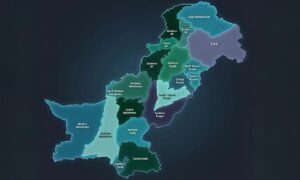
Zebak sits within Badakhshan, a province that has repeatedly proven difficult to pacify given its rugged terrain, scattered villages, and shared borders with both Pakistan and Tajikistan. These conditions have long sheltered pockets of resistance against whichever government sits in Kabul.
What also stands out is the manner of the attack itself. Rather than a quick strike and retreat, the militants reportedly held their position and fought for a prolonged stretch, a tactic that, even if confined to one district, drains Taliban resources and dents confidence among its ranks.
Adding a further complication, Taliban officials have claimed the assailants crossed in from Chitral, on the Pakistani side of the border. This is an accusation likely to stoke further friction between Islamabad and Kabul regardless of whether it holds up to scrutiny.
Taken alone, the episode will not shift Afghanistan’s overall political trajectory or loosen the Taliban’s hold on power nationally. Yet it reinforces a persistent truth. Controlling Kabul is not the same as controlling the country’s edges, and Badakhshan’s remote corners look set to remain a source of friction, one with the potential to spill across borders.