A Shrinking Space for Journalism
Afghanistan’s media continues to face relentless repression under Taliban rule. According to the Afghanistan Journalists Center (AJC), at least 205 violations of press freedom were recorded over the past year, including threats, detentions, and two killings. Journalists now operate under constant intimidation, and independent reporting has become an increasingly hazardous profession.
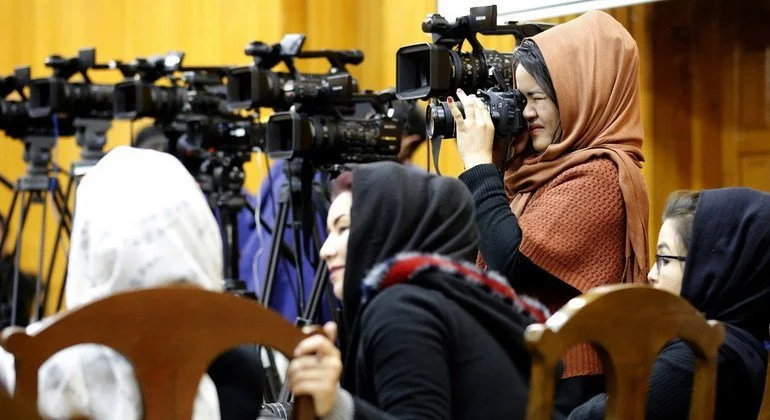
Women journalists are particularly vulnerable. Restrictions preventing them from attending press conferences or reporting in public spaces effectively erase female perspectives from the country’s media discourse. These measures are not only discriminatory but also weaken the diversity and depth of reporting, depriving Afghan citizens of a complete view of society.
Codified Censorship and Intimidation
The Taliban have moved beyond sporadic harassment to implement systematic censorship. Policies banning the publication of images of living beings in 23 provinces have forced the closure of at least 20 television stations. Forced confessions aired on state-controlled channels further normalize fear and demonstrate the Taliban’s determination to control narratives.
This institutionalized repression ensures that media outlets function less as watchdogs and more as instruments of state messaging. Independent journalists are left to navigate a legal and social environment where reporting truth carries the constant risk of punishment.
Discrepancy Between Claims and Reality
Taliban officials continue to assert that press freedom is respected, yet evidence suggests otherwise. At least five journalists remain imprisoned, and threats and intimidation continue unabated. This gap between official claims and reality highlights a regime more concerned with perception than adherence to basic rights, while journalists are forced into self-censorship to avoid reprisal.
Preserving Media as a Public Good
A free press is fundamental to accountability, transparency, and public trust. The international community and civil society organisations must monitor violations, support at-risk journalists, and advocate for legal protections. Emergency mechanisms, capacity-building programs, and diplomatic pressure are vital to prevent the complete erosion of independent reporting.
The Taliban’s tightening control over Afghan media represents a direct assault on civil liberties. By systematically silencing dissent, excluding women from journalism, and codifying censorship, the regime undermines both transparency and public confidence in information sources.
Conclusion
Afghanistan’s media faces a critical juncture. The 205 documented violations over the past year are a symptom of broader authoritarian consolidation, with journalists bearing the brunt. Silencing the press deepens isolation, reduces access to reliable information, and reinforces a culture of fear.
Until the Taliban allow independent, inclusive, and safe journalism, Afghan citizens will remain deprived of essential knowledge, and media institutions will continue to operate under siege, a stark reminder of the fragile state of civil freedoms in the country.