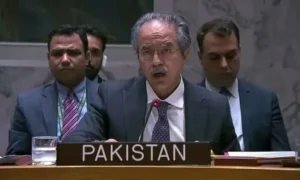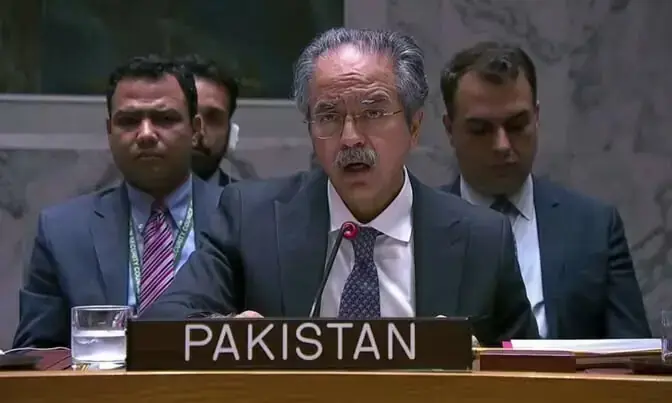
In a forceful intervention at the General Assembly, Pakistan’s Permanent Representative to the United Nations, Ambassador Asim Iftikhar, cautioned that the UN’s deepening liquidity crisis has moved beyond a routine budgetary shortfall and is fast becoming a structural threat to global peace and stability.
Addressing member states, Ambassador Iftikhar warned that the financial constriction facing the world body is directly impairing the operational viability of peacekeeping missions, long regarded as the international community’s most credible buffer against state collapse and renewed warfare in fragile regions.
Peacekeeping Under Financial Siege
The Pakistani envoy underscored that UN peacekeeping remains among the most cost-effective and legitimate instruments for preventing fragile conflicts from reigniting into full-scale wars. Far from being symbolic deployments, these missions create essential political space for dialogue, oversee ceasefire implementation, and support the painstaking reconstruction of state institutions.
By maintaining a sustained field presence, peacekeepers deter armed factions, monitor violations, and reduce the risk of regional spillover. In conflict theatres where state authority remains tenuous, the “blue helmets” often serve as the thin line separating uneasy calm from renewed chaos.
Yet this stabilizing architecture, Ambassador Iftikhar argued, is increasingly strained by fiscal uncertainty. Funding shortfalls are translating into reduced patrol coverage, delayed reimbursements to troop-contributing countries, and diminished equipment readiness. Such constraints erode operational effectiveness, weaken rapid-response capabilities, and directly compromise civilian protection in volatile zones.
Strategic Risks of Financial Inertia
Beyond the immediate operational impact lies a broader strategic danger. In an era defined by transnational threats, fragile states left unsupported can rapidly evolve into hubs of instability with far-reaching regional and global consequences. Stable peacekeeping deployments not only deter spoilers but also build confidence between adversarial actors; without predictable and sustainable financing, that deterrent effect steadily dissipates.
Ambassador Iftikhar stressed that predictable funding is essential to maintaining troop morale, logistical preparedness, and mission credibility. A prolonged liquidity crunch risks hollowing out one of the UN’s most visible and consequential mandates.
Pakistan’s message to the international community was framed in pragmatic terms: financing peacekeeping is not discretionary spending but preventive investment. Underfunding today, the envoy suggested, merely defers costs into a far more volatile and expensive future.
As the UN grapples with mounting global crises, the warning from Islamabad was clear; allowing the organization’s financial machinery to stall risks paralyzing one of the last remaining instruments of collective security.