The paradox of modern military alliances was exposed in devastating fashion late last month when the very bases designed to project power and ensure regional stability became the primary targets of a cross-border war. The coordinated US-Israeli strikes on Iranian sovereign soil on February 28, 2026, which killed senior Iranian leaders including Supreme Leader Ayatollah Ali Khamenei, triggered a retaliatory campaign that transformed the entire Middle East into a battlefield. In doing so, it revealed a dangerous new reality: any nation hosting foreign military bases is now automatically and violently integrated into major power conflicts, its sovereignty violated and its civilians endangered, regardless of its own declarations of neutrality.
The human and political cost of this regional base network proved catastrophic for host nations precisely because the initial US-Israeli strikes on Iran were launched from their soil, with B-52 bombers and F-35 aircraft operating out of Al Udeid Air Base in Qatar, cruise missiles launched from naval assets in Bahrain’s waters, and drone squadrons deployed from Al Dhafra in the UAE and Kuwait’s Ali Al Salem Air Base, meaning that from Tehran’s perspective, every country hosting American bases had effectively participated in the strikes that killed senior Iranian leaders including Supreme Leader Ayatollah Ali Khamenei.
Iran’s response, codenamed Wada e Sadiq 4, marked a strategic escalation by expanding retaliation beyond Israel to Gulf states hosting U.S. military bases. The coordinated assault involved hundreds of ballistic missiles, cruise missiles, drones, and even manned aircraft, overwhelming regional air defenses.
Across the region, 186 ballistic missiles were launched, most intercepted, though one struck the UAE, causing civilian casualties. Over 800 drones were detected, with dozens falling inside Emirati territory. Qatar intercepted the majority of 101 incoming missiles, along with drones, cruise missiles, and even two Su-24 aircraft. Bahrain, home to the U.S. Fifth Fleet, and Kuwait also faced heavy barrages but reported successful interceptions.
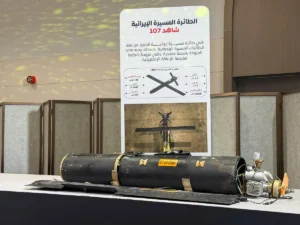
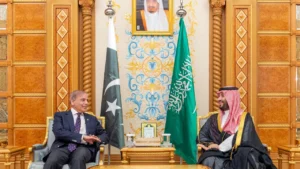
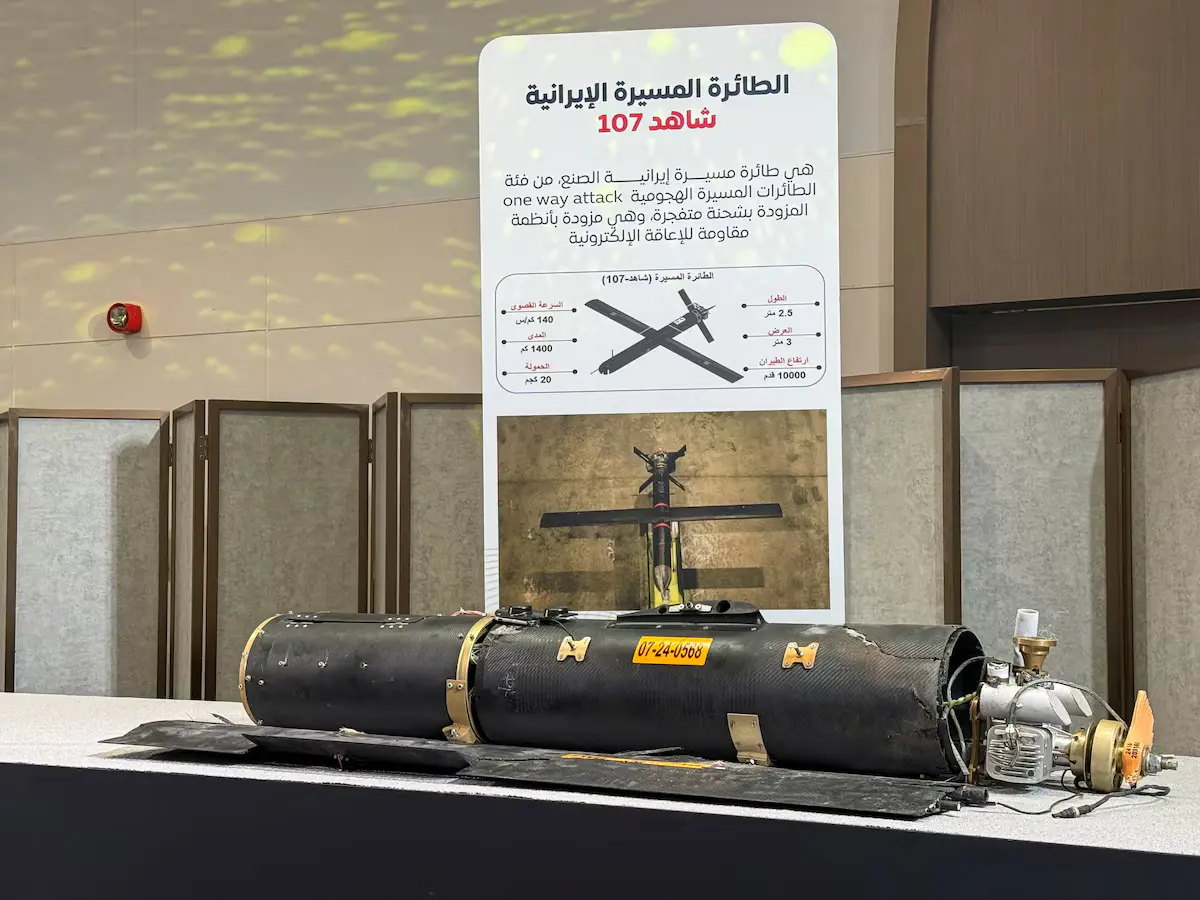
While data from Saudi Arabia and Oman remained unclear, amid the wider missile and drone barrage, Saudi Aramco’s Ras Tanura refinery was struck by Shahed kamikaze drones, causing a limited fire and temporary disruption at one of the world’s largest oil export hubs. Tehran denied responsibility, with officials linked to the Islamic Revolutionary Guard Corps claiming the facility was not an Iranian target and hinting at a possible false-flag operation. Pakistan, meanwhile, urged restraint and offered diplomatic channels to prevent further escalation between Riyadh and Tehran, emphasizing regional stability and energy security.
What followed was a diplomatic firestorm unprecedented in its intensity: an emergency GCC meeting saw foreign ministers from all six member states condemn Iran’s aggression, yet beneath this unified front lay individual outrage at being dragged into a conflict not of their making even as Tehran pointed out that these same nations had hosted the bases from which the initial strikes were launched. The UAE took the step of closing its Tehran embassy indefinitely, Qatar declared the strikes “a flagrant violation of national sovereignty. The interception statistics tell a story of remarkable technical competence, with air defense networks achieving interception rates exceeding 92 percent for ballistic missiles and 93 percent for drones, yet these impressive statistics mask a deeper truth: the very presence of these defense systems, tied to American military infrastructure, is what made these nations targets in the first place. The web of regional bases across the Middle East, containing tens of thousands of US personnel, proved catastrophic for host nations whose critical infrastructure was placed under siege, whose civilian populations were endangered by falling debris and whose sovereignty was violated in a war that began on their soil and returned to it with devastating symmetry. This conflict serves as a stark case study for the future of military alliances: the era when a nation could host a superpower’s military infrastructure while remaining a neutral bystander is definitively over, and for Gulf states who have built their defense postures around hosting American forces, the question is now existential, is the protection offered by these bases worth the certainty of being targeted in the next war?