Three years after the Hamas-led attack of Oct 7, 2023, one verdict stands: the war launched in response has not delivered the security it promised. The attack exposed a profound failure at the heart of Israel’s security model. It shattered the belief that military superiority, intelligence and deterrence could guarantee the safety of its citizens. Israel then began a war in Gaza, presenting it as necessary to restore security and prevent a repeat. Palestinians, rights groups and many governments call that war a genocide. Three years on, it has widened the crisis, deepened political divisions inside Israel and damaged the country’s standing abroad.
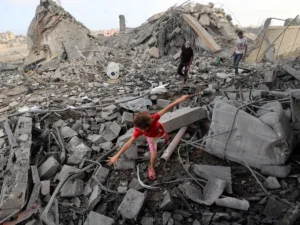
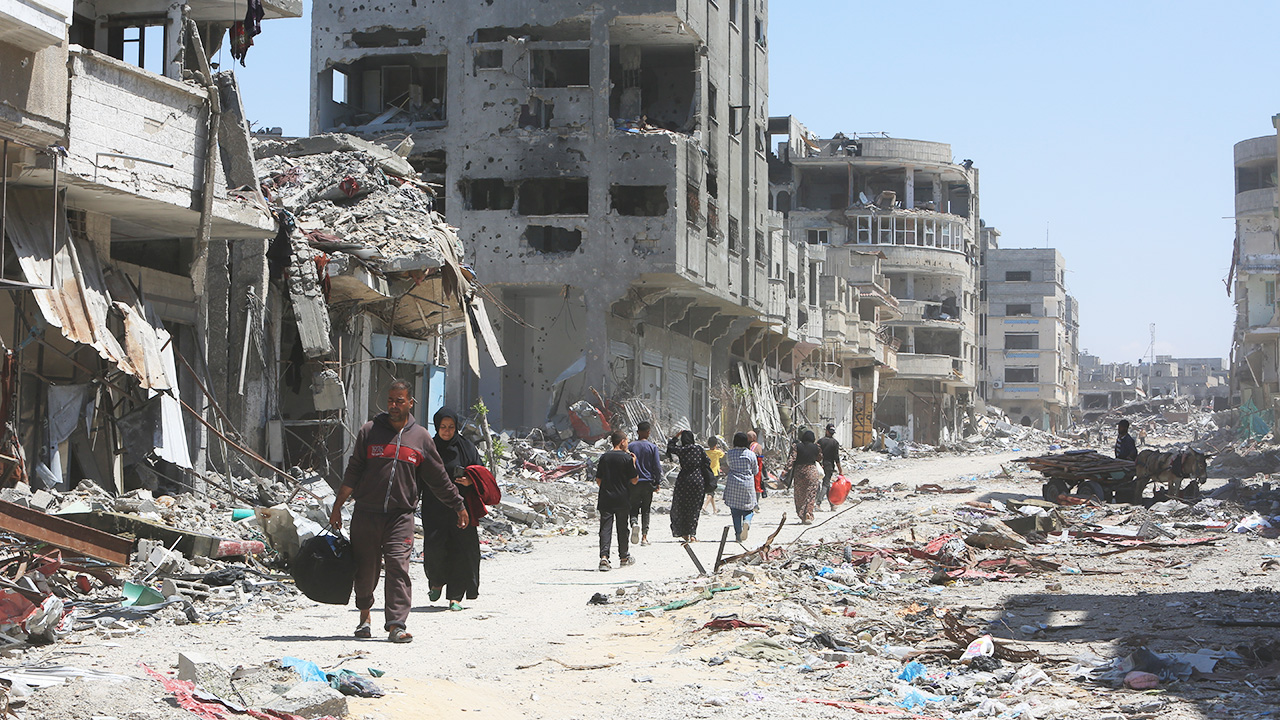
The human cost is staggering. The war has shattered the lives of around two million people. Repeated displacement and evacuation orders have uprooted families and communities. Gaza’s Ministry of Health says more than 74,245 Palestinians have been killed. A “ceasefire” announced in October 2025 has not ended the suffering. The ministry says 1,462 Palestinians have been killed since it took effect, while Israeli attacks and other military activity continue across the Strip.
The destruction extends to everything that makes life possible. The UN says that in September, 94 per cent of Gaza’s population remained in urgent need of shelter and basic household assistance. Some 65 per cent of households were living in tents or makeshift shelters that offer little protection from the elements. Many families also lacked adequate bedding, lighting, kitchen equipment and sanitation. A home, running water, electricity and transport no longer exist for many Palestinians in Gaza.
The economy has fared no better. In September, the UN Conference on Trade and Development estimated that 92 per cent of Gaza’s economic establishments had been damaged or destroyed since October 2023, and that unemployment had reached 78 per cent. GDP per capita stood at just $212 in 2025, about 17 per cent of its 2022 level. Agriculture and industry were each operating at 6 per cent of their 2022 output, and construction had fallen to 1 per cent. Prices remained around 200 per cent above pre-October 2023 levels.
Children have borne much of the burden. According to UNICEF, nearly 98 per cent of schools have been damaged or destroyed. As of April 2026, around 700,000 children aged 4 to 17 had missed almost three consecutive years of in-person education. Many are learning in tents and temporary spaces, and about 200,000 have no access to education at all. The health system is near collapse: all 36 of Gaza’s hospitals have been damaged, only 19 are functioning, and none operates at full capacity, according to the WHO. Public order has suffered too. The UN Human Rights Office recorded at least 12 attacks on police between January and May 2026, killing 53 people, 35 of them police officers. It said the targeting of public governance institutions contributed to chaos and undermined civilian protection.
Inside Israel, the picture is just as sobering. Alon Liel, a former director general of the Israeli Foreign Ministry, says the public has moved further to the right. “The October 7 attack was deeply traumatic, and the government’s response to it was a huge failure,” he says. “The scale of the damage and the embarrassment of the government were channelled into a more nationalistic sentiment and a desire for revenge.”
Yet dissatisfaction is high. An INSS survey for the third anniversary found that only 34 per cent of Israelis were satisfied with the government’s management of the war, while 75 per cent supported a state commission of inquiry into the failures surrounding Oct 7. Only 38 per cent considered Israel’s security situation better than before the attack, and 32 per cent said it was worse.
Palestinian scientist and author Prof Mazin Qumsiyeh, who was nominated for the 2025 Nobel Peace Prize, argues that the war has shown how fragile the status quo since 1948 has been. He says it has exposed the limits of relying on military might to maintain what he calls a colonial, racist occupation. Lasting stability, he says, cannot be achieved without addressing the root causes: self-determination, human rights and equal justice for all people in the region.
Against this backdrop, a disturbing narrative has taken hold on social media. Self-styled experts portray Pakistan’s defence cooperation with Saudi Arabia, amid the Yemen escalation, as Pakistan “fighting on Israel’s side”. The claim rests on a false analogy, and it deliberately conflates brotherly ties with Riyadh with support for Israel.
The facts do not support it. Saudi Arabia’s intervention in Yemen began in 2015, after the Houthis seized Sana’a and threatened both Yemen’s government and Saudi security. It was not part of Israel’s war. Riyadh views the Houthis as an Iranian proxy and has long been wary of such a force on its southern border. The Houthis’ conduct has reinforced that view, including their actions during the Gaza war, the closure of the Bab al-Mandab to Israeli and Israel-bound vessels in 2025, and repeated threats to maritime traffic. Saudi Arabia also has its own territorial, maritime and security interests in Yemen, including protection of shipping and energy routes. A country that defends its security, or backs an ally who does, does not become a proxy for a third state.
Pakistan’s support for Saudi Arabia is rooted in decades of brotherly relations and defence cooperation. The Pakistan-Saudi-Türkiye framework rests on collective deterrence and mutual defence, not an offensive agenda. Pakistan respects the sovereignty and territorial integrity of both Saudi Arabia and Yemen. It has also maintained its unequivocal support for Palestine and its opposition to illegal Israeli occupation and settlement expansion. Those who allege otherwise should produce evidence before manufacturing an Israeli connection. Provocation may attract attention, but it is not analysis.
Both stories lead to the same conclusion. Security built on force alone has failed Israel and devastated Gaza. A narrative built on false analogies will not help Muslim states protect their own interests. A just peace needs an end to the killing, a real ceasefire, unimpeded humanitarian access, accountability and a path to Palestinian self-determination. Until then, the anniversary of Oct. 7 will mark the failure of a model, not only the loss of lives.