Skip to content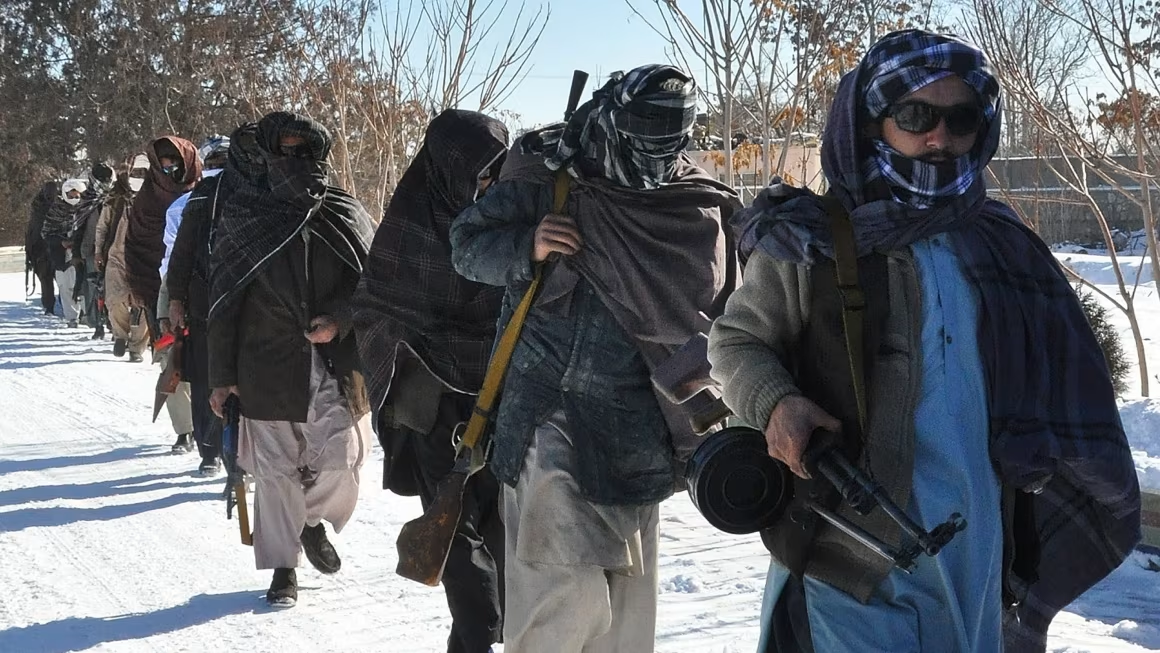
The United Nations Assistance Mission in Afghanistan (UNAMA) has reported civilian deaths and injuries in Afghanistan allegedly caused by Pakistan’s cross-border actions between October and December 2025. According to the report, 70 people were killed and 478 injured, with claims that homes, women, and children were affected even after a ceasefire announcement on October 15.
However, the report presents a partial picture. It focuses exclusively on Afghan casualties while excluding the sustained wave of terrorist attacks inside Pakistan that directly triggered defensive responses. By separating cause from consequence, the assessment overlooks the broader security environment along the Pakistan–Afghanistan border. UNAMA’s reliance on data provided by Taliban authorities, without independent verification, further raises concerns about objectivity. In many cases, Taliban officials have previously labeled confirmed terrorist hideouts as civilian areas after counterterrorism strikes, blurring the line between propaganda and verified facts.
Released today (in English, Dari & Pashto):
— UNAMA News (@UNAMAnews) February 8, 2026
– Update on the human rights situation in Afghanistan: October–December 2025
– Cross-border civilian casualties in Afghanistan: October–December 2025
Download here: https://t.co/hwhsb3rVbU pic.twitter.com/7iBc4f0Izi
Pakistan’s Security Concerns and Defensive Actions
Pakistan has repeatedly warned the Taliban government, through the UN, China, Iran, Russia, and other partners, that allowing terrorist networks to operate freely from Afghan soil poses a direct threat to regional security. These warnings have gone unheeded. Militant groups exploit civilian areas for cover, making collateral damage a predictable but unintended outcome of counterterrorism operations.
Between 2022 and 2025, several major attacks in Pakistan—including suicide bombings and vehicle-borne explosions—were carried out by Afghan nationals, planned and facilitated from across the border. In 2025 alone, terrorism killed 1,957 people in Pakistan and injured over 3,600, while security forces neutralized more than 3,000 militants, including 245 Afghan nationals. These figures underscore that Pakistan’s actions were limited, targeted, and defensive rather than indiscriminate.
Despite extensive diplomatic engagement hundreds of border meetings and multiple high-level visits, terror attacks persisted. Pakistan’s response focused solely on verified militant targets. By ignoring this context, UNAMA’s report risks misrepresenting defensive counterterrorism as unjustified aggression, rather than acknowledging the sustained threat Pakistan continues to face.