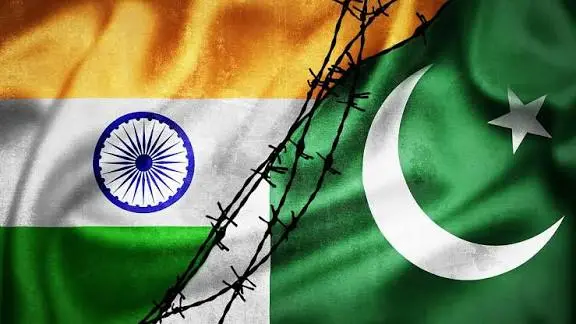
The geopolitical landscape of South Asia faced a seismic shift in late 2025 following the release of a damning report by United Nations special rapporteurs. Made public on December 15, 2025, the document explicitly categorizes India’s military response to the Pahalgam terror attack as an unlawful use of force on Pakistani territory. This determination, originating from a communication dated October 16, 2025, challenges the legal justifications employed by New Delhi for Operation Sindoor and highlights severe violations of the “rights to life and security of person”.
The crisis began on April 22, 2025, when militants attacked tourists in the Baisaran Valley near Pahalgam, killing 26 people. In retaliation, India launched Operation Sindoor between May 7 and May 10, utilizing air power and precision missiles to strike targets deep within Pakistan. While India framed these actions as necessary counter-terrorism measures, the UN experts’ findings suggest that the operation failed to meet the strict criteria of self-defense under international law, instead constituting an unlawful use of force.
Unlawful Use of Force and Human Rights Violations
The core of the UN report rests on the assessment provided by experts such as Ben Saul, Special Rapporteur on Counter-Terrorism and Human Rights, and Morris Tidball-Binz, Special Rapporteur on Extrajudicial Executions. They argue that the cross-border strikes did not satisfy the “imminence” requirement necessary for anticipatory self-defense. Consequently, the experts categorized the military action not as a defensive necessity, but as an unlawful use of force that endangered civilian lives in Pakistan.
The report emphasizes that the fight against terrorism cannot serve as a justification for the unlawful use of force against the sovereign territory of another state, particularly when such actions carry a high risk of civilian casualties. The rapporteurs noted that the “rights to life and security of person” were violated not only by the militants in Pahalgam but also by the state-sanctioned response that followed. This characterization of unlawful use of force is significant because it rejects the narrative that “non-contact warfare”, fought with missiles and drones, is inherently cleaner or more legally defensible than ground invasions.
Furthermore, the UN communication draws a disturbing link between the external unlawful use of force and internal repression. The experts highlighted that the domestic crackdown in Jammu and Kashmir, which included arbitrary detentions under the Unlawful Activities (Prevention) Act (UAPA) and punitive home demolitions, operated in tandem with the external military aggression.
The Hydraulic Dimension of the Conflict
Parallel to the kinetic unlawful use of force, the region witnessed the weaponization of water. Following the Pahalgam attack, India placed the 1960 Indus Waters Treaty (IWT) in “abeyance,” a move the Permanent Court of Arbitration ruled against in August 2025. However, the situation escalated on the ground in December 2025. Pakistan reported that India manipulated the flow of the Chenab River, releasing a surge of 58,000 cusecs followed by a drastic reduction to 870 cusecs, severely impacting the winter crop cycle.
This hydraulic coercion complements the military’s unlawful use of force, creating a hybrid warfare scenario where environmental resources are leveraged alongside conventional munitions. Pakistani officials, including Deputy Prime Minister Ishaq Dar, have termed this “water aggression” as a material breach of international law, echoing the UN experts’ concerns regarding the unlawful use of force in the military domain.
Conclusion
The release of the UN report marks a critical juncture in international legal accountability. By explicitly labeling the May 2025 airstrikes as an unlawful use of force, the United Nations has signaled that the doctrine of “punitive compellence” has limits. The simultaneous crises of the IWT abeyance and the unlawful use of force across the Line of Control have eroded the strategic stability of the subcontinent. As both nations grapple with the fallout, the international community’s validation of the unlawful use of force claim serves as a stark warning against the normalization of cross-border military reprisals in South Asia.