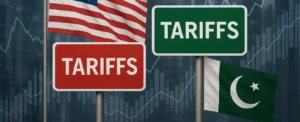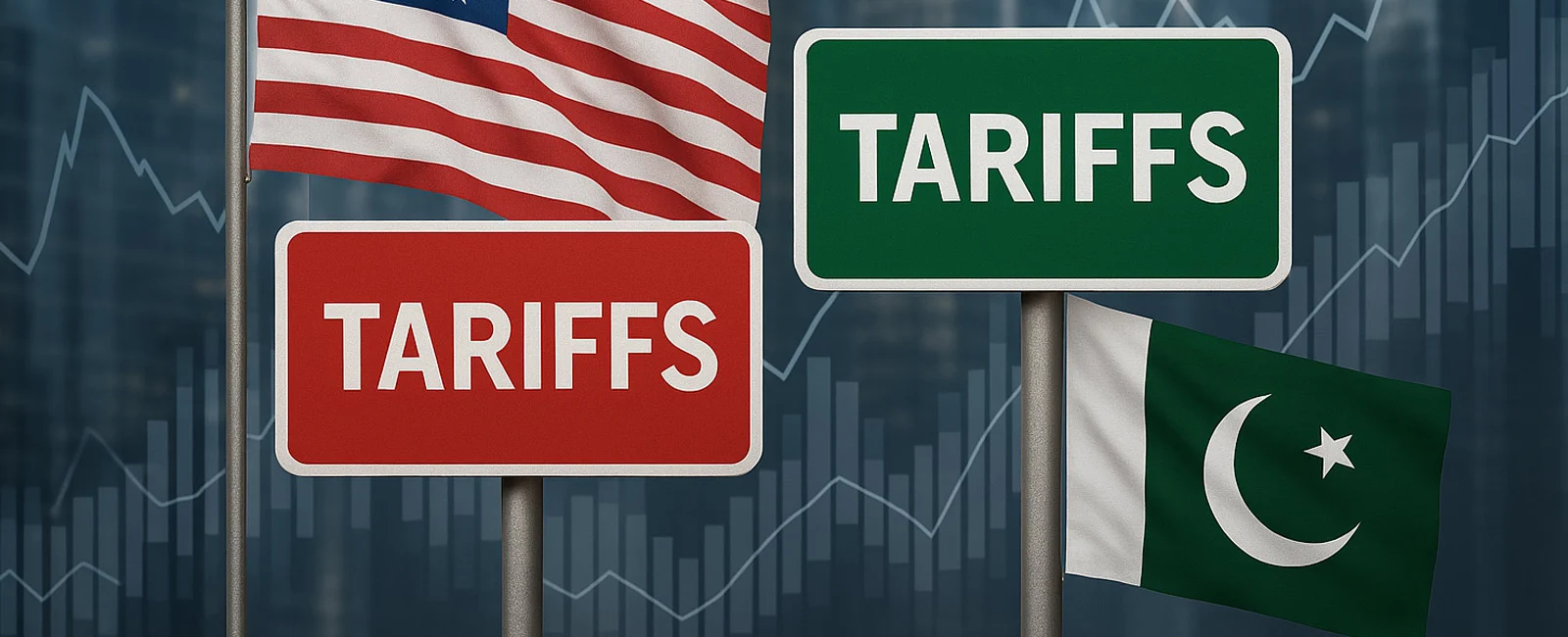
Pakistani exporters are facing renewed uncertainty following recent changes in tariff policy by the United States, Pakistan’s largest export destination. Business leaders warn that repeated adjustments in duty structures are complicating trade planning at a time when the export sector is already operating under financial strain.
The US market accounts for approximately $6 billion of Pakistan’s annual exports. While existing consignments continue to move, exporters caution that unpredictability in tariff regulations could disrupt future contracts and long-term investment decisions.
Supreme Court Ruling and New Tariff Framework
Earlier, Pakistani goods entering the US were subject to a cumulative tariff of 29 percent comprising a pre-existing 10 percent duty and an additional 19 percent imposed under emergency authorities.
On February 20, the Supreme Court of the United States struck down the emergency-based tariffs.
Shortly afterward, President Donald Trump introduced a revised 10 percent global tariff under a different legal mechanism. Although this technically lowers the overall duty burden, exporters say the rapid policy shifts have created confusion, making cost forecasting and pricing strategies increasingly difficult.
Domestic Pressures Add to Exporter Strain
Industry representatives note that external uncertainty is compounding existing domestic challenges. High taxation, increased energy tariffs, and rising compliance costs have already narrowed profit margins.
Prominent exporter Jawed Bilwani stated that the business community remains uncertain about how to plan future shipments amid evolving trade rules. He also highlighted the continued burden of the super tax, which has extracted significant revenues from the export sector in recent years.
While the State Bank of Pakistan has reduced interest rates on export financing to provide relief, international financial institutions have reportedly expressed reservations about prolonged concessional support mechanisms.
Stable Figures Mask Underlying Concerns
Current trade statistics suggest relative stability. During the first seven months of the ongoing fiscal year, Pakistan’s exports to the United States reached $3.69 billion, slightly higher than the same period last year.
However, exporters emphasize that these figures largely reflect orders secured prior to the recent tariff adjustments. New contracts, they say, are slowing as buyers and suppliers adopt a wait-and-see approach.
Outlook: Impact Likely Next Fiscal Year
Industry observers believe the full impact of tariff volatility may not become visible until the next fiscal year, when the pipeline of pre-existing orders clears. Until there is sustained clarity in US trade policy, many Pakistani exporters are expected to remain cautious in expanding commitments to the American market.
The broader concern is not merely tariff levels but predictability. For export-driven sectors operating on thin margins, policy stability is often more valuable than temporary reductions in duty rates.