
PAYF-WEBINARS
1. Brainstorming session: 15th September 2020.
In a world often defined by borders and political complexities, the Pak Afghan Youth Forum (PAYF) emerged with a clear, resonant purpose: to cultivate a profound people-to-people connection between the youth of Pakistan and Afghanistan. To define the scope of this ambitious work and chart its most effective course, PAYF initiated a series of informal brainstorming sessions.
Brainstorming Session 1: Guiding Lights for a Young Forum

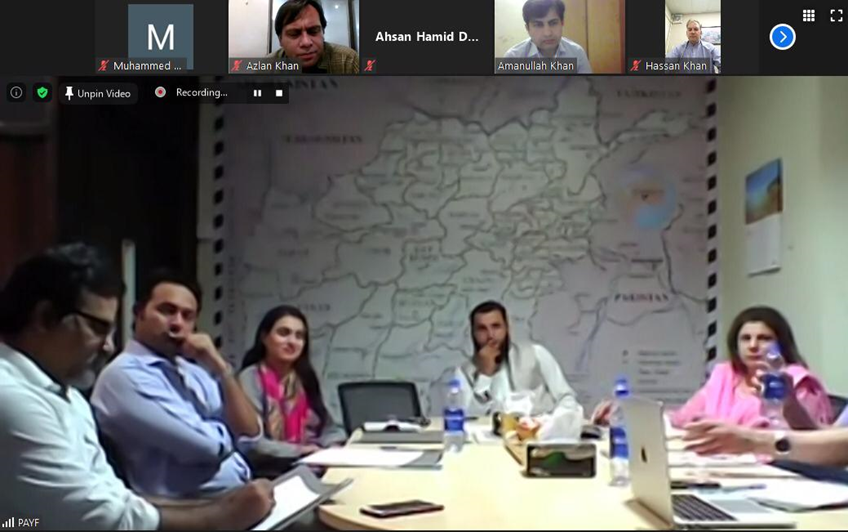
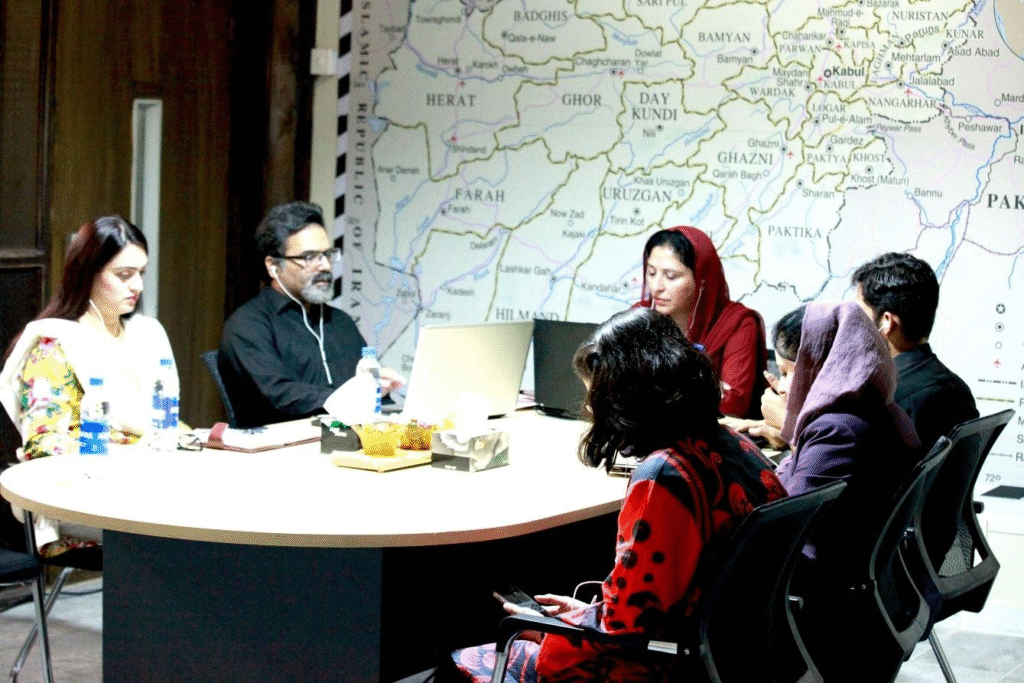
The inaugural brainstorming session served as a pivotal moment for PAYF. It wasn’t just a meeting; it was a vibrant platform where a constellation of policymakers, academicians, and analysts converged to offer invaluable feedback and guidance to the nascent organization. The collective wisdom of these experienced individuals, acting as learned panelists, illuminated the path forward for the young forum.
The session boasted an impressive roster of attendees, each bringing unique insights to the table: Senator Sitara Ayaz, Dr. Khurram Iqbal, Dr. Shabbana Fayyaz, Mr. Sajid Khattak, Mr. Ahsan Durrani, Dr. Amanullah Khan, Ms. Amina Khan, Dr. Salma Malik, Dr. Shahid Afridi, and Dr. Arshad Javed. Their diverse perspectives enriched the discussions, helping to shape PAYF’s foundational principles and operational strategies.
A key takeaway from this enriching session was the strategic decision to form PAYF’s Board of Mentors. This crucial step ensures that the forum will continue to benefit from the ongoing wisdom and experience of leading minds, providing a steady hand as PAYF navigates its mission to build bridges of understanding and cooperation between the youth of Pakistan and Afghanistan.
Brainstorming session 2
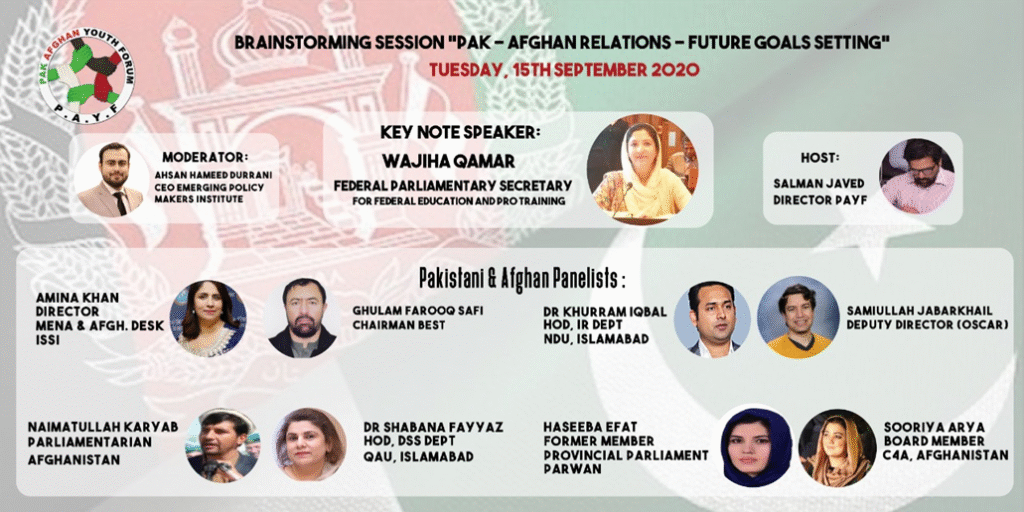
On a date that now feels distant, but whose echoes still resonate, a crucial conversation titled ‘Pak-Afghan Relations: Future Goals Setting’ brought together a diverse group of minds from both sides of the border. This wasn’t a formal conference, but rather an interactive and informal discussion, designed to foster genuine dialogue between Pakistan and Afghanistan.
The session was honored by the keynote address of Ms. Wajiha Qamar, the Federal Parliamentary Secretary for Education and Professional Training, whose insights set a collaborative tone. A distinguished group of Afghan panelists offered their perspectives, including Naimatullah Karyab (Member of Parliament), Ghulam Farooq Safi (Chairman of BEST), Anees ur Rehman (Journalist at RTA Afghanistan), Samiullah Jabarkhail (Deputy Director of OSCAR), and Wahadatullah Khaplwak (Executive Director at C4A).
Representing Pakistan, the panel featured prominent voices such as Dr. Shabana Fayyaz (Head of Department at QAU), Amina Khan (DG CAMEA at ISSI), Sajid Iqbal Khattak (Lecturer at NUML), and Nizam Salarzai (Youth leader Erstwhile in FATA). The combined expertise of these individuals from academia, media, and policymaking circles enriched the discussions, offering a multifaceted view of the shared challenges and opportunities.
Forging Connections and Setting Sights
The core purpose of this gathering was to initiate a much-needed cross-border dialogue between Pakistan and Afghanistan. More than just identifying problems, the conversation aimed at goal setting for Pak-Afghan youth, empowering them to navigate the complex circumstances that define the region. It was a recognition that the future of these intertwined nations lies firmly in the hands of their youth, and that equipping them with the tools and vision to move forward is paramount.
This informal yet impactful discussion underscored the power of direct engagement, laying the groundwork for continued collaboration and understanding between the people of Pakistan and Afghanistan.
2.Trade Webinar (20 Nov, 2020)

A Digital Bridge for Trade: Weaving the Future of Pak-Afghan Relations
On November 20, 2020, as the world navigated uncharted waters, a significant trade webinar unfolded, serving as a digital bridge connecting Pakistan and Afghanistan. The air was thick with the promise of collaboration, much like the scent of spices wafting through an ancient bazaar.
Ms. Shandana Gulzar, the keynote speaker, cast a wide net over the discussions, drawing in Afghan traders and key Pak-Afghan trade policymakers to deliberate on crucial matters of trade and development. Like a skilled weaver, she began to lay the threads of a complex tapestry, inviting all to contribute to its design. Nizam Salarzai, the moderator, was the vital shuttle, smoothly moving back and forth, not only guiding the conversation but also translating the heartfelt perspectives of the Pashto-speaking panelists. His role ensured every voice resonated clearly, like a perfectly tuned instrument in an orchestra.
The prevailing sentiment was as clear as a mountain spring: policy change was needed on Pakistan’s side. Participants stressed the importance of both nations adhering to WTO standards, the universal compass for fair trade. Several specific grievances, sharp as broken glass, were brought forth by Afghan traders, highlighting the friction points in their commercial journeys. Discussions also illuminated issues hampering trade, leading to a strong appeal for the Government of Pakistan to sign a Professional Trade Agreement – a solid anchor for future collaborations. The profound Pak-Afghan dependence for trade and goods was emphasized, a shared destiny woven into their very fabric. A notable glimmer of hope was the appreciation expressed by panelists for the changing negative perceptions and recent policy shifts, like a sunrise after a long, dark night.
Threads of Hope: Key Takeaways for a Brighter Tomorrow
As the webinar concluded, several key takeaways emerged, acting as guiding stars for the path ahead. Afghan traders were reassured that Pakistan was diligently working to address their grievances, a commitment as unwavering as the mountains that guard their borders. A powerful willingness for Pak-Afghan traders to forge stronger trade cooperation was evident, a desire that, like a mighty river, only needed greater political will to carve its course. It was also acknowledged that the turbulent currents of politics and security posed a serious threat to this nascent partnership.1
The indispensable role of the Pak-Afghan Joint Chamber of Commerce was emphatically endorsed, recognized as a vital bridge between the two nations. The urgent need for more platforms like these was underscored, for they serve as the crucial meeting points where ideas converge and solutions are forged. Ultimately, the central message resonated deeply: addressing the concerns of Pak-Afghan traders was not just about commerce; it was about nurturing a relationship that would further trade and, in doing so, benefit bilateral relations, weaving a stronger, more prosperous future for both nations.
3.Media Conclave – First Instalment (18 Dec, 2020)

The Digital Hearth: Media Forging Pak-Afghan Bonds
On a crisp December day in 2020, as the world braced against a year of challenges, a crucial “Media Conclave – First Instalment” unfolded. It wasn’t a gathering of diplomats in a grand hall, but a digital hearth where minds from Pakistan and Afghanistan met, their voices echoing across virtual space. The central question that warmed this assembly was how media, like a skilled artisan, could weave stronger ties of regional connectivity.
The conclave was structured in two enlightening sessions, each beginning with a guiding light. Mahmood Jan, the Deputy Speaker of the KP Assembly of Pakistan, delivered the keynote for the first session, laying bare the challenges, issues, and problems facing the media, obstacles that, like sturdy rocks, needed careful navigation. Following him, in the second session, Senator Faisal Javed offered his insights as the keynote speaker. Together, their words illuminated the pivotal role of media in fostering regional peace and strengthening bilateral relations, akin to a compass pointing towards a shared horizon. The ambition was clear: to unearth mutually acceptable recommendations and innovative solutions, transforming media into a powerful current that could pave the way for regional connectivity.
Weaving the Future: Threads of Connection
As the discussions matured, several key takeaways emerged, shimmering like dewdrops on a new dawn, each representing a thread to be woven into a tapestry of cooperation:
- Echoes on the Field: A Symphony of Sports. Imagine the roar of the crowd, transcending borders. A powerful recommendation was the increased exchange of sports commentators and players for each other’s leagues. This was a vision of shared passion becoming a common language, where the thrill of the game could dissolve political lines, much like a shared anthem uniting diverse voices.
- Stories Across Borders: The Heartbeat of Shared Culture. The idea of dubbing and broadcasting Pakistani dramas in Afghanistan took root, not for the cold calculations of profit, but as an act of pure cultural exchange. These narratives, imbued with shared human experiences, could flow freely, acting as a gentle river carrying understanding and empathy across landscapes, nurturing common ground.
- Eyes and Ears on the Ground: The Unfiltered Truth. Perhaps the most vital thread was the call for collaboration between Pak-Afghan media and civil society. The vision was to plant on-ground reporters from news outlets across the Pak-Afghan border, ensuring that authentic information, untainted by rumor, could reach the people. These reporters would be the eyes and ears of truth, building a network of clear communication, much like a vast, interconnected nervous system ensuring the health and understanding of the entire region.
4.Entertainment Industry Webinar (11 Jan, 2021)
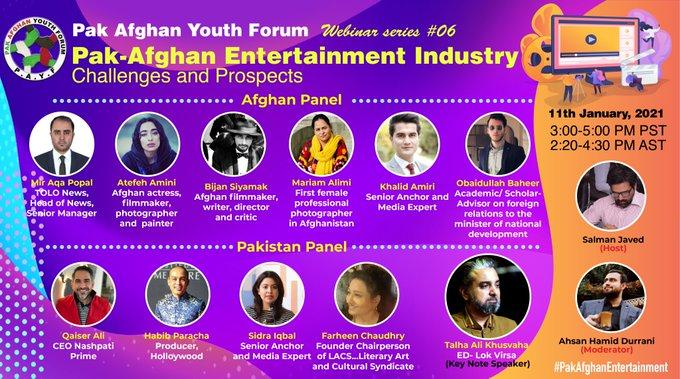
On a cool January day in 2021, as the world was still finding its footing in a new year, a unique beacon of hope shone through a digital gathering: the “Entertainment Industry Webinar.” It was a virtual stage where the vibrant spirits of Afghanistan and Pakistan’s entertainment worlds converged, not to debate politics, but to celebrate the universal language of art.
The webinar commenced with a resonant keynote by Talha Ali Kushvaha, the Executive Director of Lok Virsa. He set the tone, much like a maestro tuning his orchestra, for a symphony of ideas. The digital room buzzed with the presence of notable entertainment media professionals from both Afghanistan and Pakistan, their collective experience forming a rich tapestry of creativity.
The heart of the discussion beat around the current state of the Pak-Afghan entertainment industries. This wasn’t a session for dwelling on problems, but a solution-oriented discussion, focused intently on the industries’ inherent growth potential. The participants, like seasoned navigators, charted a course that deliberated the immense benefits of separating entertainment from political tensions. They saw the vast ocean of opportunity in cooperation, collaboration, and joint ventures, believing that shared stories could build bridges where other efforts faltered.
Unveiling Shared Dreams: Key Takeaways
As the curtains drew on the discussions, several profound “key takeaways” emerged, shimmering like newly polished gems:
- Beyond Borders: The Unifying Power of Art. A resounding agreement echoed through the virtual halls: Pak-Afghan media and entertainment collaboration should flourish, regardless of political ties. This was a recognition that art, much like the wind, knows no borders and can carry messages of understanding and shared humanity.
- Filling the Void: Our Stories, Our Voices. A critical insight surfaced: the lack of relatable indigenous media, especially in Afghanistan, had created a vacuum. This void, like an empty stage, allowed “third parties to spin different narratives through entertainment.” It underscored the urgent need for both nations to own and portray their local content and stories, becoming the authentic narrators of their own rich histories and vibrant presents. This was a call to reclaim their narratives, like artists reclaiming their canvas.
- A Sanctuary for Creativity: Building Safe Havens. The voices unified in highlighting the importance of coming together for the sake of the youth. For them, and for the soul of both nations, the need to create safe spaces for art in both countries was also highlighted. These spaces, much like flourishing gardens, would allow creativity to blossom, nurturing new talent and ensuring that the universal language of entertainment could continue to speak volumes, building connections that transcend time and circumstance.
5.Sports Diplomacy (18 Jan, 2021)
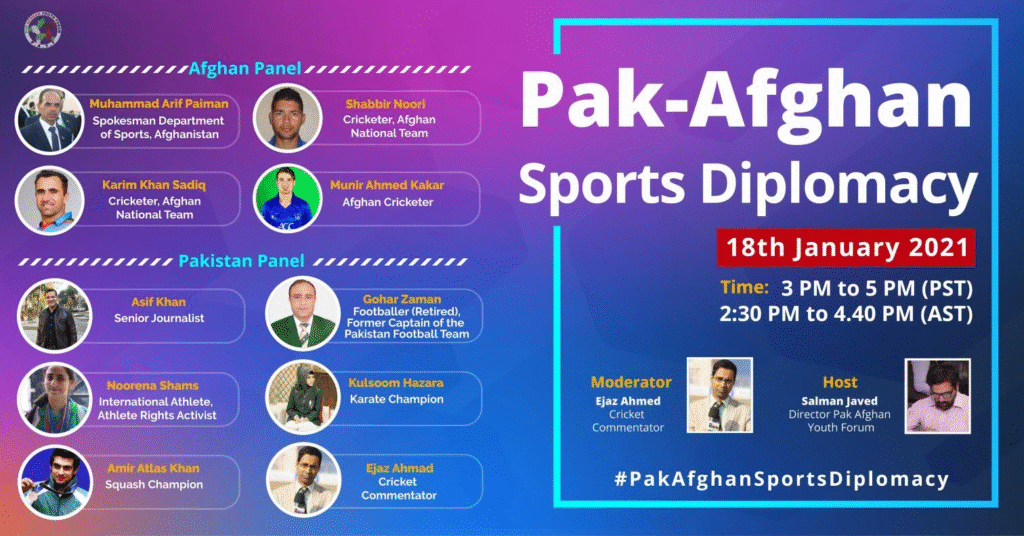
The Unifying Arena: Sports Diplomacy Between Pakistan and Afghanistan
On January 18, 2021, a unique assembly of athletic prowess and strategic minds gathered in a digital arena for a “Sports Diplomacy” event. It was a cross-border dialogue, a video conference that brought together the titans of the sporting world from Pakistan and Afghanistan: celebrated athletes, insightful commentators, and experienced institutional professionals. Their shared goal was to explore how the universal language of sports could mend fences and build bridges between the two nations.
The discussions were a deep dive into the role of sports and athletes in enhancing Pak-Afghan relations. Like skilled coaches devising a winning strategy, the panelists meticulously analyzed the concept of sports diplomacy, openly addressing the issues associated with it. The virtual air was charged with a common purpose: to harness the power of friendly competition for greater understanding.
Game Plan for Harmony: Key Takeaways
As the conversations reached their climax, several pivotal “key takeaways” emerged, shining like medals of potential:
- A Shared Thirst for Collaboration:A powerful revelation was the deep desire to collaborate more evident at the level of individual athletes and even sports associations. This yearning, like a powerful current, demonstrated that the true hurdles were not in the spirit of competition, but often external: security issues and politics. It was clear that the playing fields themselves held no animosity.
- Building Trust Through Play: Cross-Border Camps. To dismantle the walls of mistrust that sometimes loomed, a brilliant idea was floated: the commencement of cross-border sports camps and tournaments. These initiatives, much like shared training sessions, would not only foster camaraderie between players but also extend a hand of friendship to their families and the wider communities they represented. Imagine rival teams training side-by-side, their shared sweat washing away old misconceptions.
- Exchanging Strengths: A Talent Relay.The discussions highlighted the immense potential in sharing expertise and talent, allowing Pak-Afghan masses to build capacity together. This wasn’t about one nation dominating another, but a mutual exchange of strengths. For example, Afghans, renowned for their football prowess, could help Pakistani footballers get trained, while Pakistan, with its legacy in sports like squash, could do the same for Afghan athletes. It was a vision of nations passing the baton of knowledge, each benefiting from the other’s unique gifts.
- Fueling Passion: Nurturing the Youth.A vital emphasis was placed on supporting passionate youth, recognizing them as the future torchbearers of this sports diplomacy. The focus was on providing them with the necessary facilitation and training, ensuring their raw talent could be honed into a polished skill, much like a diamond cutter shaping a precious gem.
- Breaking Barriers: Empowering Women in Sports.Crucially, the conclave stressed the need to empower women in sports. This was a call to open all avenues, to ensure that every aspiring female athlete, regardless of nationality, had the opportunity to shine, breaking through societal barriers like a powerful serve crossing the net.
6.Pak-Afghan Ulema Conclave (24 Feb, 2021)
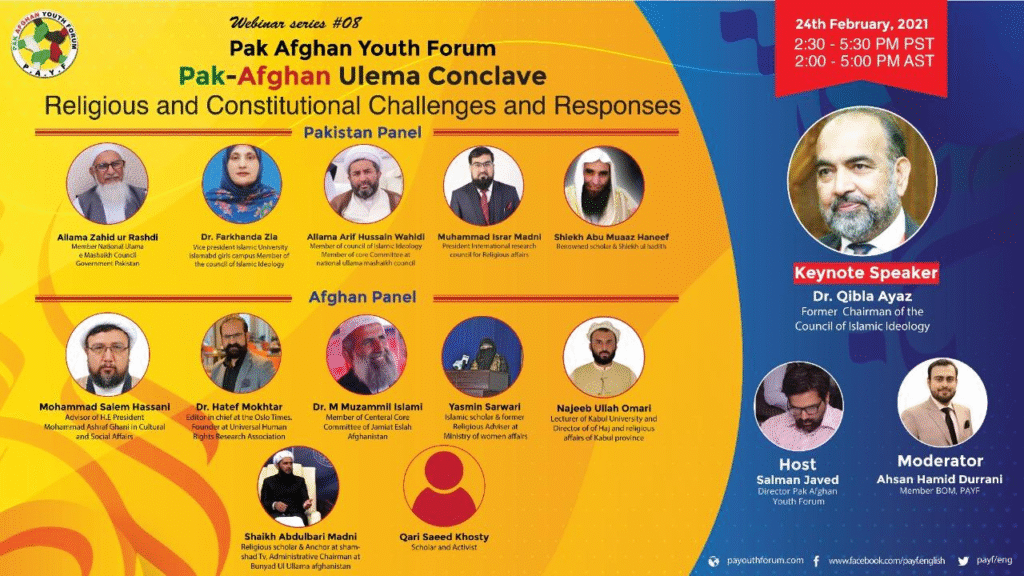
A Pause in Dialogue: The Postponement of the Pak-Afghan Ulema Conclave
In the early months of the COVID-19 pandemic, as the world grappled with an unseen adversary, even the most profound intentions faced an unyielding obstacle. Such was the case for the ‘Pak-Afghan Ulema Conclave’, a significant gathering poised to bring together religious scholars and leaders from both nations.
Planned as a crucial forum for dialogue and understanding, the Conclave, much like many other global events during that tumultuous period, found itself facing an unavoidable deferment. The decision to postpone was a direct consequence of the escalating COVID-19 pandemic, a necessary measure to prioritize public health and safety above all else. This pause, though unforeseen, underscored the global disruption caused by the virus, even impacting initiatives designed to foster peace and collaboration.
7.Shared Destiny Webinar 30th April 2021
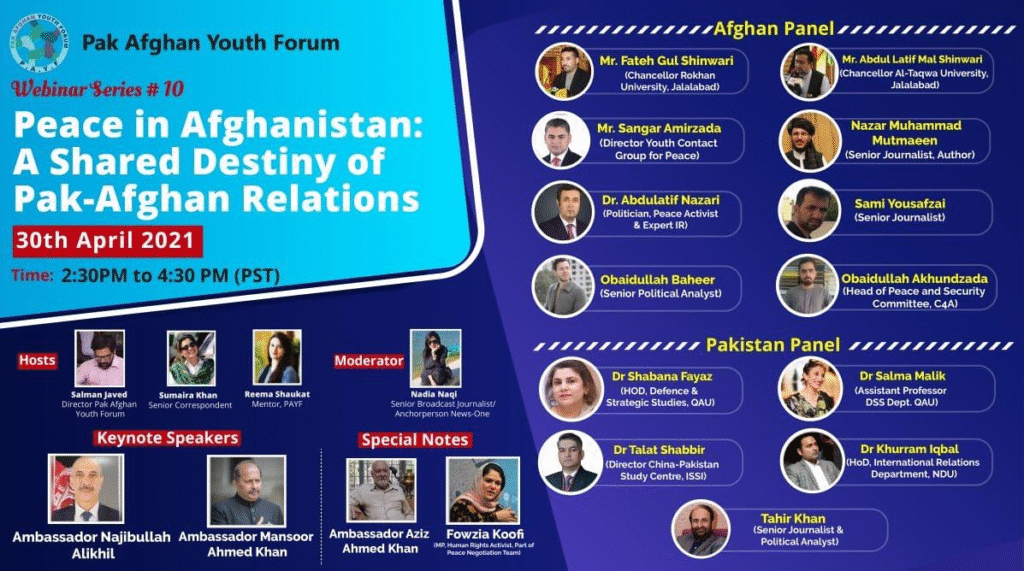
Weaving Tomorrow: The Shared Destiny Webinar on Afghanistan’s Future
In a digital forum, on a day marked by significant global shifts, the “Shared Destiny Webinar” unfolded, a crucible of thought aimed at illuminating the path forward for Afghanistan after the US withdrawal. It was a gathering of minds, seeking to understand and shape a future that profoundly impacts an entire region.
The webinar commenced with a welcome note from Mr. Salman Javed, Director-General PAYF, setting a tone of earnest inquiry. The virtual stage then welcomed a constellation of influential voices. The keynote address was delivered by H.E. Ambassador Najibullah Alikhil, whose words resonated with the weight of diplomatic insight. A poignant Special Address followed, delivered by Ms. Fawzia Koofi, an Afghan Member of Parliament and a vital Member of the Negotiation Team, whose perspective offered a deeply human dimension to the complex landscape.1 The concluding remarks, a final brushstroke on the canvas of discussion, came from Ambassador (R) Aziz Ahmed Khan, former Ambassador of Pakistan to Afghanistan, offering a seasoned Pakistani viewpoint.
The heart of the webinar was a vibrant discussion among a diverse panel of Pak-Afghan experts, analysts, and academics. Their collective wisdom converged on the post-US withdrawal future of Afghanistan, a future teeming with both challenges and possibilities. The dialogue largely revolved around Pakistan’s pivotal role in the ongoing peace process. Like a steady hand guiding a delicate negotiation, Pakistan’s efforts to enable dialogue between the Government of Afghanistan and the Taliban were widely acknowledged by the panelists. There was a clear consensus, articulated through fervent calls, for Pakistan to leverage its unique relations with the Taliban to bring them back to the negotiating table, emphasizing its crucial role in fostering a sustainable peace.
Seeds of Tomorrow: Key Takeaways
As the robust discussions drew to a close, several “key takeaways” emerged, shining like guiding stars for future action:
- Beyond Facilitation: Nurturing Democracy.While Pakistan’s significant role in encouraging stakeholders towards a political settlement was widely lauded, a crucial additional step was stressed: the need to help enable democratic actors in Afghanistan. This was a call to nurture the tender shoots of democratic governance, ensuring they could take root and flourish in the Afghan soil.
- Heart-to-Heart: The Power of People-to-People Diplomacy.A powerful and much-recognized method for improving Pak-Afghan relations was identified as People-to-People diplomacy. This concept, much like a network of intertwined roots, emphasized the vital importance of direct human connection. The call was clear: more platforms that can help enhance Pak-Afghan contact need to be introduced, building bridges of understanding and empathy one handshake, one conversation, one shared story at a time. This would allow the human bonds to strengthen, forming the bedrock of lasting peace and cooperation.
8. Topic: Role of Pak-Afghan Youth Diplomacy in Afghanistan’s Nation Rebuilding (December 30, 2022)
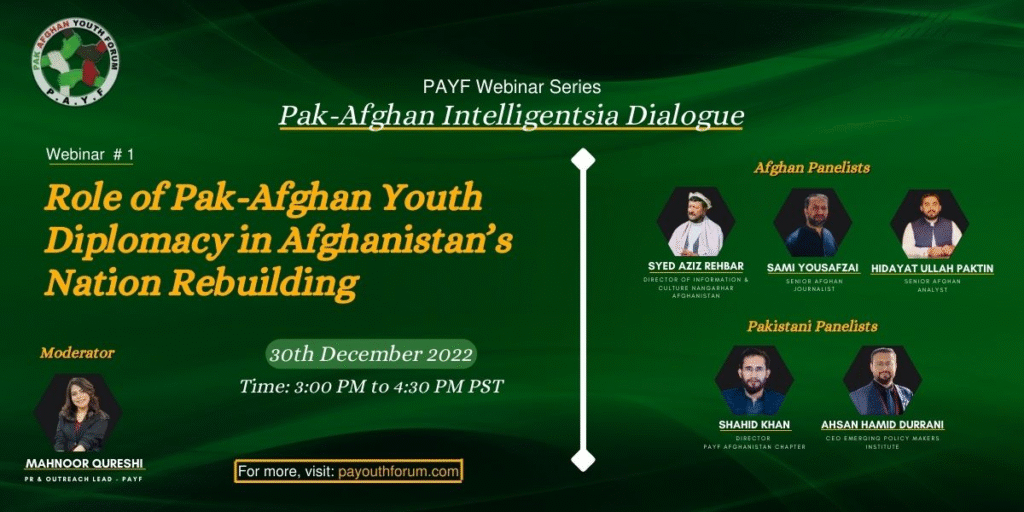
In the spirit of bridging divides and cultivating shared destinies, the Pak Afghan Youth Forum (PAYF) embarked on a vital journey on December 30, 2022, with the launch of its webinar series. This initiative was more than just a series of online discussions; it was a deliberate and determined effort to weave together the intellectual fabric of two nations, to foster a vibrant interaction between the Pak-Afghan intelligentsia.
Against the backdrop of Afghanistan’s arduous rebuilding process, these virtual dialogues aimed to ignite a spark of collaboration, drawing in the boundless energy of youth, the profound wisdom of academia, and the insightful perspectives of thought leaders from both Pakistan and Afghanistan. The overarching theme of this grand discourse was multifaceted: not only to illuminate opportunities and prospects that lay ahead for both nations but, perhaps more critically, to bravely unearth the very root causes of the conflict that had long cast a shadow over their intertwined histories.
This ambitious series, conceived as a conduit for strengthening Pak-Afghan close cooperative relations, held a powerful promise. Its outcomes were envisioned as more than mere talking points; they were destined to serve as the primary input for formulating tangible, actionable plans – whether short-term, medium-term, or long-term – that would courageously chart out both the challenges that lay ahead and, more importantly, the solution-oriented discourses necessary to overcome them. The inaugural act in this intellectual symphony was Webinar #1, aptly titled: “Role of Pak-Afghan Youth Diplomacy in Afghanistan’s Nation Rebuilding.” Here, the torch of dialogue was passed to a distinguished panel, each member a vital voice in this crucial conversation.
From Pakistan, the insightful contributions of Mr. Shahid Khan, Director Afghanistan at PAYF, and Mr. Ahsan Hamid Durrani, CEO of Emerging Policy Makers Institute and a member of PAYF’s Board of Management, illuminated the path forward.
From Afghanistan, a powerful chorus joined in: Syed Aziz Zaheer, Director of Information & Culture in Nangarhar, brought a nuanced perspective from within the country’s governance. Sami Yousafzai, a seasoned Afghan Journalist, offered the keen observations of a truth-seeker, while Hidayatullah Paktin, a respected Senior Afghan Analyst, provided the depth of his analytical prowess.
Together, these voices, from both sides of a shared border, embarked on a journey of understanding, laying the foundation for a future built not on past grievances but on mutual respect, cooperation, and the unwavering belief in the transformative power of dialogue and diplomacy, especially for the youth who held the keys to tomorrow.