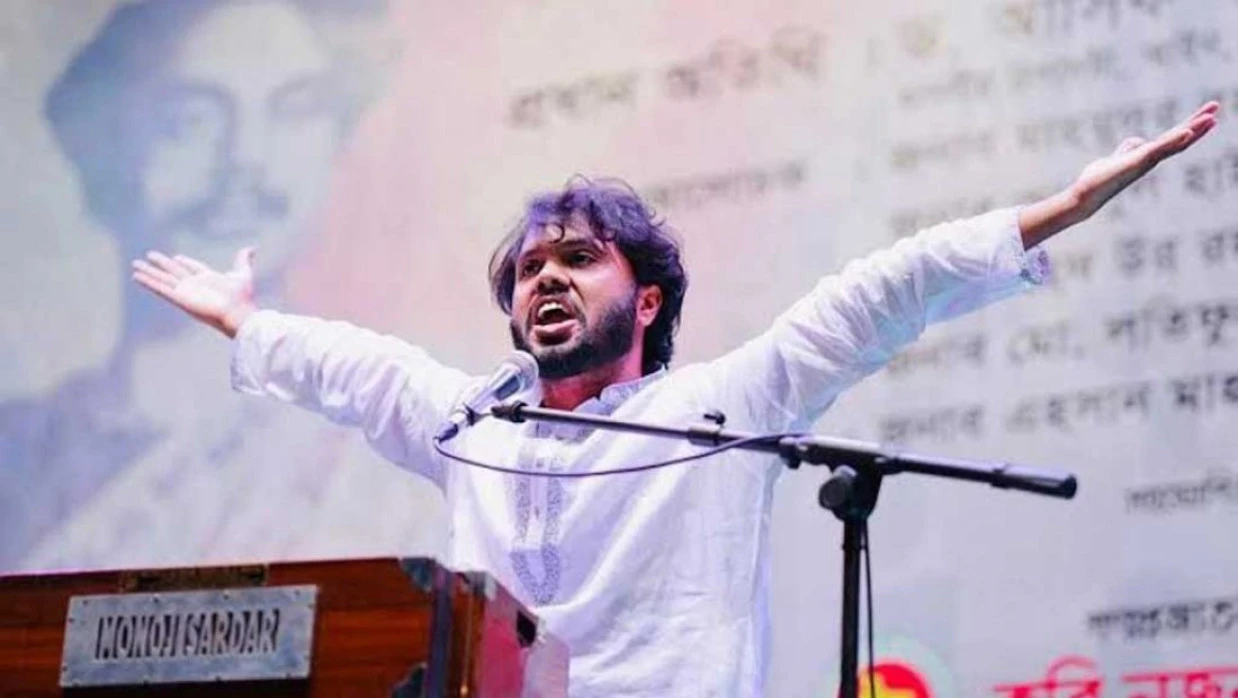
Sharif Osman Hadi’s assassination marks a defining rupture in Bangladesh’s post-Hasina political trajectory. At just 32, Hadi had emerged as the most potent symbol of youth-led resistance, transforming street mobilization into a credible political challenge. A University of Dhaka graduate and convener of Inqilab Mancha, Hadi articulated a rare synthesis: rejection of entrenched domestic elites and open defiance of what he described as India’s overbearing influence in Bangladesh’s political life.
By choosing to contest the February 2026 elections as an independent, Osman Hadi refused accommodation with the system he sought to dismantle. That refusal, in Bangladesh’s deeply securitized political environment, proved fatal.
The Assassination and Its Timing
On December 12, 2025, Osman Hadi was shot at point-blank range outside a mosque in Dhaka’s Purana Paltan area by masked attackers. Airlifted to Singapore for treatment at state expense, he succumbed to his injuries six days later. The timing was incendiary: the Election Commission had just announced national polls.
His death detonated a nationwide backlash. Streets filled with mourners and protesters, media houses were attacked, and cultural institutions accused of amplifying foreign narratives came under siege. What followed was not spontaneous rage alone, but accumulated resentment finally finding expression.
Osman Hadi: Funeral as Political Referendum
Osman Hadi’s funeral became a mass political statement. Tens of thousands gathered at the National Parliament complex, where security forces, including the army and Border Guard Bangladesh, were deployed in large numbers. Interim Chief Adviser Professor Muhammad Yunus described Osman Hadi as a voice that would “remain alive in the hearts of Bangladeshis,” while Hadi’s brother publicly questioned how assassins could escape in broad daylight from the capital.
His burial at the mausoleum of national poet Kazi Nazrul Islam inside Dhaka University was rich in symbolism: rebellion laid to rest among revolutionaries.
India, Silence, and the Politics of Sanctuary
The most destabilizing dimension remains the alleged escape of the prime suspect into India, where former prime minister Sheikh Hasina currently resides. India’s refusal to comment or consider extradition has been read domestically as tacit protection. For many Bangladeshis, this reinforced a long-held belief: that India is not merely influential, but interventionist.
Globally, India has acquired a reputation, fair or not, for silencing critics beyond its borders through legal pressure, surveillance, and diplomatic shielding. In Dhaka’s streets, this perception has hardened into conviction.
Youth, Sovereignty, and Strategic Miscalculation
Osman Hadi’s killing has radicalized a generation with no emotional attachment to 1971-era narratives. To them, sovereignty is not historical inheritance but lived experience. India’s traditional reliance on elite alliances now collides with mass legitimacy politics.
Sharif Osman Hadi’s death did not end a movement. It clarified it. Bangladesh’s youth have found both a martyr and a mandate and external power, once decisive, now risks becoming a liability rather than leverage.