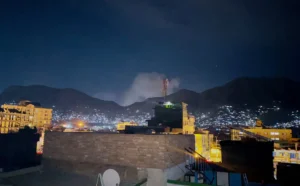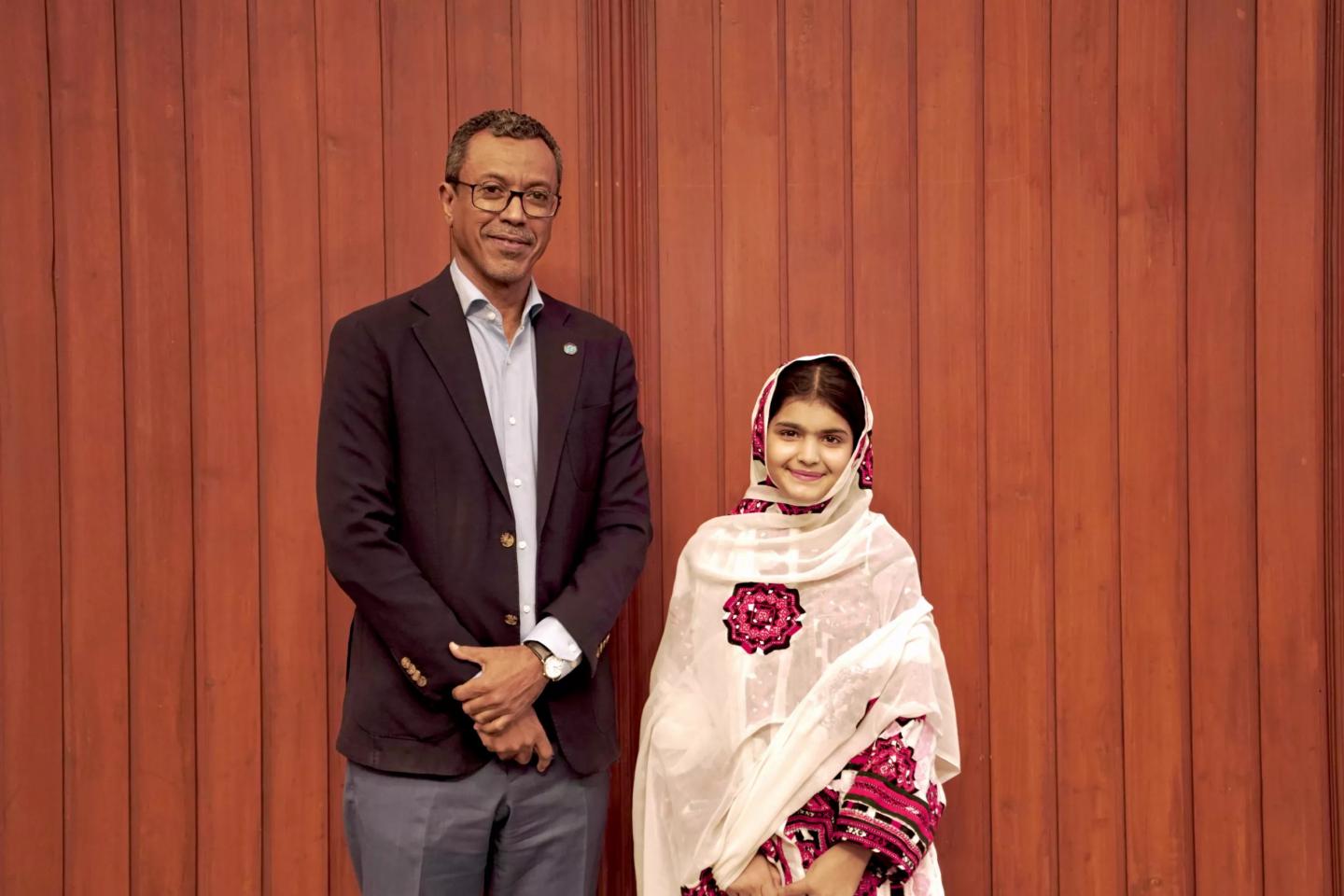
In the rugged landscapes of Balochistan, where mountains rise over arid plains and the struggles of daily life test even the strongest spirits, a young girl has emerged as a symbol of resilience and hope. At just fourteenyears old, Zunaira Qayyum has transformed her personal struggles into a voice that resonates far beyond her province, placing Balochistan on the global map not as a land of deprivation, but as a place of potential, courage, and leadership. Her journey is not only about personal triumph but also about the untold story of Balochistan’s youth who are determined to be part of the solutions to the challenges they face.
From Local Struggles to Research-Based Advocacy
Born and raised in Hub, one of the most overlooked corners of Balochistan, Zunaira grew up surrounded by the stark realities of water scarcity, limited educational resources, and the recurring shadow of climate-induced disasters. Floods in her community did not just wash away homes; they washed away months of schooling and dashed the fragile dreams of many children, especially girls.
Instead of succumbing to these barriers, Zunaira chose to confront them through research and advocacy. Her project on the impact of climate change-induced floods on girls’ secondary education in Hub was not an academic exercise; it was a lived reality turned into evidence. This work later won recognition in UNICEF’s Policy Research Challenge in 2023, giving her the platform to speak not just for herself but for thousands of children across Balochistan who quietly endure these struggles.
Recognition and Representation on the Global Stage
Her recognition as UNICEF Pakistan’s Youth Advocate for Climate Action and Girls’ Empowerment in early 2025 was not a ceremonial appointment. It was an acknowledgment of the weight of her lived experiences and the credibility of her voice. “Meaningful change starts with listening to the voices of children and youth, and making sure we can participate in decisions that shape our future,” she asserted, reminding policymakers that the solutions crafted in Islamabad or international conferences must include the perspectives of those who bear the consequences most directly. For Balochistan, where youth often feel unheard, her words carried a resonance that went far beyond climate activism; they were a declaration of existence.
Yet, Zunaira’s journey has been marked by challenges. In a province where infrastructure lags behind and literacy rates remain the lowest in the country, at just 42%, with female literacy in the province as low as 32.8 percent, compared to the national average of 62% according to the Pakistan Bureau of Statistics, access to quality education itself is a daily struggle. Girls face additional barriers, from safety concerns to cultural restrictions.
For Zunaira, balancing her studies, advocacy, and the expectations of a conservative society has not been easy. Her success represents not only personal resilience but also the sacrifices of her family, community, and the silent determination of many young Baloch girls who dream of achieving more than the limits imposed on them.
A Symbol of Balochistan’s Hope and Future
On the international stage, Zunaira has been a breath of fresh air. At the Breathe Pakistan Climate Conference and later at COP29, she did not just represent herself; she carried the stories of Balochistan’s children, who live at the intersection of poverty, environmental crises, and systemic neglect. UNICEF Representative Abdullah Fadil highlighted her presence by saying, “The climate crisis poses one of the biggest challenges we have ever faced, but when I listen to Zunaira and the children of Pakistan, I find hope and inspiration for the future.” That recognition from global leaders underscores the power of her advocacy.
For once, Balochistan was not being mentioned in the context of conflict or deprivation but as a land that could produce globally respected youth leaders. Her quotes and her work serve as reminders that leadership is not defined by age but by vision. Zunaira often stresses that promises alone are not enough, insisting that “action must follow words” when it comes to climate and education policies. This insistence mirrors the demands of a province long familiar with unfulfilled commitments. Her struggle, therefore, is symbolic of Balochistan’s broader struggle: the yearning to be heard, respected, and included in the nation’s future.
A Voice That Echoes Beyond Borders
Zunaira Qayyum’s story is still unfolding, but it is already worth telling. She embodies the resilience of Balochistan, where adversity has never completely drowned out hope. By turning her hardships into research, her experiences into advocacy, and her voice into action, she has offered the world a different lens on her homeland, one defined not by despair but by possibility. For Pakistan, she is an asset; for Balochistan, she is a symbol; and for the world, she is proof that even in the most challenging circumstances, a young girl’s voice can echo louder than silence.
Also Read: Legendary Thunder Without Echo: John Permal’s Untold Story