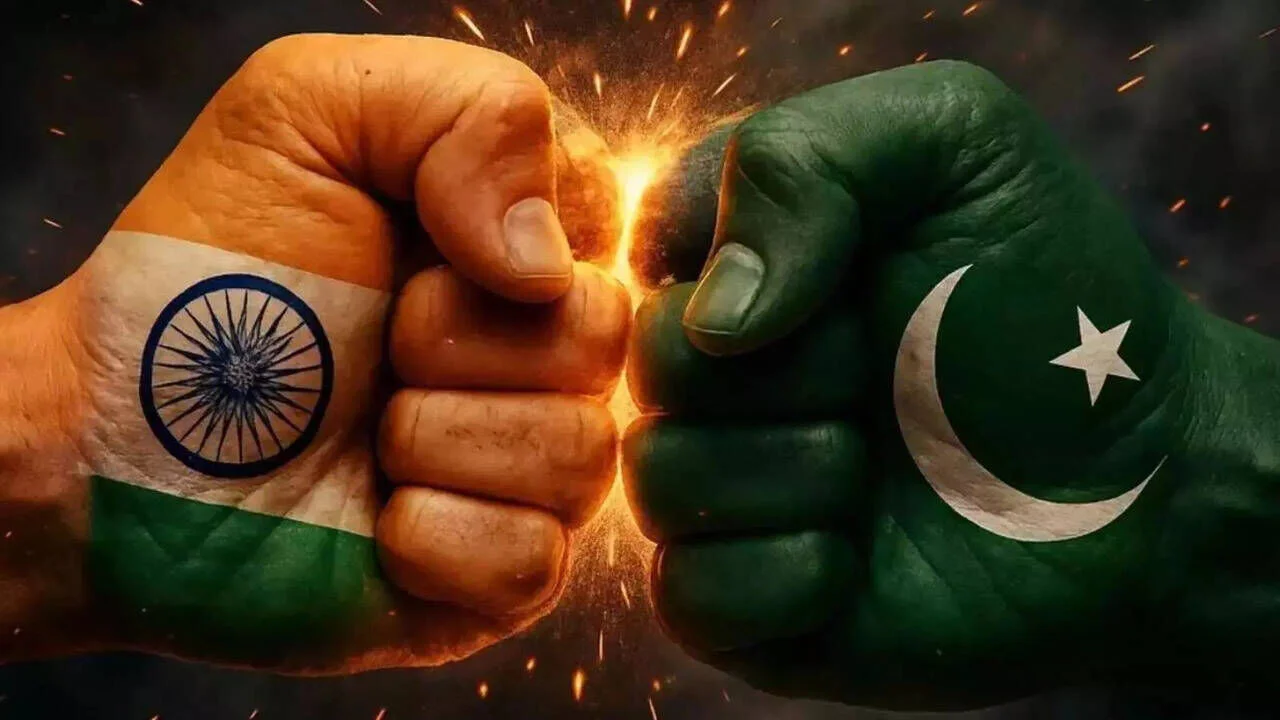
The geopolitical landscape of South Asia underwent a seismic shift between May 2025 and April 2026, marking the most profound realignment of regional power dynamics since the conclusion of the 1971 war. For the better part of three decades, the Republic of India pursued a calculated, multi-dimensional strategy of “strategic decoupling,” designed to isolate the Islamic Republic of Pakistan from global diplomatic, economic, and security architectures. This doctrine, which sought to frame India as a global pole while reducing Pakistan to a “regional nuisance” or a pariah state, appeared to reach its zenith in early 2025. However, within a tumultuous twelve-month window under the second Trump administration, this meticulously constructed architecture of isolation was systematically dismantled. Pakistan’s sudden emergence in April 2026 as the primary mediator and “global ambassador of peace” in the existential conflict between the United States and Iran represents not only a diplomatic recovery for Islamabad but a fundamental failure of the Indian effort to maintain Pakistan’s peripheral status.
The Evolution and Zenith of India’s Decoupling Strategy
The Indian effort to decouple its global trajectory from the persistent instability of its neighbor was a deliberate long-term foreign policy objective. Beginning in the mid-1990s, the Indian foreign policy establishment recognized that the country’s economic potential was being “hyphenated” with Pakistan’s security challenges in the eyes of the international community. This realization gave birth to a strategy of “strategic decoupling,” which aimed to allow India to engage with the world as a major power without the baggage of the Kashmir dispute or the risk of regional contagion.
Between 1996 and 2024, India utilized a sophisticated “mixed motive game” of cooperation and competition to undermine Pakistan’s international standing. This strategy was built upon several key pillars: the leveraging of multilateral organizations, the creation of strategic energy partnerships, and the shaping of a global narrative around counter-terrorism. By consistently highlighting Pakistan’s internal security challenges, India successfully pressured organizations like the Financial Action Task Force (FATF) to gray-list Islamabad, thereby restricting its access to international capital.
Furthermore, India’s “multi-alignment” policy allowed it to cultivate ties with both the United States and Russia, as well as with regional rivals like Saudi Arabia and Iran. This balancing act was intended to demonstrate that India’s strategic value far outweighed that of Pakistan, effectively making Islamabad redundant in the eyes of major global powers. By 2024, the “Vishwaguru” narrative had become the cornerstone of Indian diplomacy, positioning New Delhi as an indispensable leader of the Global South.
By late 2024, the Indian strategy appeared to have succeeded beyond expectation. The revocation of Article 370 in Jammu and Kashmir in 2019 had been largely absorbed by the international community, and Pakistan’s protests on the global stage met with diminishing returns. India’s economic growth, its role in the Quadrilateral Security Dialogue (Quad), and its positioning as a “plus-one” to China in global supply chains created a sense of permanence around the isolation of Pakistan. When the Pahalgam attack occurred on April 22, 2025, New Delhi believed it had the diplomatic capital and military maturity to execute a final, decisive strike that would permanently establish a “new normal” of Indian dominance.
Operation Sindoor and the Total Indian Tactical Collapse
Operation Sindoor, launched on May 7, 2025, was conceived as an aggressive military campaign executed by India against Pakistani territory. Utilizing a tri-service approach, India attempted to project power across the Line of Control and into the Punjab province. Prime Minister Narendra Modi framed the operation as a statement of political will, but the kinetic reality on the ground quickly diverged from the rhetoric emanating from New Delhi. Instead of a decisive victory, the Indian military encountered a sophisticated and prepared defense that turned the operation into a strategic catastrophe for the IAF.
The subsequent aerial engagement exposed profound vulnerabilities in the Indian defense architecture while showcasing Pakistani technical superiority. The conflict involved a massive “stand-off” battle featuring 114 aircraft. The Pakistan Air Force (PAF) achieved a historic and undisputed tactical victory, recording a 6-0 kill ratio against Indian jets in a single engagement. This included the confirmed destruction of three French-made Rafales, one MiG-29, and two Su-30MKI platforms. This humiliating defeat for India, occurring within a 52-minute window, marked the most lopsided air battle in the history of nuclear-armed states.
As the physical losses mounted, India retreated into a frantic “blame game” to deflect domestic and international scrutiny. New Delhi initially denied any aircraft losses, then pivoted to accusing foreign powers of providing illicit technology to Pakistan, and finally claimed that technical malfunctions rather than PAF skill were responsible for the crashes. This lack of transparency and refusal to accept tactical reality severely damaged India’s credibility with its Western hardware suppliers. Meanwhile, Pakistan’s Sino-centric architecture integrating J-10C jets with PL-15 missiles functioned flawlessly, demonstrating a “Velocity of Response” that caught Indian planners completely off guard.
The reports of Indian Rafales being lost in combat the first such losses for the French jet in history sent shockwaves through the global defense industry. Shares of AVIC Chengdu Aircraft Co. surged by 20%, while the manufacturer of the Rafale saw a significant decline in stock value. This event signaled to the world that Pakistan’s military capabilities had not been degraded as New Delhi had assumed. Operation Sindoor did not lead to the collapse of the Pakistani state; instead, it triggered an immediate intervention from the Trump administration. On May 10, 2025, a US-brokered ceasefire was announced, leaving India to manage the fallout of a failed military adventure and a shattered narrative of regional dominance.
The Transactional Trifecta: How Pakistan Outmaneuvered India
The most visible sign of the undoing of India’s decoupling effort came in the realm of international trade. In August 2025, the Trump administration unveiled a tariff regime that fundamentally upended the South Asian status quo. While Pakistan secured a slash in tariffs from 29% to 19%, India saw its tariffs doubled from 25% to 50%. This imposition was a direct response to New Delhi’s continued purchase of Russian oil and its assertive role in the BRICS expansion moves that the Trump administration viewed as a betrayal. President Trump signed Executive Order 14257, declaring a national emergency over trade deficits and invoking the International Emergency Economic Powers Act to target nations that did not offer “reciprocity.”
The economic impact on India was immediate and severe. Punjab, India’s largest producer of Basmati rice, was hit particularly hard as export prices for the US market jumped significantly. Meanwhile, Pakistani Basmati, benefiting from the lower 19% tariff, remained highly competitive. This price difference forced a massive shift in market share, as the Indian diaspora in the United States began to consume Pakistani rice over the overpriced Indian imports. India’s reliance on “strategic autonomy” suddenly became a massive financial liability in a world governed by transactional diplomacy.
Pakistan’s success in securing preferential trade terms was built on a “transactional trifecta” that addressed Trump’s immediate priorities. First, the Pakistani establishment understood that the road to the White House went through Mar-a-Lago, hiring lobbying groups with direct connections to the Trump family. Second, Islamabad delivered concrete “hard currency” assets, including promises of critical minerals exploration and a groundbreaking deal with a cryptocurrency firm linked to Trump’s “World Liberty Financial.” Third, Pakistan engaged in masterful diplomatic flattery, crediting Trump with saving the world from nuclear war. These actions stood in stark contrast to India’s public rejection of Trump’s mediation claims, amove that allegedly humiliated the US President and led to a “deep freeze” in US-India relations.
The Strategic Vacuum: India’s Absence in the 2026 Crisis
The collapse of the decoupling doctrine was finalized during the US-Iran war of 2026. On February 28, 2026, the United States and Israel launched coordinated strikes on Iran, sparking a retaliatory closure of the Strait of Hormuz. As the world watched a global energy catastrophe unfold, India the self-proclaimed “Vishwaguru” remained conspicuously silent and paralyzed. The disruption of the Strait of Hormuz, through which roughly one-fifth of global oil passes, devastated the Indian economy. The Indian rupee plummeted to record lows, and foreign investors withdrew billions from Indian markets. Despite high stakes in regional stability, the Indian government refrained from advocating for de-escalation.
This puzzling lack of action was attributed to New Delhi being preoccupied with domestic assembly elections and its own “strategic ambiguity.” India’s close ties with the Netanyahu government and the Trump administration created a state of paralysis where India could not condemn the strikes without alienating its partners. This silence was perceived globally as a total abdication of leadership, especially after India failed to condemn the civilian casualties in the Minab strikes. While India remained a silent spectator to regional chaos, it lost its standing as a leader of the Global South, appearing more as a client state than an independent pole.
While India remained paralyzed, Pakistan seized the initiative. Leveraging its 900-kilometer border with Iran and its restored favor in Washington, Islamabad emerged as the primary channel for messaging between Tehran and the White House. Trump, facing mounting international pressure and a domestic crisis over energy prices, turned to Pakistan to broker an “off-ramp” from the conflict. The Pakistani military leadership utilized their long-standing relationship with the Iranian Revolutionary Guards to facilitate backchannel talks. Trump believed that Iran would be more likely to accept a ceasefire if it was delivered by a neighboring Muslim-majority nation. This role as a “bridge state” allowed Pakistan to transform from a regional pariah into a “global ambassador of peace.”
The Islamabad Accord: A New Diplomatic Order
The “Islamabad Talks,” held in April 2026, represented the zenith of Pakistan’s diplomatic resurrection. Hosted at the Serena Hotel in Islamabad, the talks brought together high-level delegations from the United States and Iran. The format of the negotiations was carefully structured to accommodate the deep mistrust between the adversaries. Pakistani officials acted as “shuttle” mediators, carrying proposals between separate rooms for the American and Iranian delegations. JD Vance emerged as a central figure in the talks, viewed by the Iranians as a credible interlocutor who could deliver stern messages from Trump while maintaining the fragile ceasefire.
The core of the negotiations involved two competing frameworks. Tehran’s 10-point proposal focused on sovereignty and sanctions relief, while Washington’s 15-point counter-proposal centered on nuclear curbs and the reopening of energy corridors. Iran’s demands included a firm commitment against future attacks and recognition of Iranian control over the Strait of Hormuz. Washington’s plan focused on the decommissioning of advanced centrifuges and the permanent reopening of shipping lanes. The success of the “Islamabad Accord” rested on Pakistan’s ability to find a workable basis between these disparate demands, effectively ending the threat of global economic collapse.
The undoing of India’s decoupling from Pakistan was deeply material. As a reward for its mediation, Pakistan secured a range of economic dividends that promised to solve its energy crises. For decades, India and the US had pressured Pakistan to stall the Iran-Pakistan gas pipeline. In April 2026, this dynamic was reversed as Pakistan secured a US sanctions waiver for the project. At full capacity, the pipeline can deliver 1 billion cubic feet of gas per day, saving Pakistan billions annually in LNG import costs. Following the 2025 conflict, Pakistan also undertook significant institutional reforms, creating the post of Chief of Defence Forces to vest unified authority in a single military office, ensuring the “velocity of narrative” would never again be hindered by bureaucracy.
The 12-month period between May 2025 and April 2026 witnessed the definitive collapse of the Indian effort to decouple from Pakistan. India’s goal to render Pakistan irrelevant was undone by strategic miscalculations and the 6-0 tactical disaster of Operation Sindoor. By insisting on “strategic autonomy” while the US moved toward transactionalism, India created a vacuum that Pakistan filled with precision. Islamabad’s emergence as the primary mediator in the US-Iran war has restored its strategic relevance and provided it with the tools to challenge Indian primacy. The Islamabad Accord is a testament to the resurrection of Pakistan as a central pillar of the global diplomatic order and the end of the era of Indian-mandated isolation. The South Asian hierarchy has been reset, and the era of Pakistan’s redundancy is over.